Water is one of the most vital natural resources in the world, especially in industry. However, without proper monitoring, wastewater from industrial processes can harm the environment. To maintain ecosystem balance and comply with government regulations, water quality monitoring becomes a critical aspect. In this article, we will discuss the importance of water quality monitoring in industries and the innovative solutions offered by Water Quality Monitoring System (WQMS) from Nocola to achieve a better environment.
1. Why Is Water Quality Monitoring Important in Industries?
Water quality monitoring is the process of measuring certain parameters in water that help determine whether the water is safe to use or discharge into the environment. There are several key reasons why water quality monitoring is crucial, especially in the industrial sector:
Environmental Protection: Industrial waste often contains harmful substances that can pollute natural water sources such as rivers, lakes, or oceans. Without proper monitoring, this pollution can cause long-term damage to ecosystems.
Regulatory Compliance: Many countries enforce strict regulations on the discharge of wastewater from industries. By monitoring water quality, companies can ensure they comply with these regulations and avoid fines or penalties.
Operational Efficiency: By monitoring water quality, companies can identify areas that require improvement. This also helps optimize industrial processes involving water, such as treatment or cooling.
2. Key Parameters in Water Quality Monitoring
When monitoring water quality, there are several important parameters to measure. Some of these parameters include:
pH: The acidity or alkalinity level of water can affect the life forms in it and the industrial processes that use water.
Total Dissolved Solids (TDS): High TDS levels in water indicate dissolved substances, potentially from industrial waste.
Dissolved Oxygen (DO): Oxygen dissolved in water is essential for aquatic life. Low DO levels can be an indicator of organic pollution.
Water Temperature: Significant temperature changes can affect the water’s ability to support life and alter its physical and chemical properties.
Heavy Metal Content: Many industries produce waste containing heavy metals such as lead, mercury, or arsenic, which are extremely harmful to the environment.
3. Nocola’s WQMS: Innovative Solution for Water Quality Monitoring
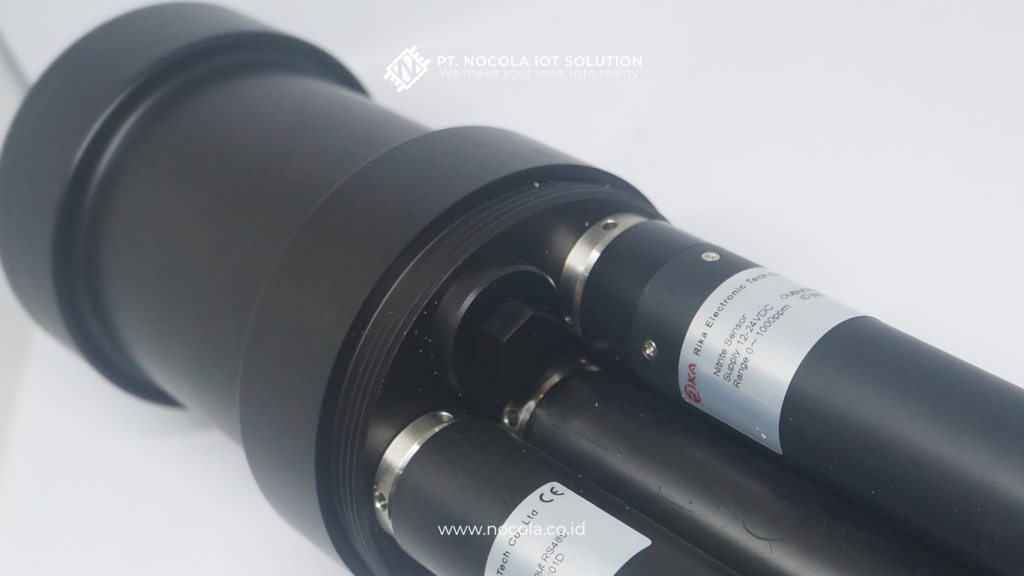
Nocola offers a water quality monitoring solution known as the Water Quality Monitoring System (WQMS). This system is designed to provide accurate, real-time monitoring data, helping industries comply with environmental regulations and improve their wastewater management.
Key Features of Nocola’s WQMS:
Real-Time Monitoring: Nocola’s WQMS allows real-time water quality monitoring, providing immediate information about water quality parameters in industrial areas.
IoT-Connected: WQMS integrates with Internet of Things (IoT) technology, enabling efficient data management and remote access. This system simplifies water quality monitoring without the need for frequent manual inspections.
Accurate Measurements: Using advanced sensors, WQMS can measure various water parameters such as pH, DO, TDS, and water temperature with high precision.
Early Warning: If undesirable changes occur in water parameters, the system can provide early warnings, allowing corrective action to be taken immediately to prevent pollution.
4. Benefits of WQMS for Industries
Implementing a water quality monitoring system like Nocola’s WQMS offers several benefits for industrial companies:
Higher Operational Efficiency: With real-time monitoring, companies can optimize water usage and reduce costs associated with wastewater treatment.
Reduced Environmental Risks: WQMS helps detect water quality issues early, enabling companies to prevent potential pollution that could harm the environment.
Ensured Compliance with Regulations: With accurate and detailed monitoring data, companies can ensure that they always comply with environmental regulations regarding wastewater disposal.
Improved Company Reputation: Companies that prioritize monitoring and protecting the environment tend to have a better reputation among the public and business partners.
5. Positive Environmental Impact
In addition to direct benefits for industries, implementing WQMS also has significant positive impacts on the environment. By continuously monitoring and controlling water quality, companies can:
Reduce Water Pollution: Proper monitoring allows industries to better manage their waste and prevent the discharge of harmful substances into natural water sources.
Preserve Aquatic Ecosystems: Good water quality is essential to support life in water. By reducing contamination, industries can help maintain aquatic ecosystem balance.
Use Water More Efficiently: Water quality monitoring also helps companies reduce excessive water use, thereby contributing to water resource conservation.
Conclusion
Water quality monitoring in industries is not only a requirement for regulatory compliance but also an important step in preserving the environment. Nocola’s Water Quality Monitoring System (WQMS) provides an innovative and efficient solution to ensure that water used and discharged by industries is safe for the environment.
With real-time monitoring features, IoT integration, and the ability to detect various water parameters, WQMS is an essential tool to help industries better manage their wastewater. The implementation of this system not only assists in regulatory compliance but also contributes to environmental protection and operational efficiency. Ultimately, Nocola’s WQMS is a solution for a more sustainable industrial future.