Physical Address
304 North Cardinal St.
Dorchester Center, MA 02124
Physical Address
304 North Cardinal St.
Dorchester Center, MA 02124

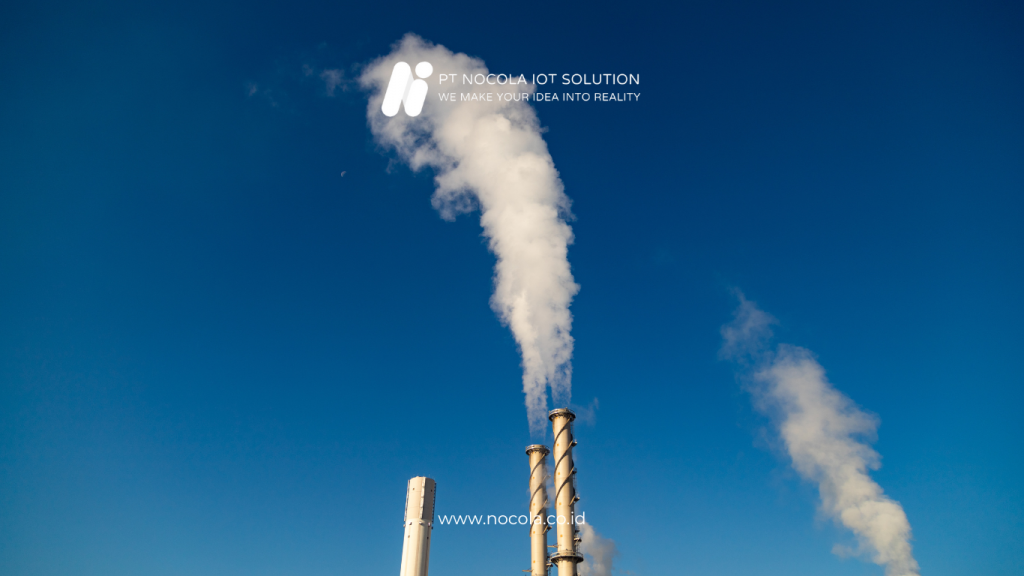
The modern industry is not only required to increase productivity but also to maintain environmental sustainability. One of the biggest challenges is managing exhaust gas emissions generated from the production process. Uncontrolled emissions can degrade air quality, disturb public health, and even violate environmental regulations.
To address this challenge, we present the Continuous Emission Monitoring System (CEMS) Nocola, a technology-based solution capable of monitoring emissions in an accurate, real-time, and continuous manner. This article will delve deeply into the importance of CEMS, how this technology works, and the significant benefits it offers for both industry and the environment.

CEMS Nocola is an emission monitoring system based on the Internet of Things (IoT) designed to measure, record, and report the concentration of exhaust gases from industrial chimneys. Several emission parameters that can be monitored include:
With this monitoring, industries can ensure that the emissions released remain within the environmental quality standards set by the government.

Industrial emissions are one of the major contributors to air pollution. Without strict supervision, exhaust gases can cause:
Hence, the use of CEMS Nocola becomes a strategic step to meet health, environmental, and regulatory compliance aspects.

CEMS Nocola utilizes a combination of advanced sensors, IoT technology, and digital platforms. Here’s how it works:
Using manual methods for measuring emissions requires manpower, time, and is often inaccurate. With CEMS Nocola, industries gain the following advantages:

The government mandates that many industries install CEMS as a condition for operational permits. With this system, companies can avoid penalties.
Industries that are environmentally conscious will earn more trust from the community, investors, and business partners.
Emission monitoring helps mitigate the impact of air pollution on ecosystems.
With detailed emission data, companies can identify energy-wasting production processes.
The public can trust more due to open reporting related to industrial emissions.
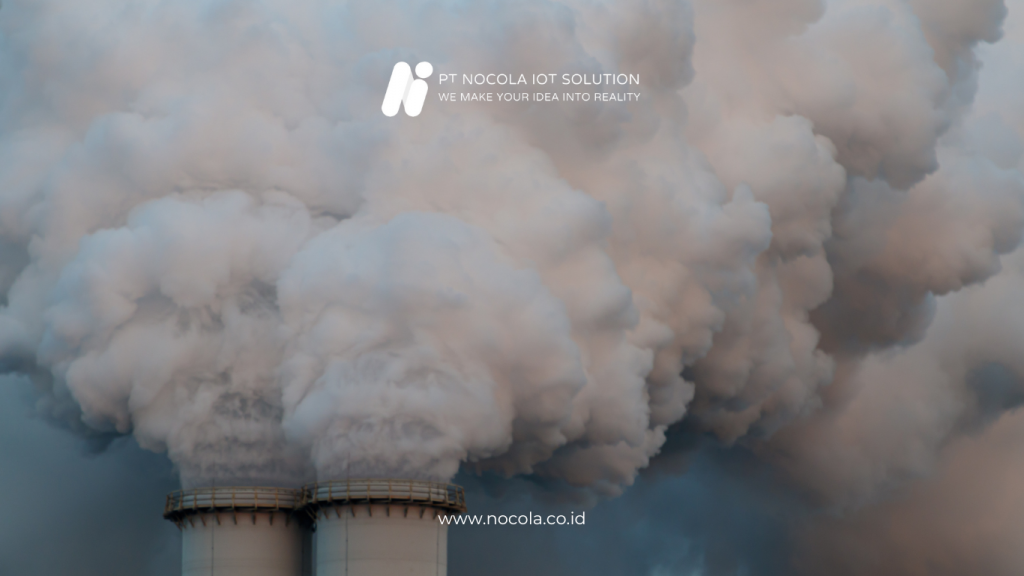
CEMS Nocola can be applied across various industrial fields, such as:
With its application in various sectors, the positive impact on the environment will be even broader.
CEMS Nocola emerges as a modern solution for more accurate and real-time industrial emission monitoring. With IoT technology and advanced sensors, this system not only helps companies comply with regulations but also supports environmental conservation programs, improves production efficiency, and strengthens the company’s image as an environmentally friendly industry.
In the future, CEMS Nocola will become the new standard in industrial emission management, aligned with the world’s need to mitigate climate change impacts and maintain air quality.

