Monitor Water Quality in Real-Time with WQMS from Nocola

Water is an irreplaceable source of life. However, amid industrial growth, urbanization, and rapid climate change, water quality has become a global concern. Many rivers, lakes, and even groundwater sources are experiencing declining quality due to contamination from both industrial and domestic waste.

In Indonesia, this challenge is even greater as many regions still rely on natural water sources that are vulnerable to pollution.
To address these issues, modern solutions are needed that enable accurate and real-time monitoring of water quality.

This is where the WQMS (Water Quality Monitoring System) comes into play.
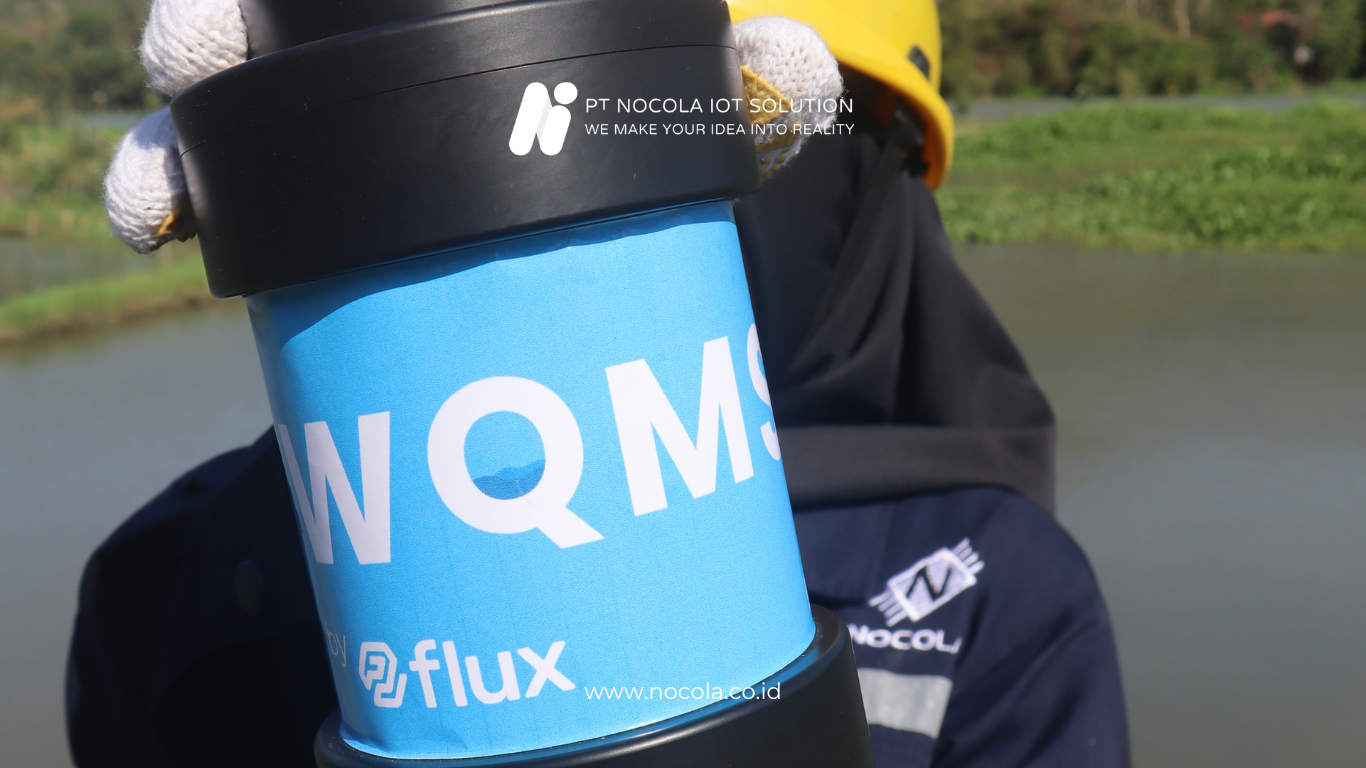
Developed by Nocola IoT Solution, WQMS is an IoT-based system that allows for the automatic, efficient, and sustainable monitoring of various water parameters.
What Is WQMS and How Does It Work?

WQMS Overview

Also Read: The Benefits of WQMS in Water Resource Management

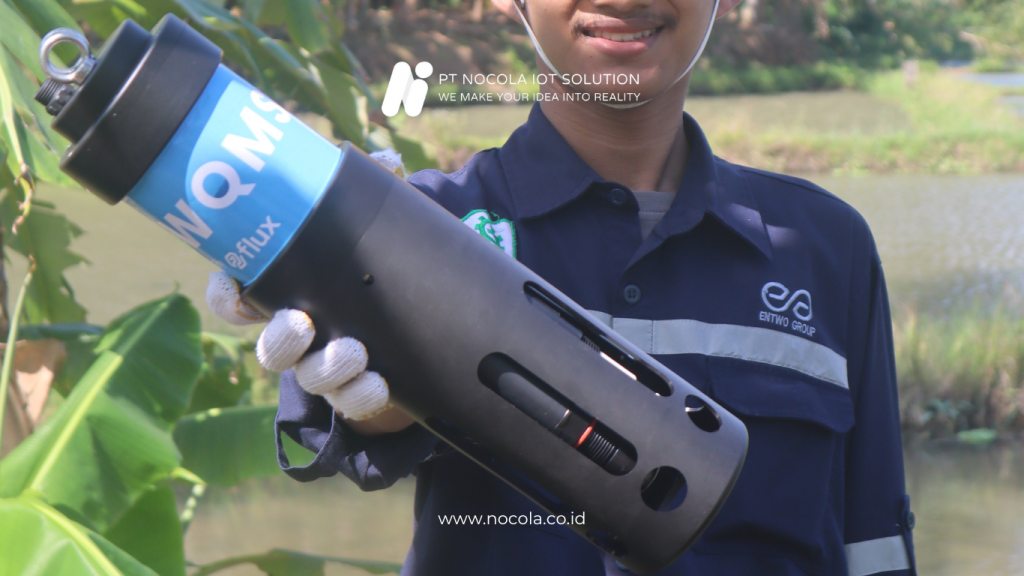
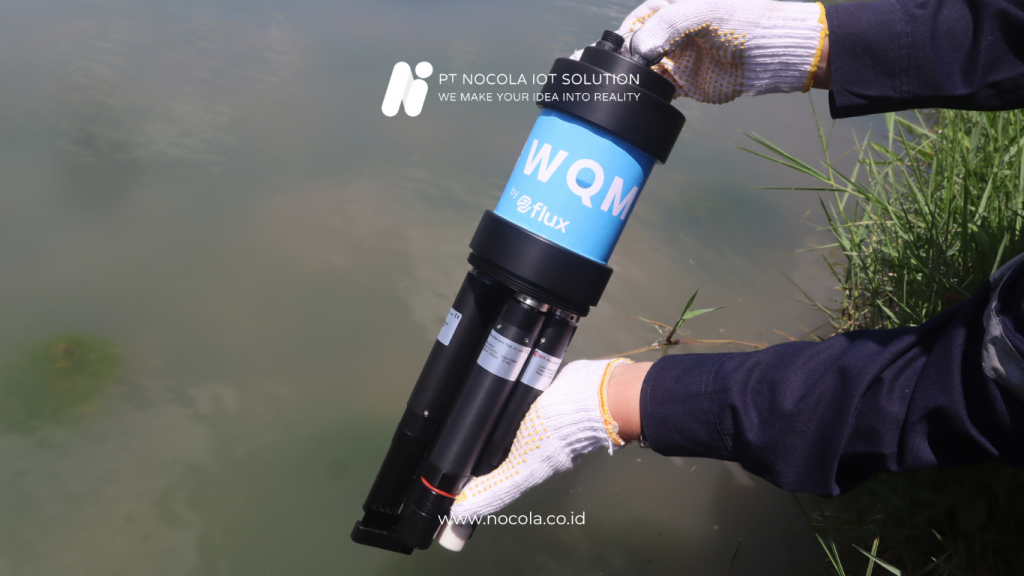
Water Quality Monitoring System (WQMS) is a sensor-based system designed to detect, record, and report changes in water quality parameters such as pH, temperature, DO (Dissolved Oxygen), TDS (Total Dissolved Solids), conductivity, and turbidity levels.

With the support of IoT technology, all data from the sensors is sent to a cloud platform and displayed through a digital dashboard, which can be accessed from anywhere—either via laptop or smartphone.

In simple terms, WQMS functions like a “digital eye” that continuously observes water conditions 24/7.
How WQMS Works

  1. Sensors Collect Data Directly
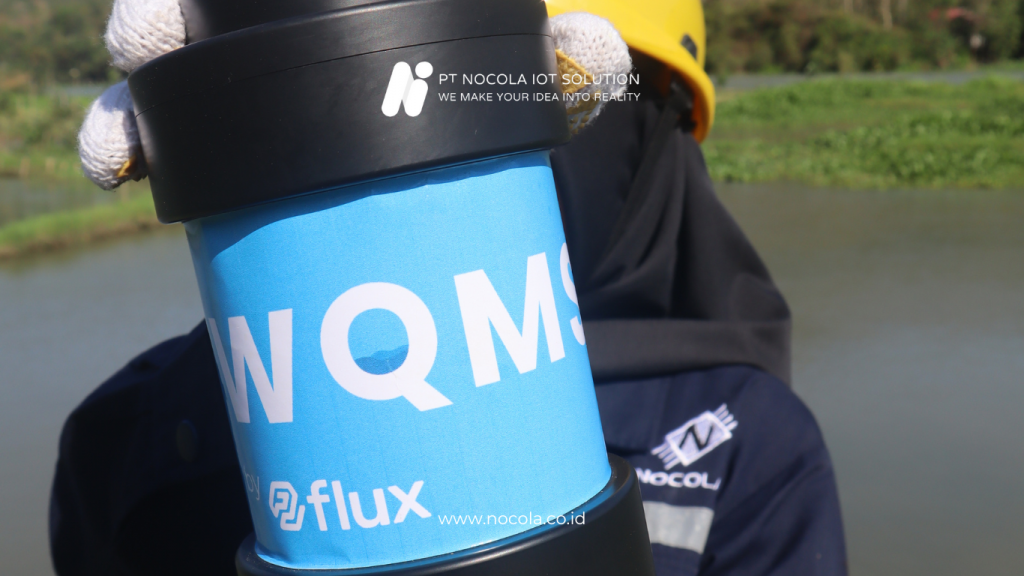
    WQMS sensors are placed in water sources (such as rivers, reservoirs, or tanks). These sensors detect key parameters of the water at specific intervals.
  2. Data is Sent to the IoT Gateway
    The measurement data is transmitted to the gateway, connecting the devices in the field to the cloud system.
  3. Data is Stored and Processed in the Cloud
    All collected data is automatically sent to Nocola’s cloud server, where it is processed into graphs, trends, and notifications.
  4. Real-Time Monitoring Through the Dashboard
    Users can monitor water conditions in real-time through a web dashboard or mobile application.
  5. Automatic Notifications in Case of Anomalies
    If water parameters show values beyond normal limits, the system will send an automatic alert for swift action to be taken.

The Importance of Real-Time Water Quality Monitoring

Importance of Water Quality Monitoring

Poor water quality can have a significant impact, not only on the environment but also on public health and industrial sustainability.
Manual monitoring often proves ineffective because:

  • Data is collected periodically, not in real-time.
  • The analysis process is time-consuming.
  • The risk of human error is high.

With automated and IoT-based systems like WQMS, water quality monitoring becomes faster, more accurate, and sustainable.
Key Parameters Monitored by WQMS

WQMS Parameters

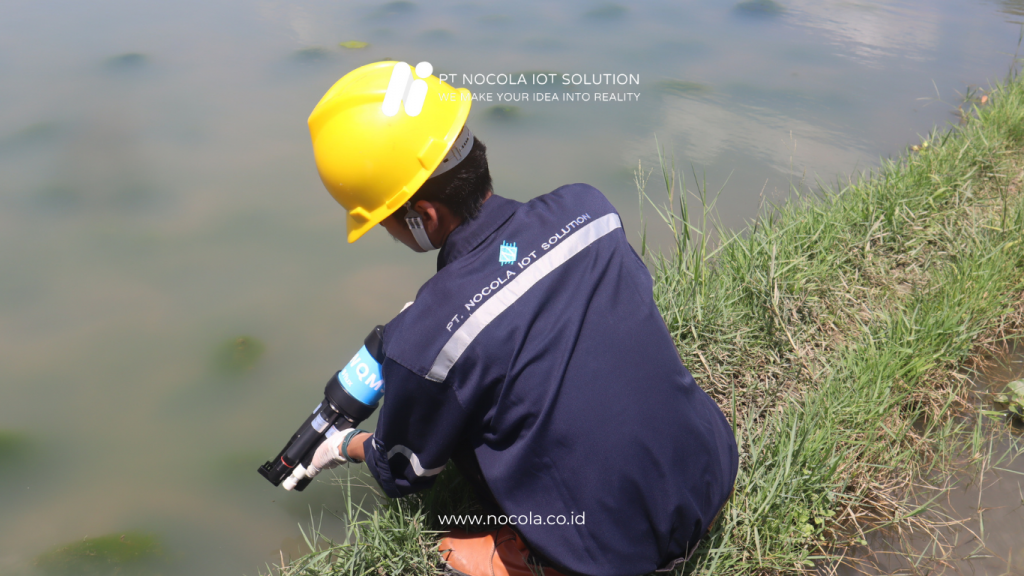
Nocola’s WQMS is equipped with various advanced sensors to measure key water quality parameters, including:

  1. pH (Hydrogen Potential)
    Measures water acidity or alkalinity. Ideally, clean water has a pH between 6.5–8.5.
  2. DO (Dissolved Oxygen)
    Indicates the level of dissolved oxygen in water. Higher DO levels equate to better water quality.
  3. TDS (Total Dissolved Solids)
    Measures the total amount of dissolved solids in water, such as salts and minerals.
  4. Water Temperature
    Influences biological and chemical activities within the water.
  5. Turbidity
    Indicates water clarity; the higher the turbidity value, the more suspended particles there are.
  6. Conductivity
    Measures the water’s ability to conduct electricity, which correlates with ion content.

With this combination of sensors, WQMS can provide a comprehensive overview of water quality conditions in real-time.
Integration of WQMS with IoT and Cloud Technology

Integration

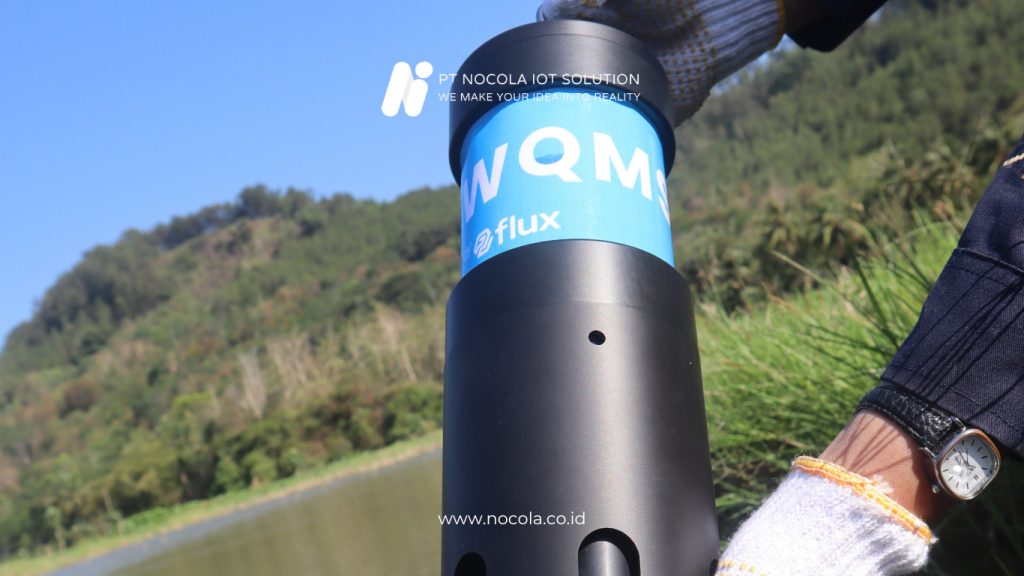
Through IoT (Internet of Things) technology, WQMS can directly connect to a cloud platform that manages thousands of measurement points from various locations.
This enables users to:

  • View data directly from monitoring locations anytime.
  • Access historical data and long-term trends.
  • Make quick decisions based on current information.

The WQMS dashboard provides data in the form of:

  • Real-time graphs
  • Historical data tables
  • Sensor location maps (geolocation)

This ease of use enables users to effectively analyze changes in water quality over time and take preventive actions when anomalies occur.
Benefits of Nocola’s WQMS for Various Sectors

Benefits of WQMS

By applying Nocola’s WQMS, industries can realize significant benefits, including:

1. Industry and Power Plants

  • WQMS helps ensure that waste discharged meets environmental standards.
  • It assists industries in complying with environmental regulations and avoiding penalties due to emissions violations.

2. Drinking Water Management and Water Utilities

  • For maintaining high-quality water consumed by the public, water utilities can use WQMS to:
  • Continuously monitor raw water quality.
  • Detect changes in water quality due to contamination.
  • Ensure optimal water treatment processes.

3. Agriculture and Fisheries

  • In modern agriculture, especially in hydroponics and aquaponics, water quality significantly affects the growth of plants and fish.
  • With WQMS, farmers can monitor pH, temperature, and nutrient content of water in real-time, enabling quick adjustments to keep harvests at their maximum.

4. Environment and Conservation

  • WQMS is also used by environmental agencies to monitor:
  • The quality of rivers, lakes, and reservoirs.
  • The impact of industrial activities on aquatic ecosystems.
  • Pollution trends over time.

With digitized data collection, environmental conservation efforts become more measurable and data-driven.

Conclusion: Nocola WQMS, A Step Forward for Clean Water and a Sustainable Future

Water quality is a reflection of the quality of life.
With the presence of Nocola’s WQMS, monitoring water quality is no longer complicated and slow; it has become automatic, real-time, and data-driven.

This system not only helps industries and governments in complying with environmental regulations but also promotes awareness to protect the natural environment through the utilization of IoT technology.

As an innovation by local talent, Nocola’s WQMS demonstrates that local technology can provide smart solutions to global challenges.
With precise monitoring technology, we can ensure that every drop of water remains clean, safe, and sustainable for future generations.

Leave a Reply

Your email address will not be published. Required fields are marked *

×

Talk with our support

× Hi. there