Physical Address
304 North Cardinal St.
Dorchester Center, MA 02124
Physical Address
304 North Cardinal St.
Dorchester Center, MA 02124

The logistics industry is currently in an era filled with challenges. Demand for faster shipments is increasing, operational costs are rising, transportation routes are becoming more complex, and asset loss remains a significant problem. Amidst these demands, logistics companies need systems that provide complete visibility over their operations.
This is why the Internet of Things (IoT) is the most relevant solution. IoT brings real-time tracking technology that enables companies to know the location, condition, and status of their assets at any time—from vehicles and containers to machinery, warehouse equipment, and customer packages.
With IoT, tracking is not just about knowing where an asset is, but also what is happening with that asset. This article explores how IoT is transforming the logistics world to be faster, smarter, safer, and more efficient.
Read Also: TrackX: Asset Tracking Solutions Transforming the Logistics World
IoT in logistics refers to the use of sensors, tracking devices, and internet connectivity to collect real-time data about assets and operational processes. This technology allows companies to:
With IoT, logistics is transitioning from manual systems to smart, data-driven systems.
In the e-commerce era, customers desire fast and trackable deliveries. IoT provides full transparency, allowing customers to monitor the movement of goods in real-time.
International shipping, multimodal transportation (land, sea, air), and extensive warehousing make manual tracking too risky.
Loss of containers, pallets, forklifts, and even vehicles occurs frequently due to a lack of monitoring. IoT significantly reduces these risks.
With more accurate data, logistics managers can optimize routes, minimize fuel consumption, and avoid costly downtimes.
With GPS, NB-IoT, LoRa, and BLE sensors, companies can monitor asset locations anytime and anywhere.
Benefits include:
IoT makes asset management smarter and minimizes risks.
For industries such as food, pharmaceuticals, electronics, and chemicals, the condition of goods is far more important than just location.
IoT sensors can monitor:
Monitoring results are sent directly to dashboards and provide automatic notifications if anomalies occur.
Machine learning and IoT data can help determine the most efficient routes based on:
This optimization saves time and costs, while also reducing carbon emissions.
IoT can monitor:
With this data, companies can perform predictive maintenance, preventing sudden breakdowns during deliveries.
IoT-based tracking provides a new level of security:
This helps companies reduce losses from theft or logistics manipulation.
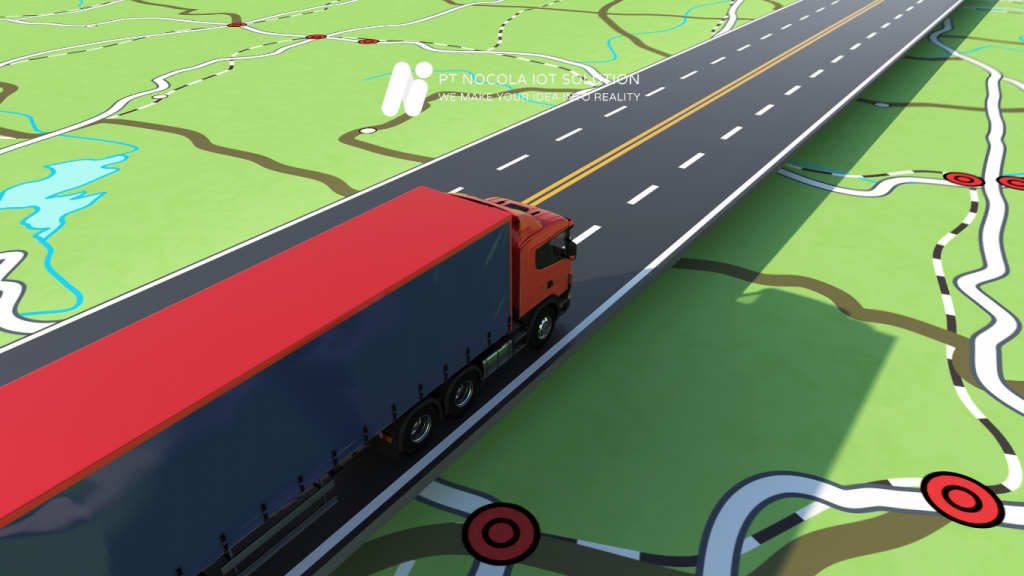
Companies can view all vehicles on a single dashboard complete with:
Fleet management becomes much more efficient and measurable.
IoT enables:
All these minimize human errors and speed up operational processes.
TrackX is an example of an IoT solution that provides tracking for:
With LoRaWAN, GPS, and NB-IoT technologies, TrackX offers high accuracy with low battery consumption—ideal for 24/7 operations.
For fresh food logistics or vaccines, IoT sensors maintain stable temperatures throughout the journey.
Containers can be equipped with sensors to monitor:
This system helps ports increase the speed of goods distribution.
IoT is not just about location tracking—IoT is a complete transformation for the logistics industry. With the ability to monitor assets in real-time, optimize routes, enhance security, and reduce downtimes, IoT makes the entire supply chain faster and more efficient.
Companies that adopt IoT early will gain a significant competitive advantage in a highly dynamic market. With smart tracking technologies, risks can be mitigated, operational costs reduced, and customer service drastically improved.
Modern logistics requires transparency, speed, and accuracy—and IoT is the answer.

