Physical Address
304 North Cardinal St.
Dorchester Center, MA 02124
Physical Address
304 North Cardinal St.
Dorchester Center, MA 02124


Agriculture is the backbone of many regions in Indonesia, providing food and a source of income for millions of people. However, various challenges such as climate change, pest attacks, unstable weather, and low production efficiency necessitate significant transformation in the agricultural sector. In this digital era, the Internet of Things (IoT) brings new hope through the concept of smart farming.
Smart farming allows agricultural processes to become more measurable, efficient, and predictable. By utilizing sensors, automation, and data analysis, farmers can enhance crop yields, reduce risks of losses, and utilize resources more optimally. This article delves into how IoT is key to the future of smart farming in Indonesia, complete with its benefits, the technologies used, and the future of modern agriculture.

Read Also: Smart Farming: The Future of Agriculture
Smart farming is a modern agricultural method that leverages digital technologies like IoT, sensors, big data, AI, drones, and automation to optimize each stage of the farming process. This concept enables farmers to understand the conditions of the land, weather, crops, and usage of water and fertilizers with high accuracy.
All of these lead to one goal: increasing productivity and reducing the risk of crop failure.
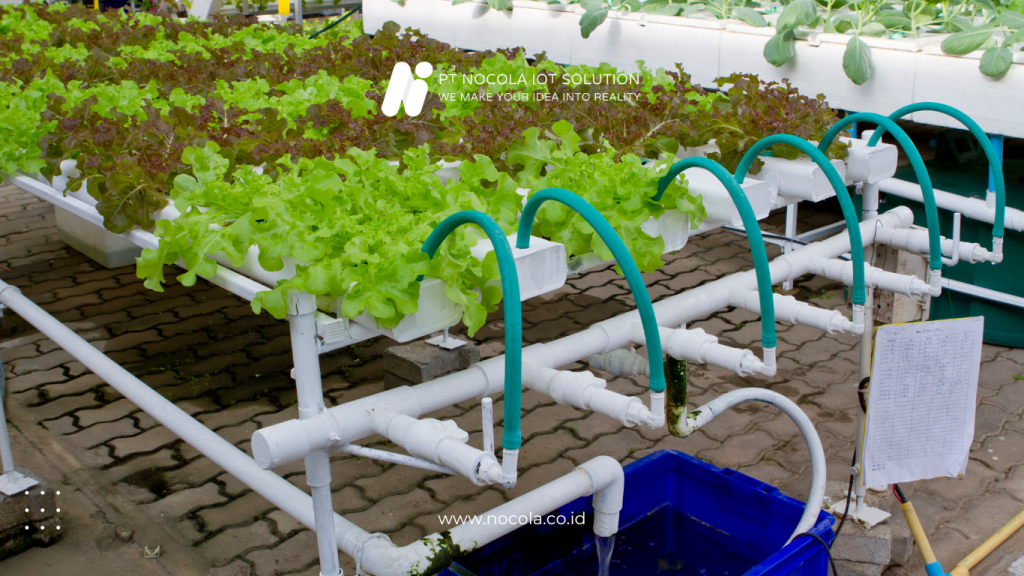
IoT is the heart of smart farming. With sensor devices connected to the internet, farmers can monitor land and crop conditions in real time. The collected data helps farmers understand the situation and take timely actions.
Without IoT technology, such data would be difficult to acquire quickly and accurately.
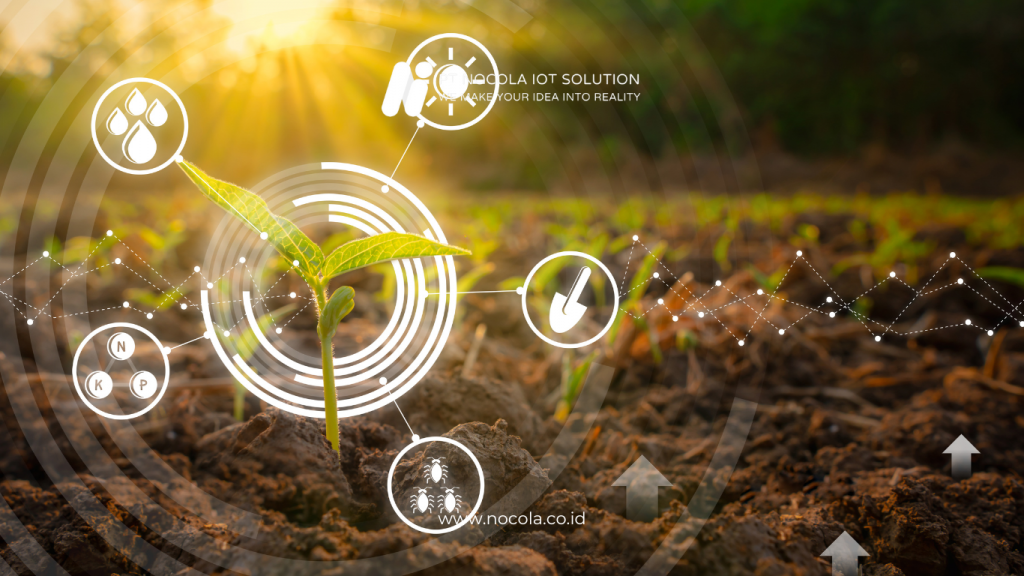
Farmers can make decisions based on real data rather than intuition. For example:
With real-time data, productivity can increase significantly.
Weather changes often lead to crop failures. With IoT:
Indonesia faces challenges regarding water availability in several areas. IoT helps:
Smart farming helps farmers monitor the conditions of the soil and crops, reducing the need for pesticides.
The younger generation is more interested in modern and technology-driven sectors. IoT makes agriculture appear:
Used to measure:
This information is crucial for determining water and fertilizer needs.
An automatic irrigation system based on sensors that activates only when the soil needs water.
Drones can capture aerial images and detect:
Provides comprehensive data on:
This data is crucial for determining planting strategies.
For hydroponic farming, aquaculture, and rice fields, water quality is critical to success.
Controls:
All done automatically based on sensors.
For the livestock sector, IoT monitors:
In major cities, this technology helps produce high-quality vegetables in limited spaces.
Several areas are using:
Chili, tomatoes, and bell peppers are grown in greenhouses with automatic controls.
DO, pH, and ammonia sensors are used to maintain water quality in fish ponds.
Smart farming is the future of agriculture in Indonesia. With increasingly complex challenges, the agricultural sector must adapt by using modern technologies like IoT. Smart farming not only increases productivity but also reduces risks, saves resources, and supports national food security.
IoT plays a crucial role as the backbone of smart farming. With sensors, real-time data, and automated systems, farmers have the ability to manage land more precisely and efficiently.
If Indonesia aims to advance in the agricultural sector, digital transformation cannot be postponed. Smart farming is no longer an option—it is a necessity. And IoT is the key that opens that door.

