Physical Address
304 North Cardinal St.
Dorchester Center, MA 02124
Physical Address
304 North Cardinal St.
Dorchester Center, MA 02124
Digital transformation has prompted businesses to increasingly rely on data-driven technologies. Amid this development, two terms frequently emerge and are often considered synonymous: *IoT (Internet of Things)* and AIoT (Artificial Intelligence of Things). While both are interconnected, they serve different roles, capabilities, and impacts on business operations.**
Many companies have begun adopting IoT to monitor assets, machinery, and the work environment. However, with the growing need for smarter and more automated analysis, AIoT has emerged as an evolution of IoT, incorporating artificial intelligence.
This article will comprehensively discuss the differences between IoT and AIoT, ranging from basic concepts, how they work, advantages and disadvantages, to guidelines for selecting the technology that best suits your business.
Read Also: Understanding the Internet of Things (IoT): From Sensors to the Cloud
IoT is a concept where various physical devices—such as sensors, machinery, cameras, and measuring instruments—connect to the internet to automatically collect and transmit data.
Examples of IoT applications:
IoT acts as a data collector from the real world into digital systems.
In simple terms, IoT operates through the following stages:
In conventional IoT systems, data analysis is generally basic and requires human intervention.
IoT helps businesses to:
However, IoT is still limited to what is happening, not why or what should be done next.
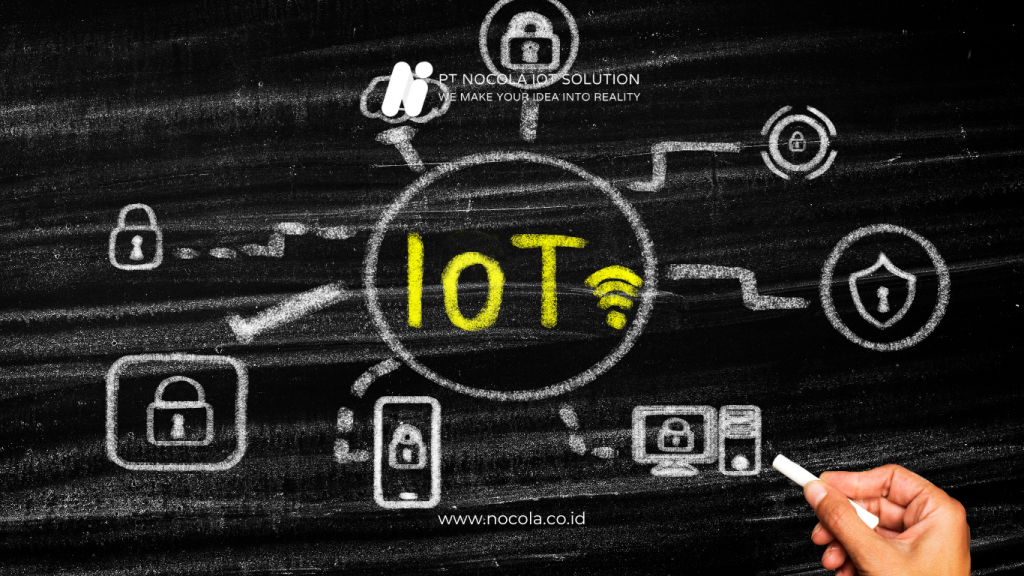
AIoT is the integration of IoT and Artificial Intelligence (AI). This technology not only collects data but also analyzes, understands, and makes automated decisions based on that data.
With AIoT, systems can:
AIoT operates with a smarter flow:
AIoT transforms data into a strategic asset, not just reports.
AIoT helps businesses:
Here’s a conceptual overview of the differences between IoT and AIoT:
IoT answers the question “What is happening?”
AIoT answers “Why is it happening, and what should be done?”
The difference between IoT and AIoT lies in the level of intelligence and the business value generated. IoT focuses on data collection, while AIoT offers analysis, predictions, and automation based on artificial intelligence.
IoT is suitable for the initial stages of digital transformation and basic monitoring needs. Meanwhile, AIoT is the ideal solution for businesses looking to advance further with adaptive, predictive, and efficient systems.
By understanding operational needs, business scale, and long-term goals, companies can choose the most appropriate technology. Ultimately, both IoT and AIoT play a crucial role in driving businesses toward a smarter and more sustainable digital era.

