Physical Address
304 North Cardinal St.
Dorchester Center, MA 02124
Physical Address
304 North Cardinal St.
Dorchester Center, MA 02124

The agricultural sector remains the backbone of Indonesia’s economy. Millions of farmers depend on their harvests as their livelihood and play a crucial role in maintaining national food security. However, amid climate change, limited land, and rising production costs, agricultural productivity faces increasingly complex challenges.
Conventional farming methods that rely on experience and manual estimations are often insufficient to tackle these challenges. This is where smart farming comes in as a solution. By leveraging Internet of Things (IoT) technology, farming can be managed with greater precision, efficiency, and data-driven approaches.
As a provider of local IoT solutions, Nocola offers smart farming technology tailored to the needs and conditions of agriculture in Indonesia. This article will discuss how Nocola’s IoT is a key player in enhancing agricultural productivity through a smart farming approach.
Read also: IoT Technology for Smart Farming: Agricultural Innovation
Before discussing solutions, it is important to understand the main challenges faced by the agricultural sector in Indonesia.
Climate change makes weather patterns difficult to predict. Excess rainfall or prolonged droughts can lead to crop failures.
Without accurate data, water and fertilizer usage is often excessive or suboptimal, impacting costs and the quality of harvests.
Many farmers still rely on intuition without support from data such as:
Differences in methods and management lead to inconsistent harvests across regions.

Smart farming is a modern agricultural approach that utilizes digital technologies—particularly IoT, sensors, and data analytics—to manage farming activities with precision.
With smart farming, farmers can:
This approach makes agriculture more adaptive to environmental changes and market demands.
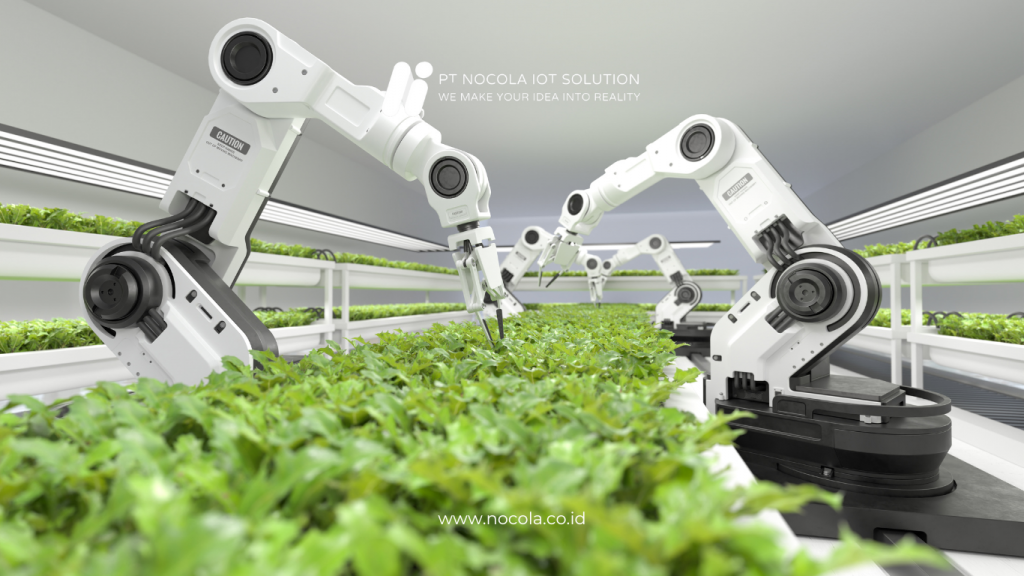
IoT serves as the primary foundation for implementing smart farming. This technology enables various devices in agricultural fields to connect and send data automatically.
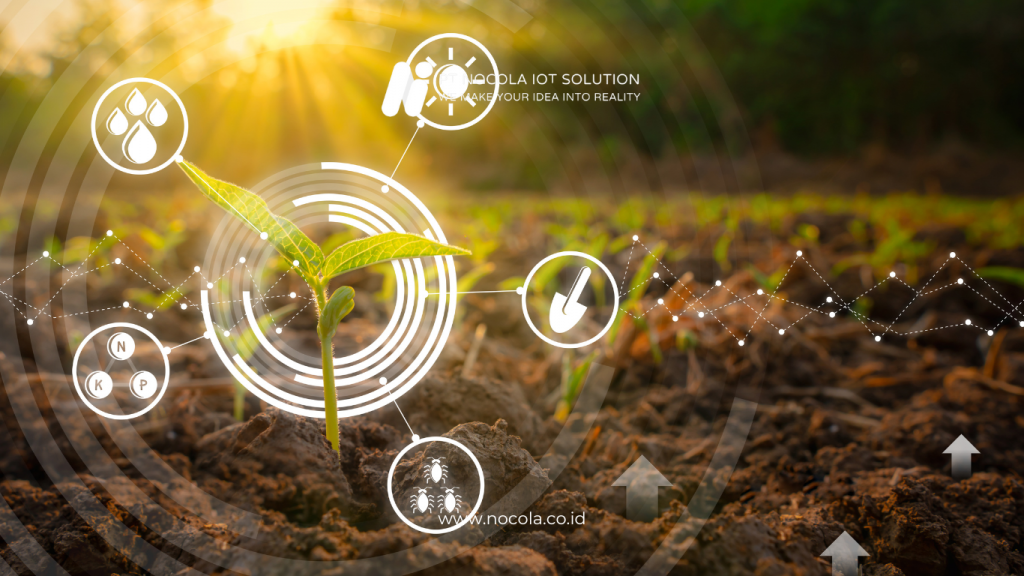
IoT sensors are used to measure:
This data is used as the basis for decision-making.
With IoT connectivity, data from the fields can be accessed:
Farmers and land managers do not need to be onsite to know the condition of the crops.
IoT allows integration with:
This makes agricultural management more efficient and responsive.
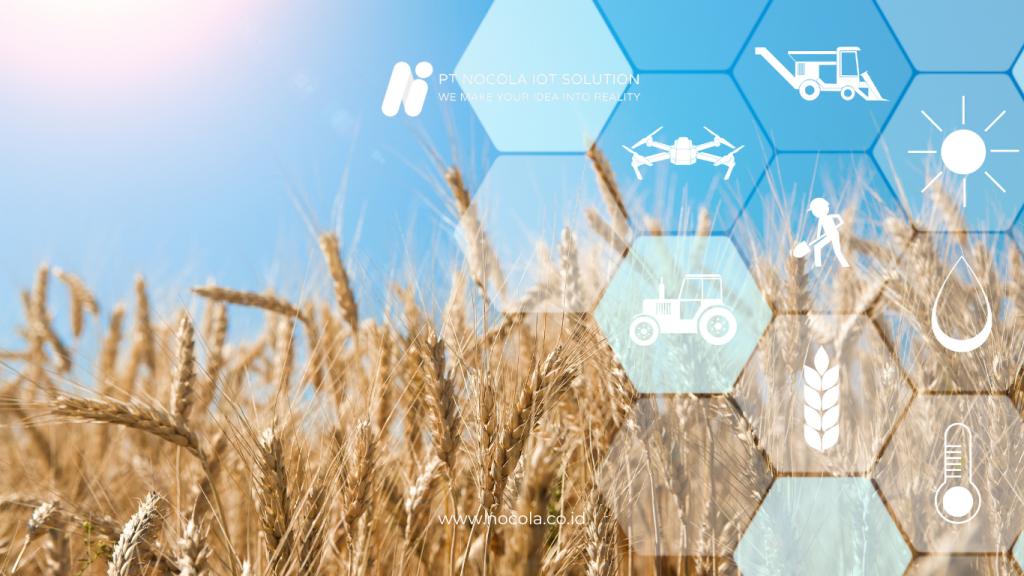
Nocola IoT is a smart farming solution designed to help farmers and agribusinesses manage land digitally. This system combines sensor devices, connectivity, and an easy-to-use analytics dashboard.
Nocola’s IoT solution is suitable for:
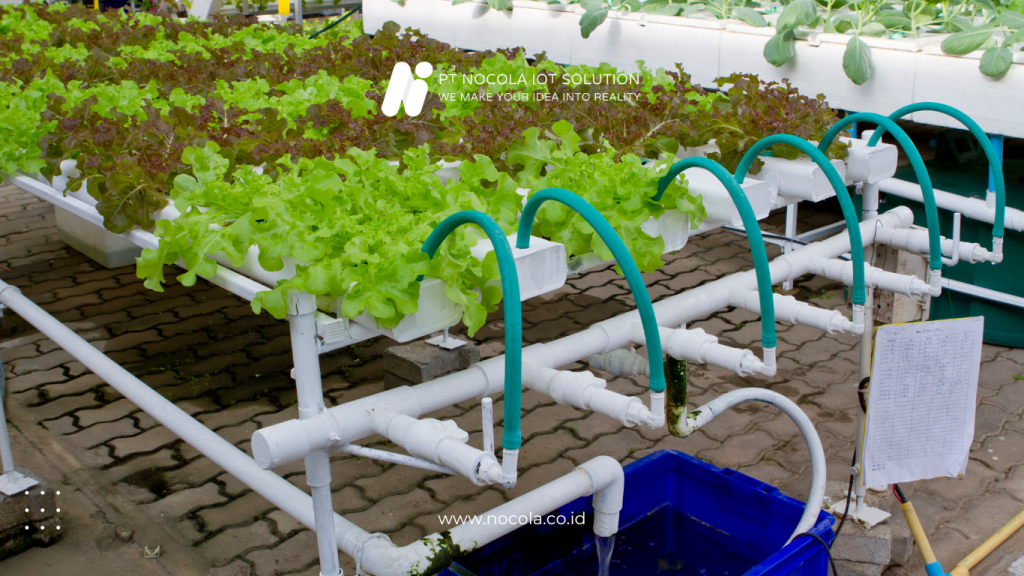
Nocola’s IoT sensors can monitor crucial crop conditions accurately and continuously.
Sensor data is transmitted through a stable network tailored to the conditions in Indonesia.
All data is displayed in a visual dashboard that is:
Farmers will receive notifications if field conditions are outside normal limits.
Sensors operate 24/7 without the need for manual input.
The data is processed to display trends and the current condition of the crops.
Farmers can determine:
Based on accurate data.
Smart farming is the answer to the challenges of Indonesian agriculture in the modern era. By leveraging Nocola’s IoT, farmers and agribusiness operators can manage their land with greater precision, efficiency, and data-driven methods.
Nocola’s IoT helps to:
As a local IoT solution, Nocola plays a pivotal role in driving the digital transformation of the agricultural sector and is a key to improving the productivity of Indonesian farmers in the future.

