Physical Address
304 North Cardinal St.
Dorchester Center, MA 02124
Physical Address
304 North Cardinal St.
Dorchester Center, MA 02124

Water quality monitoring can no longer be conducted periodically and manually. In many sectors, including industry, utilities, and environmental management, water quality must be continuously monitored to detect potential pollution, process disruptions, and environmental risks promptly.
This is where the role of Water Quality Monitoring System (WQMS) becomes crucial. Through an integrated water monitoring system, companies can monitor water quality parameters in real-time, automatically, and directly connected to a centralized monitoring system.
As part of the industrial Internet of Things (IoT) solution, the integrated WQMS developed by Nocola is designed to meet the needs for continuous water monitoring, whether for industrial needs, water resource management, or compliance with environmental regulations.
This article will thoroughly discuss how the concept of continuous water monitoring with WQMS integrated can help companies improve operational control, maintain environmental quality, and strengthen data-driven decision-making systems.
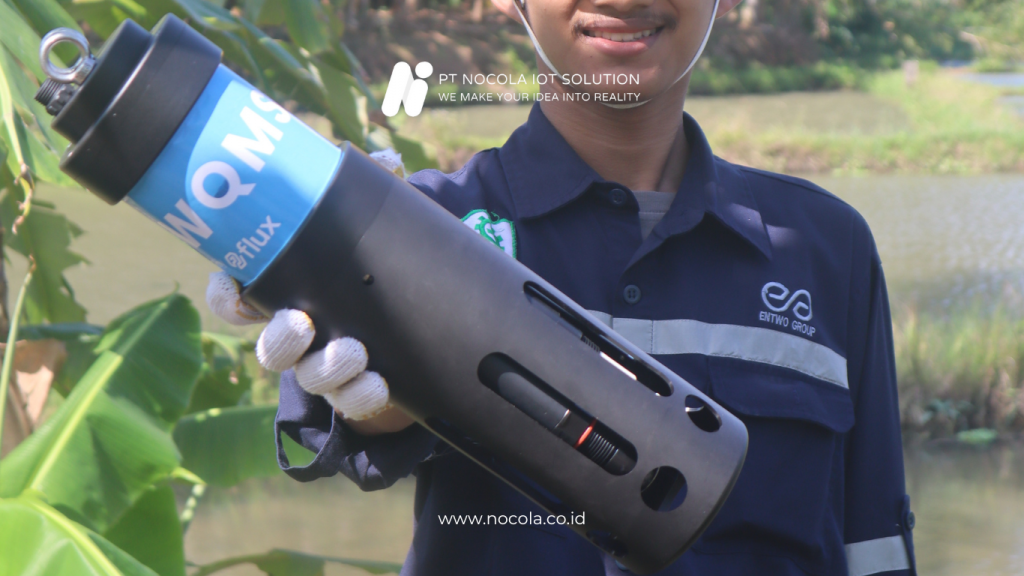
Read More: WQMS: A Real-Time Water Quality Monitoring Solution
Water quality plays a crucial role in various sectors, from manufacturing, power generation, waste processing, mining, to raw water management. Water serves not only as a raw material but also as a medium for processes, cooling, and environmental control.
However, on the ground, water quality monitoring processes still face many challenges.
One of the main challenges is that measurement methods are still manual and not continuous. Water sampling is usually performed at certain time intervals and then analyzed in a lab. This method cannot accurately reflect real-time water conditions.
When sudden changes in water quality occur, the manual system often fails to detect them promptly. In fact, small changes in certain parameters can have a significant impact on production processes, equipment safety, and the surrounding environment.
The next challenge is the limited visibility of data. Measurement data is often scattered across various documents, spreadsheets, or separate reports. This makes it difficult for operational teams and management to observe water quality trends over a certain period.
Additionally, the process of reporting water quality for both internal and external needs also requires considerable time. Data must be manually compiled, verified, and then restructured into report formats.
In the context of environmental compliance, companies are required to have accurate, sustainable, and traceable water quality data. Data readiness can pose administrative and reputational risks.
This condition demonstrates that companies need a water monitoring system that can operate continuously, is connected, and easily accessible. This is the foundation for the emergence of the concept of integrated WQMS as a solution for continuous water monitoring.
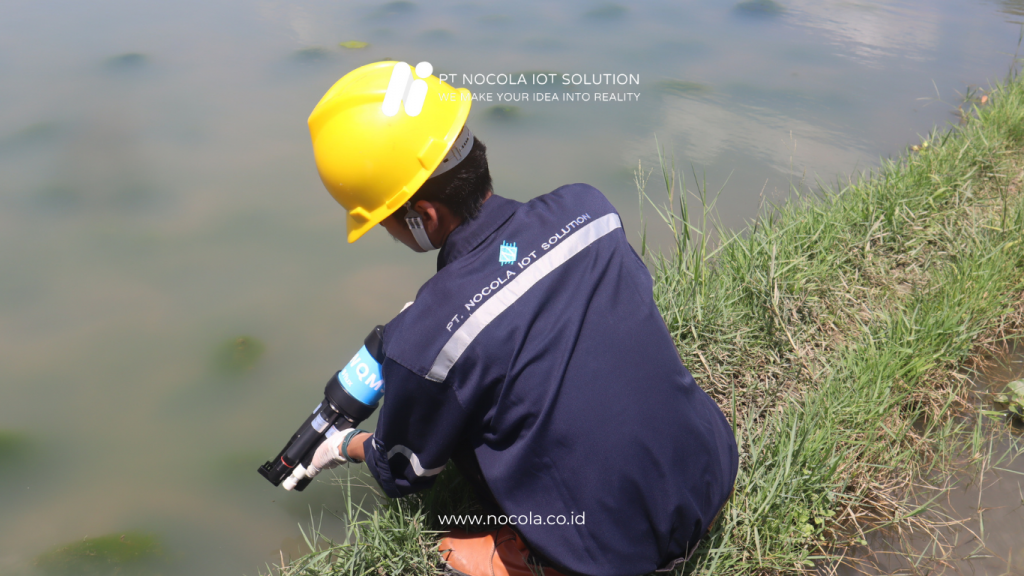
The integrated WQMS is a water quality monitoring system that combines sensors, data communication systems, and monitoring platforms into one cohesive system.
With WQMS, various water quality parameters can be monitored automatically and continuously. Sensors will read water conditions in the field and then send the data to a central system for display on a monitoring dashboard.
The integrated concept means that all components, from field devices to visualization systems, work within one ecosystem. Data is no longer standalone but becomes part of a connected monitoring system.
In its implementation, Nocola’s integrated WQMS is designed for various needs, such as:
This system allows companies to conduct continuous monitoring 24 hours a day, 7 days a week, without relying on manual sampling processes.
The main advantage of this approach is the availability of real-time data. When parameter values change, the system can record and display that data immediately.
The integrated WQMS also supports data centralization concepts. All water quality data from various monitoring points can be collected on one platform, facilitating cross-location monitoring.
With an integrated system, companies do not just know the current water condition but also have a historical data track record that can be utilized for long-term analysis.
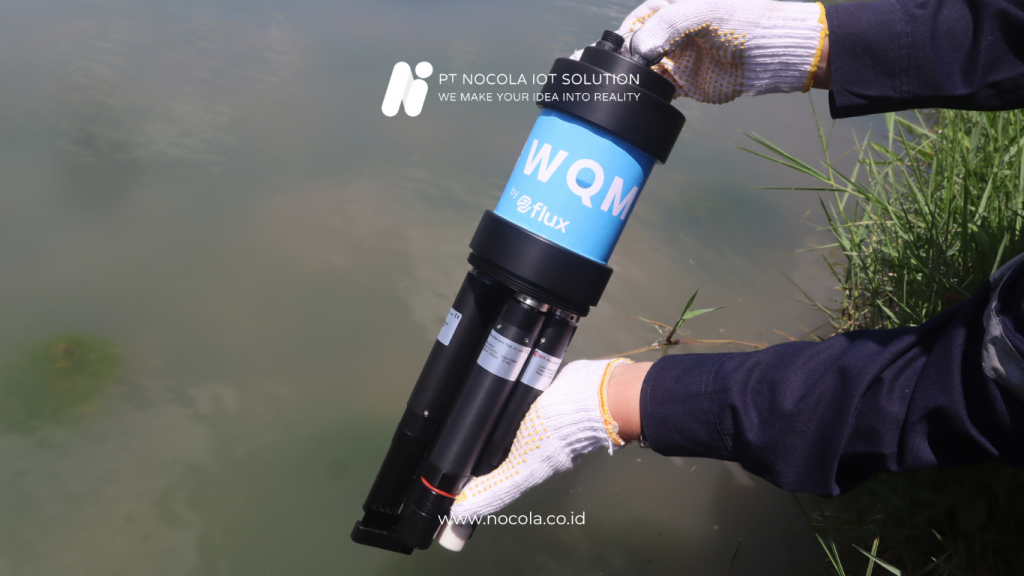
The integrated WQMS is built from several key components that support one another.
The first component is the water quality sensor. These sensors read various parameters related to water conditions. Each sensor is placed at predefined monitoring points according to operational needs.
The next component is the data acquisition and transmission system. The data from the sensor readings is automatically sent via a communication network to the central system. This process enables data to be received almost in real-time.
Next, there is the monitoring platform that functions as the central processing and visualization hub. Through the dashboard, users can monitor water quality conditions from various locations in a single view.
The integrated WQMS also comes with a data management system. Incoming data is not just displayed but also stored as historical data that can be accessed later.
Additionally, this system supports the grouping of monitoring points based on area, installation, or type of monitoring. This structure simplifies structured supervision for users.
In the context of integration, Nocola’s WQMS can be developed to connect with other systems in the operational environment, such as environmental monitoring systems, management dashboards, or company operational platforms.
With such architecture, the integrated WQMS not only functions as a monitoring tool but also as an environmental data source that can be utilized for various strategic company needs.
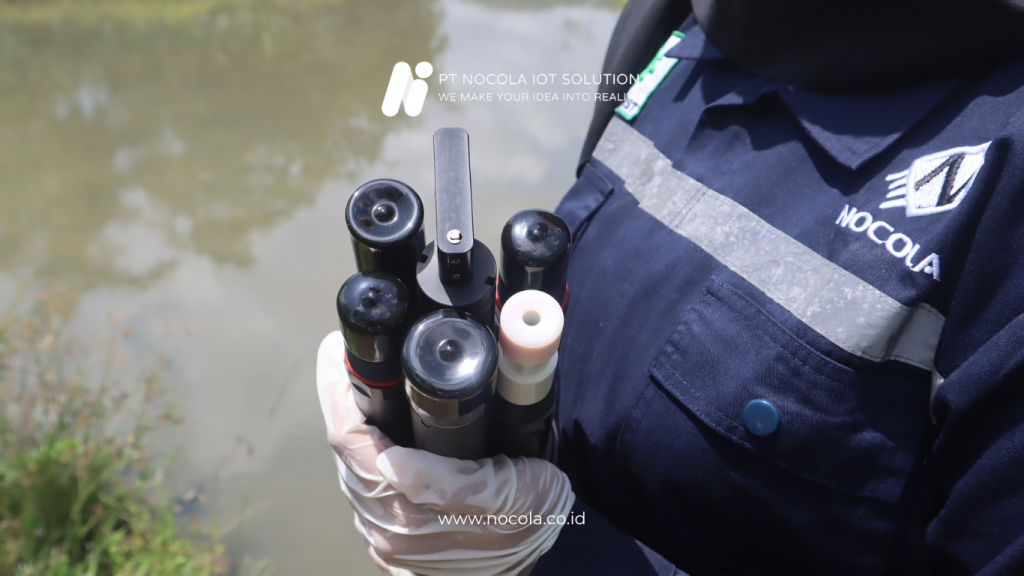
The application of integrated WQMS has a significant impact on company operations.
One of its main benefits is the increased response speed to changes in water quality. When anomalies occur, operational teams can quickly learn of the situation without having to wait for manual sample results.
This is particularly important in industrial environments where delayed action can lead to production process disruptions, equipment damage, or even potential pollution.
The next benefit is increased work efficiency. Data collection processes are no longer conducted manually, allowing teams to focus more on monitoring activities and corrective actions.
An integrated WQMS also helps companies conduct multi-location monitoring. Several monitoring points can be monitored simultaneously through a centralized dashboard.
From an environmental compliance perspective, the integrated WQMS greatly assists companies in providing neat, sustainable, and traceable data.
Systematically stored water quality data facilitates companies in preparing environmental reports. The auditing process becomes quicker because data is available digitally and structured.
Moreover, long-term data records enable companies to evaluate water quality trends. By understanding patterns of water quality changes, companies can prioritize corrective planning more accurately.
From a management perspective, data generated by the integrated WQMS can be used as a basis for decision-making, whether for process improvements, technology investments, or strengthening environmental policies.
In other words, the integrated WQMS not only helps companies monitor water quality but also strengthens environmental governance and operational sustainability.
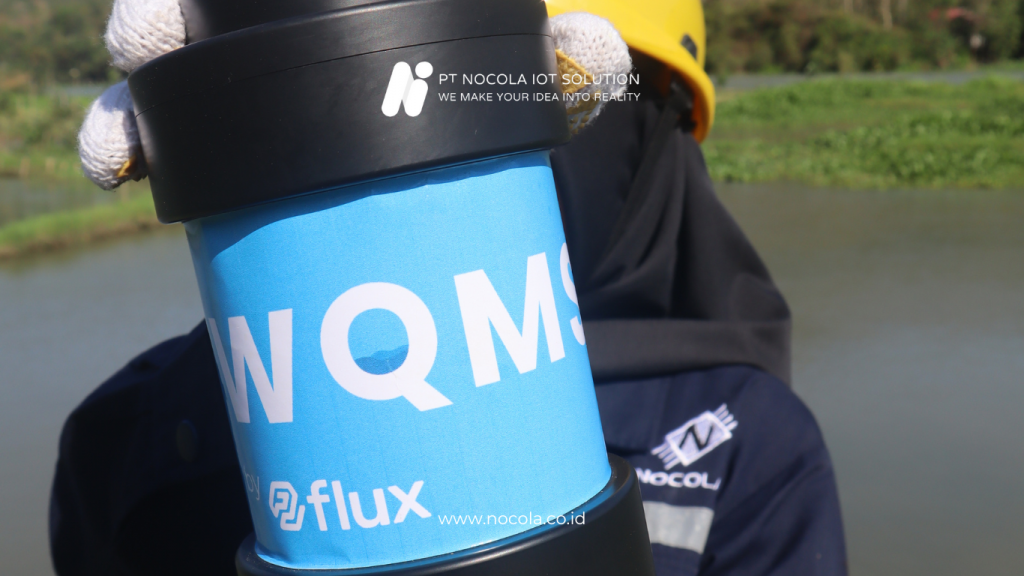
Digital transformation in environmental management has become a primary focus for modern industries. Companies can no longer rely solely on manual documentation or periodic reports.
The integrated WQMS plays an important part in this transformation by shifting monitoring processes from reactive to proactive.
With data available in real-time, companies can continuously monitor water conditions. When indications of declining water quality arise, preventive actions can be taken more swiftly.
The integrated WQMS also encourages the adoption of data-driven monitoring. All decisions related to water management can be supported by actual field data.
In Nocola’s solution ecosystem, the integrated WQMS can be developed as part of a broader industrial monitoring platform. Water quality data can be linked with other operational systems, such as maintenance systems, environmental reporting systems, or management dashboards.
This approach opens opportunities for companies to build more comprehensive and coordinated environmental monitoring systems.
Moreover, the use of the integrated WQMS also helps companies build an image as organizations concerned with the environment and committed to sustainable operational practices.
In the long term, the digital transformation of environmental monitoring through integrated WQMS will become an essential foundation for companies to meet regulatory demands, market pressures, and the increasing public expectations regarding environmental performance.
Continuous water monitoring is an essential requirement for companies that want to maintain operational quality while meeting increasingly stringent environmental management demands. Manual methods and periodic measurements are no longer adequate to cope with the dynamics of water conditions in the field.
The integrated WQMS presents a modern solution for real-time, automatic, and continuous water quality monitoring. Through a system of sensors, data transmission, and centralized dashboards, companies can monitor water conditions from various points more quickly and accurately.
By implementing Nocola’s integrated WQMS, companies gain tangible benefits in terms of operational response time, work efficiency, reporting ease, and enhanced compliance with environmental regulations.
More than just a monitoring system, the integrated WQMS serves as a crucial part of the digital transformation in environmental management. By leveraging structured and sustainable water quality data, companies can build data-driven decision-making, strengthen environmental governance, and support business sustainability in the future.
