Physical Address
304 North Cardinal St.
Dorchester Center, MA 02124
Physical Address
304 North Cardinal St.
Dorchester Center, MA 02124


Air quality has become a critical issue in industrial operations, urban areas, and public spaces. Industrial activities, transportation, and rapid urban development contribute significantly to the increase of air emissions and pollutants. If not properly monitored, these conditions can negatively impact public health, the environment, and a company’s compliance with environmental regulations.
Many organizations and companies are now realizing that air quality monitoring can no longer rely on periodic or manual measurements alone. A system is required that can monitor air conditions in real time, accurately, and be easily accessed by multiple stakeholders.
One solution that is increasingly being adopted is an AQMS (Air Quality Monitoring System). AQMS is a sensor-based and digital-platform air quality monitoring system designed to continuously measure, record, and display air quality data.
Through a digital approach, AQMS helps companies and environmental managers gain better visibility into air conditions at specific locations. The collected data can also be used to support decision-making, emission control planning, and environmental reporting.
In practice, air quality monitoring plays an important role in supporting pollution control, public health protection, and environmental quality improvement. Even global air quality standards and guidelines are issued by international organizations such as the World Health Organization, which emphasizes the importance of continuous air pollutant monitoring.
Through this article, we will comprehensively discuss how AQMS helps make air quality monitoring easier and more accurate, as well as its strategic benefits for industry and environmental management.
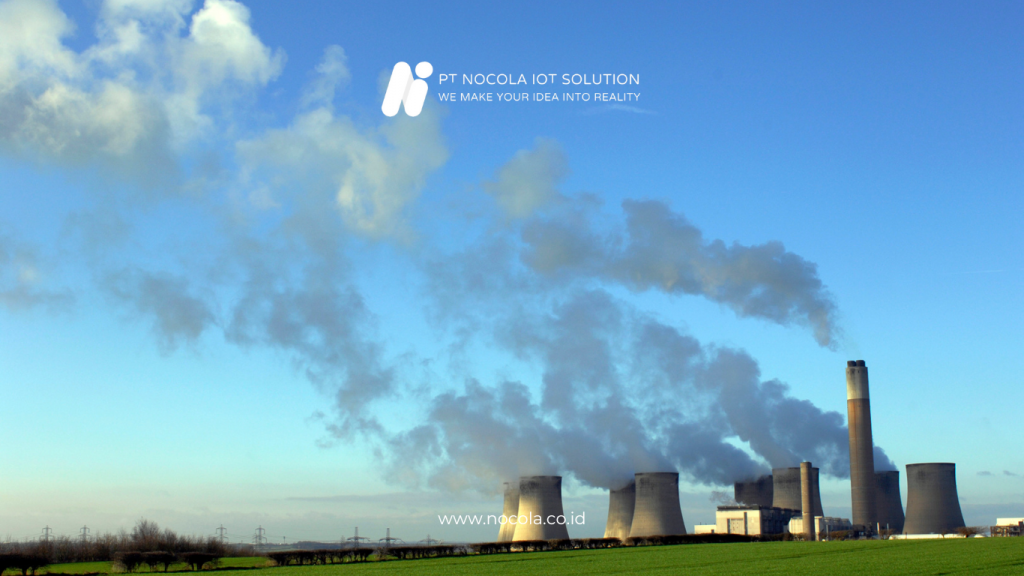
Many organizations still conduct air quality monitoring using conventional methods, such as periodic air sampling followed by laboratory analysis. While this approach can provide detailed measurement results, it also has significant limitations.
One of the main challenges is time limitation. Sampling only represents air conditions at a specific moment. Changes in air quality that occur outside the sampling period are not captured.
In reality, air pollutant concentrations can change very rapidly. Production activities, traffic volume, wind direction, and weather conditions can influence air quality within minutes.
In addition, laboratory analysis requires extra processing time before results become available. As a result, when pollutant concentrations suddenly increase, corrective actions are often taken too late.
Another challenge is limited spatial coverage. Monitoring multiple locations at the same time requires more personnel, equipment, and operational costs. This makes it difficult for companies or site managers to obtain a comprehensive view of overall air quality conditions.
From a data management perspective, manual recording is also prone to errors. Inconsistent data formats, the risk of data loss, and limited data processing and analysis capabilities are common issues.
These conditions indicate that conventional approaches are no longer sufficient to meet the demands of air quality monitoring in today’s digital and modern industrial environment.

AQMS is designed to overcome the limitations of conventional monitoring methods. The system operates by using air quality sensors installed at designated monitoring points.
These sensors automatically measure various air quality parameters and transmit the data to a central system. The data is then displayed through a digital dashboard that users can access in real time.
With AQMS, users no longer need to wait for laboratory results to understand current air conditions. Air quality information is available instantly, making monitoring and decision-making more efficient.
AQMS continuously stores data over time. Every measurement result is recorded in the system and can be accessed later for historical analysis, reporting, and environmental performance evaluation.
In industrial operations, AQMS helps environmental and occupational safety teams monitor air conditions around production areas. When pollutant concentrations exceed predefined thresholds, the system can provide automatic alerts to users.
This real-time approach allows mitigation actions to be implemented more quickly, such as adjusting production processes, improving ventilation systems, or rescheduling certain activities.
AQMS also plays an important role in supporting data transparency. Digital air quality data can be accessed by management, auditors, and other stakeholders in accordance with company policies.

AQMS is designed to monitor a wide range of air quality parameters that are relevant to industrial operations and environmental management.
Commonly monitored parameters include fine particulate matter, pollutant gases, and supporting environmental conditions such as temperature and humidity.
Fine particulate matter is a critical indicator because it can directly affect respiratory health. Meanwhile, pollutant gases such as carbon monoxide, nitrogen dioxide, and sulfur dioxide are also major concerns in industrial and urban air quality monitoring.
With AQMS, all of these parameters can be monitored simultaneously and continuously. Data from each sensor is displayed in the form of graphs, tables, and easy-to-understand visual indicators.
In addition to showing current conditions, the system allows users to compare data over time to identify trends in air quality improvement or deterioration.
Users can define specific threshold values for each parameter. When measurement values exceed these limits, the system will automatically send notifications or alerts.
This approach enables companies to manage air quality monitoring in a more structured and proactive manner, rather than reacting only after problems occur.
Through multi-parameter monitoring, AQMS provides a more comprehensive overview of air conditions at a given location.

The implementation of AQMS offers a wide range of strategic benefits for companies, industrial zone operators, and institutions responsible for environmental management.
The main benefit is the ease of monitoring air quality. Teams no longer need to conduct continuous manual measurements, as data is automatically available through the system.
In terms of accuracy, AQMS helps reduce the risk of data recording errors. Data is collected directly from sensors and stored digitally, making it more consistent and traceable.
AQMS also supports improved compliance with environmental regulations. Historical data records make it easier for companies to prepare environmental reports, audits, and licensing documentation.
For management, AQMS provides relevant information for strategic decision-making. Air quality data can be linked with specific operational activities, helping evaluate the environmental impact of production processes.
In addition, implementing AQMS helps enhance a company’s public image. A transparent commitment to air quality monitoring demonstrates the company’s concern for employee health and the surrounding community.
In the long term, AQMS also contributes to pollution prevention efforts. By identifying patterns and sources of pollutant increases, companies can develop more effective emission control strategies.

To deliver greater value, AQMS can be integrated with other digital systems within the company’s environment.
Through this integration, air quality data can be combined with operational data, production data, and equipment maintenance data. This approach enables companies to understand the relationship between operational activities and their impact on air quality.
Within an integrated monitoring system, users can monitor various environmental and operational indicators through a single dashboard. This simplifies coordination among production teams, environmental teams, and management.
Integration also enables the implementation of digital workflows. For example, when AQMS detects an increase in pollutant levels, the system can automatically trigger follow-up actions, such as creating inspection tickets or assigning field personnel.
This approach helps accelerate responses to potential environmental issues while improving overall operational efficiency.
Furthermore, integrated AQMS data can be used for advanced analysis, such as environmental impact modeling, evaluation of emission control system effectiveness, and planning for future environmental performance improvements.
As a result, AQMS does not only function as a measurement tool, but also becomes a key component of the digital transformation ecosystem for environmental management and industrial operations.
Air quality monitoring is a vital element in protecting health, safety, and the sustainability of industrial operations and surrounding areas.
Manual and conventional approaches can no longer meet the growing need for fast, accurate, and continuous data. AQMS provides a modern solution for real-time, structured, and easily accessible air quality monitoring.
By monitoring multiple air quality parameters, AQMS helps companies improve environmental visibility, accelerate responses to potential pollution events, and support regulatory compliance.
The integration of AQMS with digital systems also opens opportunities to build a more efficient and data-driven integrated monitoring platform.
By utilizing AQMS optimally, companies and site operators can establish more transparent, accurate, and sustainable air quality management practices, while supporting the creation of a healthier environment for all stakeholders.
