Physical Address
304 North Cardinal St.
Dorchester Center, MA 02124
Physical Address
304 North Cardinal St.
Dorchester Center, MA 02124

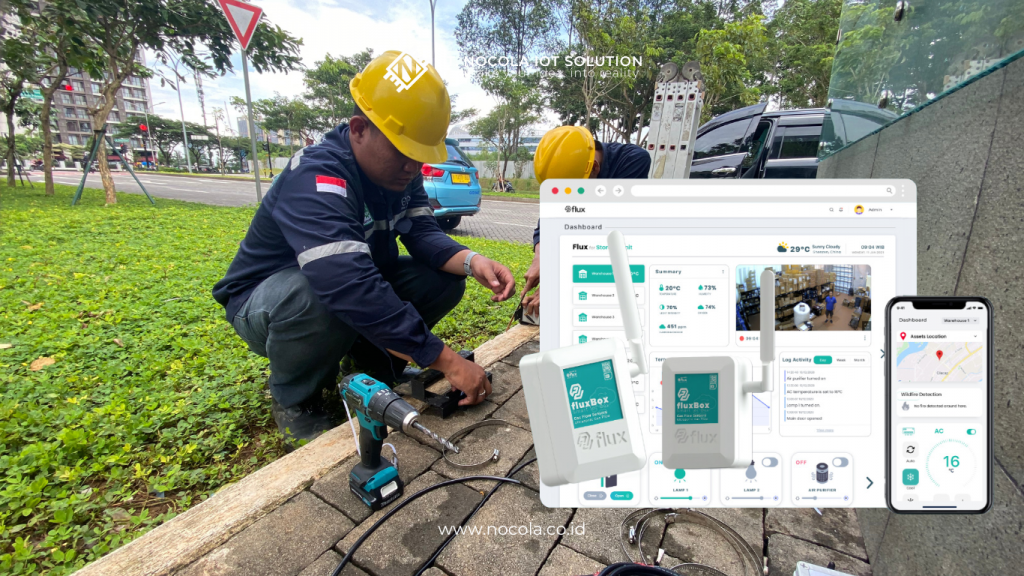
The manufacturing industry is one of the sectors that has gained the most benefits from advancements in Internet of Things (IoT) technology. With advanced connectivity and the ability to monitor and control various devices in real-time, IoT plays a crucial role in the fourth industrial revolution. One of the leading IoT solutions that plays a key role in this transformation is Flux by Nocola. Flux brings significant advancements in data management, device monitoring, and integrated connectivity. In this article, we will discuss how Flux helps the manufacturing industry adopt IoT more effectively.
Read More: Nocola Flux: IoT Solutions for a More Connected and Efficient Smart City
Flux is an IoT platform developed by Nocola IoT Solution, offering a comprehensive solution for connecting, managing, and monitoring various devices in the manufacturing industry. This platform is designed to simplify the integration of IoT devices into existing manufacturing systems, ensuring better operational monitoring and control.

Read More: IoT Solutions from Nocola for Automotive Manufacturing and Transportation
IoT has revolutionized the manufacturing industry by enabling companies to improve efficiency, reduce downtime, and enhance workplace safety. IoT devices connected to a network allow accurate data collection from various points in the production chain. This helps in quicker problem identification, resource optimization, and increased production output.


One of the biggest advantages of Flux is its ability to manage data on a large scale. Data from various devices in the manufacturing industry is often dispersed and difficult to analyze simultaneously. Flux simplifies this process by providing a centralized platform for data collection, storage, and analysis.
Flux uses cloud technology to store data generated by IoT devices. This allows data to be accessed from anywhere, at any time, by authorized personnel. The use of cloud technology also ensures that data remains secure, organized, and ready for analysis. This way, decision-making can be done more quickly and accurately.
One of Flux’s key features is its ability to conduct in-depth data analysis. The collected data can be analyzed in real-time to detect trends, anomalies, or potential issues. With enhanced analytics, manufacturing industries can improve efficiency, plan better maintenance, and identify optimization opportunities.

Read More: Embracing the Future of Industry with Nocola’s Integrated IoT Solutions
Flux supports multi-platform connectivity, which is essential in modern manufacturing. With various machines, devices, and sensors from different manufacturers, integration and connectivity have been a significant challenge for many industries. Flux solves this by providing seamless device connectivity, enabling real-time data exchange between different systems.
With the growth of IoT in the manufacturing industry, the need for integrated platforms like Flux has become more important than ever. Flux by Nocola offers comprehensive IoT solutions, enabling manufacturers to improve efficiency, reduce downtime, enhance safety, and optimize resource management. By adopting IoT solutions such as Flux, manufacturers can stay competitive in a rapidly evolving industrial landscape, ensuring long-term success and sustainability.