Physical Address
304 North Cardinal St.
Dorchester Center, MA 02124
Physical Address
304 North Cardinal St.
Dorchester Center, MA 02124

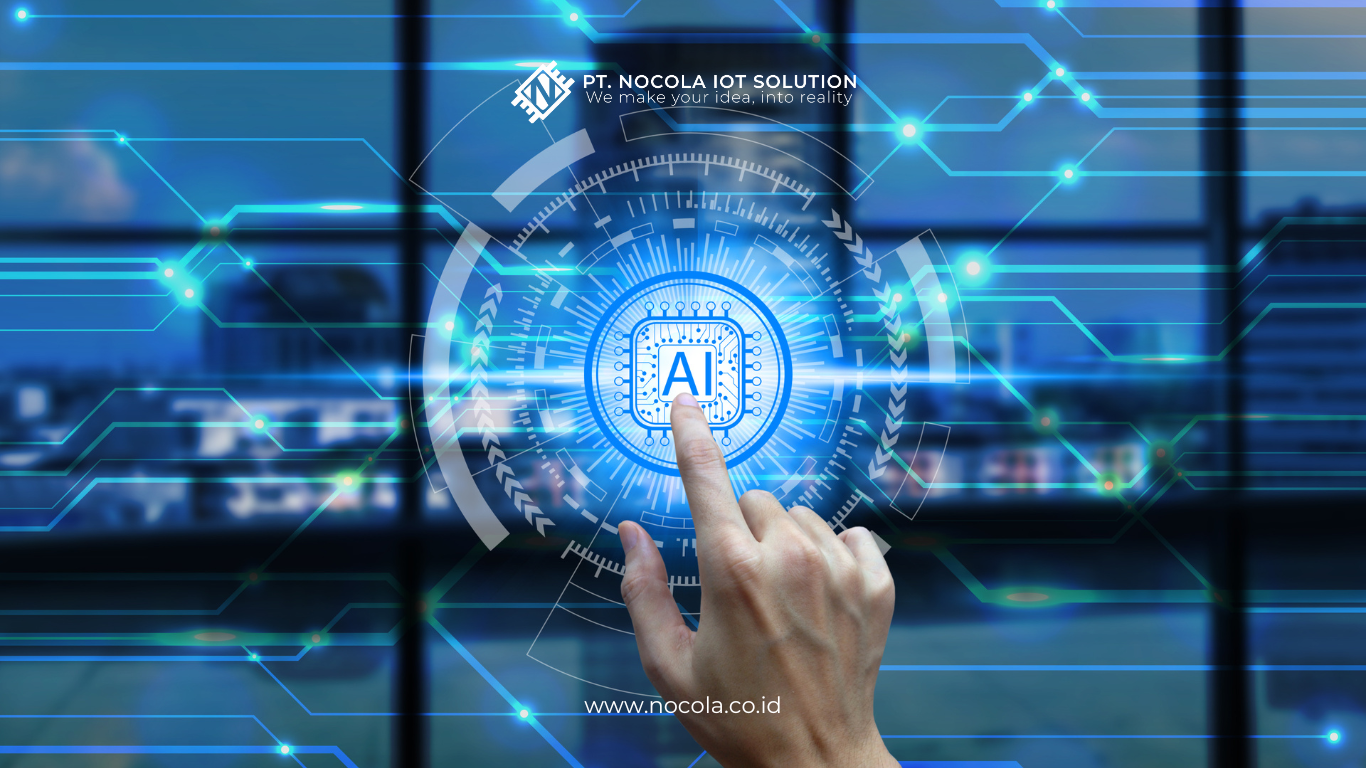
In the rapidly evolving digital era, technologies like Artificial Intelligence (AI) and Machine Learning (ML) have become key drivers of transformation across various business sectors. They not only accelerate operational processes but also reshape how companies innovate, interact with customers, and make decisions. This article will discuss how AI and ML play a critical role in changing the modern business landscape and what can be expected in the future.
Read more: IoT Based Pest Control: A Modern Solution for Sustainable Agriculture
AI refers to technology that enables machines or computer systems to mimic human intelligence in performing complex tasks such as voice recognition, data analysis, and natural language processing. Machine Learning (ML), a subset of AI, involves developing algorithms that allow computers to “learn” from data without being explicitly programmed.
In recent years, the advancement of AI and ML has been propelled by big data growth, increased computing power, and innovations in sophisticated algorithms. AI and ML have moved from being purely technical terms to becoming integral parts of various industries, from healthcare and finance to e-commerce.
Read More: The Future of AI Technology: How Artificial Intelligence Will Impact Jobs and Business
Modern businesses utilize AI and ML in numerous ways to enhance productivity, efficiency, and customer service. Here are some examples of how AI and ML are being widely implemented:
Many manual tasks that used to be time-consuming are now automated thanks to AI. For example, in the financial sector, AI is used to process insurance claims, verify identities, and analyze transaction data to detect fraud.
AI and ML enable businesses to gain deep insights into customer behavior and preferences. By analyzing customer data, companies can provide more relevant product recommendations and improved personalization, as seen in e-commerce and music streaming platforms.
Companies use ML algorithms to analyze historical data and make future predictions. In manufacturing, predictive analytics can be used to monitor machine health and prevent downtime by predicting failures before they occur.
Many businesses now use AI-powered chatbots to handle customer queries, offering 24/7 support and improving the overall customer experience. Virtual assistants like Siri or Alexa use AI to respond to user requests.
Read More: Integrating AI and IoT with Flux from Nocola: The Future of Automated Manufacturing
There are numerous advantages for companies that adopt AI and ML in their operations. Some of these include:
By automating routine tasks, companies can reduce human error and increase overall efficiency, allowing employees to focus on higher-value work such as innovation and strategy development.
ML enables faster and more accurate data analysis, allowing companies to make more informed decisions based on insights gained from data. This can encompass everything from marketing strategies to inventory management.
By using AI for personalization and customer support, companies can offer more enjoyable and relevant experiences to consumers, such as better product recommendations based on purchase history or 24/7 customer support.
AI allows businesses to scale their operations without significantly increasing their workforce, which is crucial for companies looking to expand into new markets or handle growing demand.
Read More: Integration of Nocola IoT Solutions with ERP Systems: Improving Efficiency and Decision Making
While AI and ML bring many advantages, companies face several challenges when trying to implement these technologies.
ML requires vast amounts of data to learn and make accurate predictions. However, not all companies have access to sufficient data or the infrastructure needed to process it.
With the increasing use of AI, there are security and privacy risks that must be addressed. Data breaches or unethical use of data can damage a company’s reputation and lead to legal issues.
There is currently a shortage of skilled professionals with expertise in AI and ML. Companies often have to compete for top talent in this field, which can be a barrier to effectively adopting the technology.
Adopting AI and ML can be a costly investment, especially for small businesses. Companies need to consider the costs of technological infrastructure, software development, and staff training to manage these technologies.
Read More: Nocola Smart Agriculture Solutions: Optimizing Agricultural Yields with IoT and Real-Time Data
Despite the challenges, the future of AI and ML in business is bright. Businesses that successfully implement these technologies can expect increased competitiveness, enhanced innovation, and improved operational efficiency. As AI and ML continue to evolve, their applications will expand, driving new business models and reshaping industries globally.
With the development of deep learning and reinforcement learning, AI will become increasingly autonomous in making complex decisions without human intervention. For example, autonomous vehicles capable of driving themselves and inventory management systems that can manage stock without human involvement.
In the future, AI will not only be used for operational tasks but also in strategic decision-making at the management level. AI algorithms can assist company executives in formulating business strategies based on more in-depth data analysis.
AI will increasingly integrate with other technologies, such as the Internet of Things (IoT), blockchain, and cloud computing. This will create a more advanced digital ecosystem, allowing companies to optimize their operations holistically.
As AI becomes more sophisticated, ethical issues surrounding its use will also receive greater attention. In the future, there will be more regulations and guidelines to ensure that AI usage remains responsible and ethical.
AI and Machine Learning have become transformative forces in modern business, opening up new opportunities for efficiency, personalization, and innovation. Although there are challenges in implementing these technologies, the benefits they offer far outweigh the drawbacks, providing a competitive edge for companies that successfully adopt them. In the future, as AI continues to advance, we will see businesses become smarter, more autonomous, and adaptive to environmental changes. For companies that want to stay relevant and competitive, adopting AI and ML is a step that cannot be overlooked.