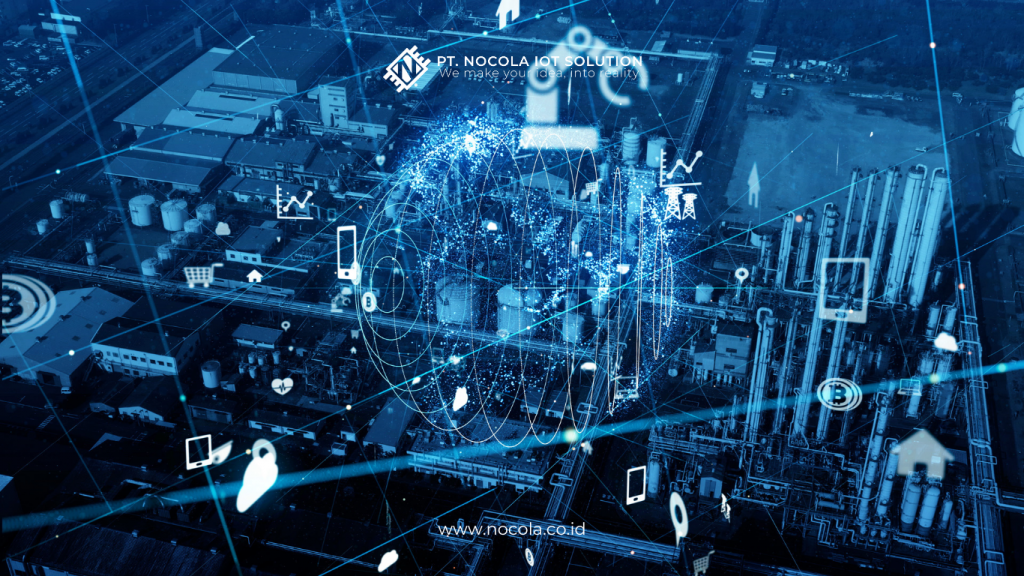
Industry 4.0 has transformed the global landscape with advanced technologies that connect machines, systems, and humans more integratively. Amidst these changes, the Internet of Things (IoT) plays a crucial role in facilitating this transformation. This article will explain how IoT has become a major driver in the Industry 4.0 revolution, impacting various economic sectors and significantly enhancing efficiency and productivity.
The Internet of Things (IoT) refers to a network of digitally connected physical devices, allowing these devices to collect and exchange data through sensors and other embedded devices. The basic concept of IoT is to create an ecosystem where these devices can communicate and collaborate automatically without direct human intervention.
Automated Manufacturing Industry 4.0 has accelerated the adoption of automation in various production lines. With the help of IoT, factories can integrate smart sensors into machines and equipment, allowing real-time monitoring of operational conditions and performance. This not only optimizes production processes but also reduces unplanned downtime and overall production costs.
Supply Chain Management IoT has transformed the way supply chain management operates by enabling real-time tracking of shipped goods. IoT sensors can monitor the location and condition of goods, such as temperature and humidity, allowing companies to identify potential issues before they affect deliveries. With accurate data analysis, inventory planning can be optimized, reducing logistics costs and improving operational efficiency.
Predictive Maintenance IoT enables the shift from schedule-based maintenance to predictive maintenance. IoT sensors can continuously monitor the condition of machines, collecting performance and reliability data. Using smart data analysis, systems can predict maintenance needs and estimate the optimal time for repairs or component replacements. This approach not only reduces maintenance costs but also extends the operational lifespan of machines.
Healthcare IoT has revolutionized the healthcare sector by enhancing patient monitoring and data-driven care. IoT devices such as connected medical monitors allow healthcare providers to monitor patients in real-time, analyze vital data, and deliver more timely and focused care.
Transportation In the transportation industry, IoT has enabled the development of autonomous vehicles and smart transportation systems. IoT sensors installed in vehicles and road infrastructure can monitor traffic conditions, reduce accidents and congestion, and improve travel efficiency.
Agriculture IoT has facilitated smart farming by enabling more efficient and sustainable crop management. IoT sensors can monitor soil conditions, temperature, humidity, and plant water needs in real-time. With accurate data analysis, farmers can optimize resource usage, increase crop yields, and reduce environmental impact.
Despite its various benefits, IoT also faces serious challenges related to data security and privacy. Connected systems increase the risk of cyber-attacks, such as data theft or device control takeover. To address these challenges, stringent security standards, strong data encryption, and greater awareness of potential risks involved in IoT implementation are needed.
Conclusion
The Internet of Things (IoT) is a key pillar in the Industry 4.0 revolution, changing the way various sectors operate and innovate. By leveraging advanced connectivity and data analysis, IoT enhances efficiency, productivity, and service quality across industries. However, challenges related to security and privacy must be addressed seriously to ensure the sustainable and secure adoption of IoT. With continuous technological development and appropriate regulations, IoT can continue to play a major role as a catalyst in guiding Industry 4.0 towards a smarter and more connected era.