Physical Address
304 North Cardinal St.
Dorchester Center, MA 02124
Physical Address
304 North Cardinal St.
Dorchester Center, MA 02124

Revolution of Industry 4.0 has brought significant changes to various industrial sectors, especially in manufacturing. By combining Artificial Intelligence (AI) and the Internet of Things (IoT), the manufacturing industry can now achieve unprecedented efficiency. This article will discuss in depth how AI and IoT play a role in the Revolution of Industry 4.0, their impact on the manufacturing industry, and the challenges and opportunities they present.
Read More: Multifunctional AI Widely Used in Offices
The Revolution of Industry 4.0 refers to the fourth phase of industrial development, marked by the application of advanced technologies such as AI, IoT, Big Data, and automation in production processes. The main goal of Industry 4.0 is to create “smart factories” that can operate automatically, optimize production processes, and increase efficiency and productivity.
Read More: Utilizing IIoT to Optimize Supply Chain
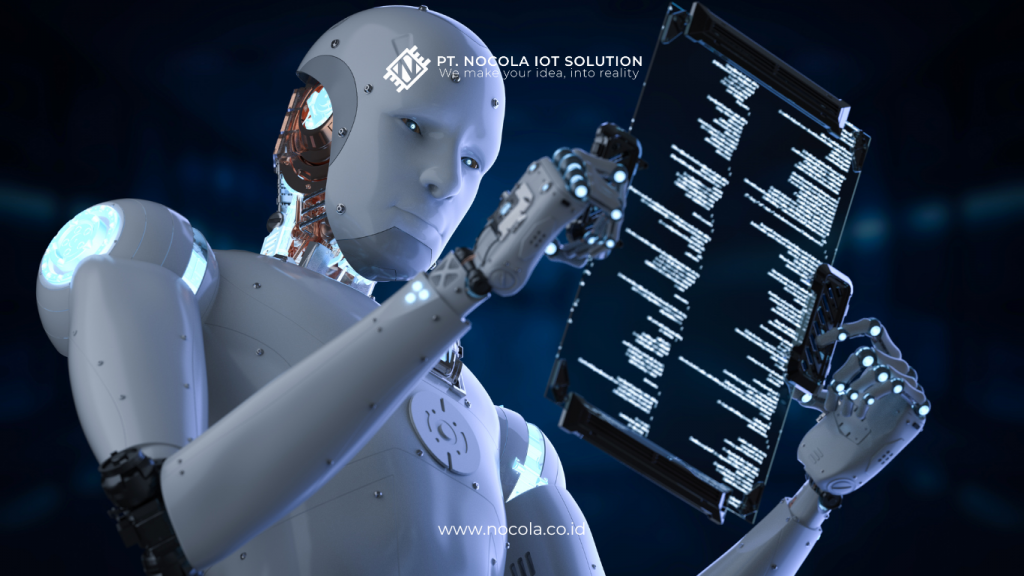
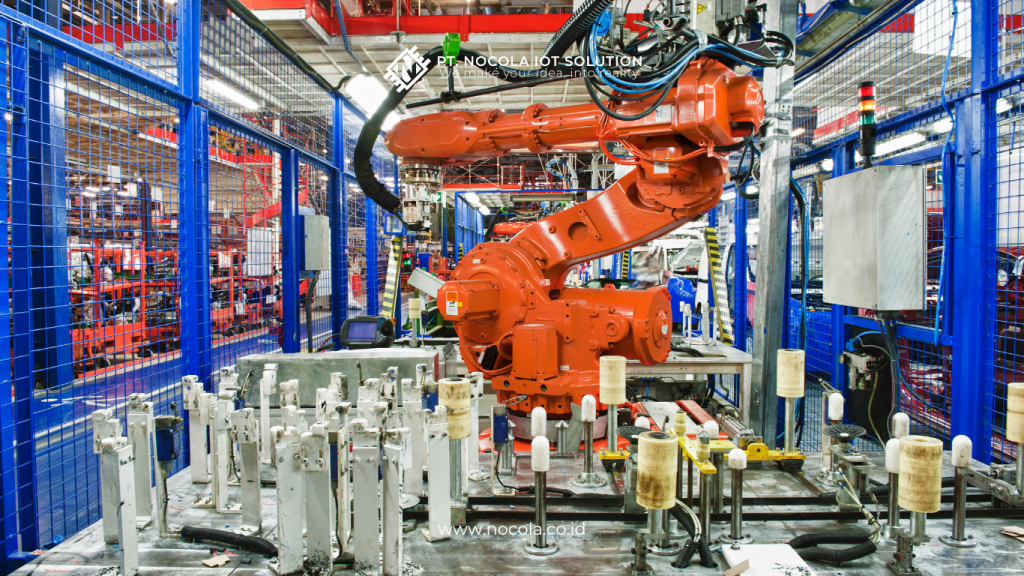
One of the primary applications of AI in manufacturing is automation and robotics. Robots equipped with AI technology can perform complex tasks with high precision, reduce human errors, and improve product quality. Moreover, these robots can work continuously, thereby increasing production output.
AI also plays a crucial role in predictive maintenance. By using machine learning, AI can analyze data from production machines to predict when a machine will experience a failure. This allows companies to perform maintenance before the breakdown occurs, reducing downtime and saving repair costs.
AI can be used to analyze production data in real-time and identify areas that can be optimized. For instance, AI can recommend adjustments in production speed, energy usage, or resource allocation to achieve higher efficiency.
Read More: AI and the Future of Work: Challenges and Opportunities
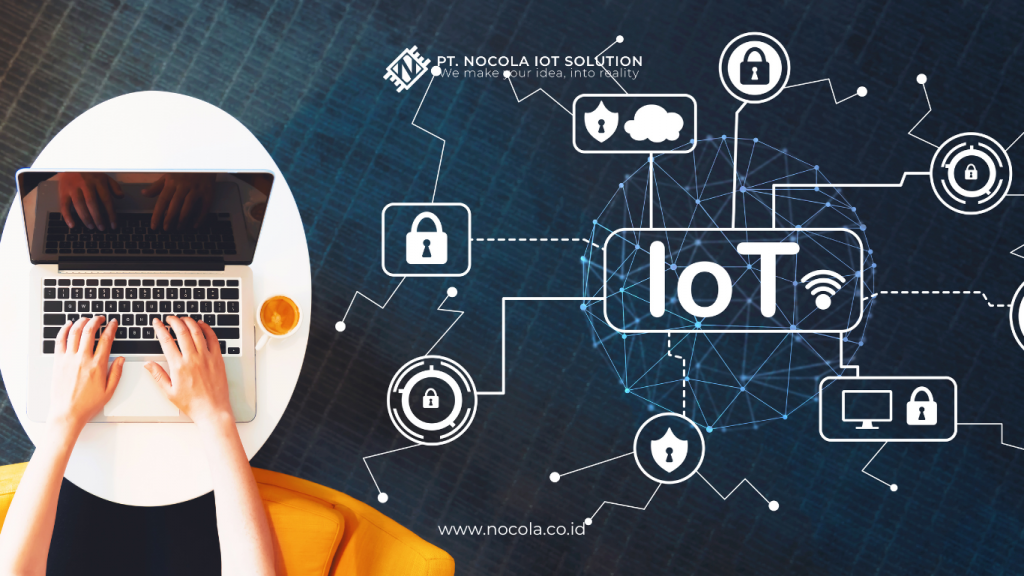
IoT enables companies to monitor and control production processes remotely. IoT sensors installed on production machines can send real-time data to a central system, allowing for quick and accurate decision-making.
IoT also assists in supply chain management. By using sensors and IoT devices, companies can track the movement of raw materials and finished products, monitor stock in real-time, and optimize deliveries. This helps reduce logistics costs and ensures that production is not disrupted due to a lack of raw materials.
IoT can enhance workplace safety in factories. IoT sensors can detect hazardous conditions and provide early warnings to workers. Additionally, wearable devices connected to IoT can monitor the health and safety of workers, allowing companies to take preventive actions to reduce the risk of accidents.
Read More: Developing an AI-Based Customer Experience Platform: Nocola and Proto Collaboration
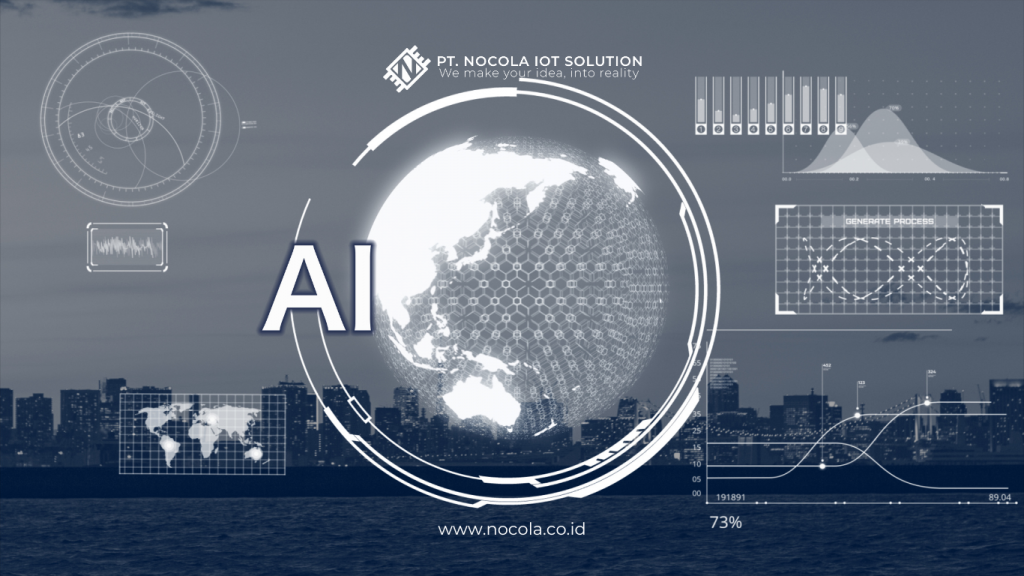
The integration of AI and IoT enables the creation of connected and intelligent production systems. Data collected by IoT sensors can be analyzed by AI to provide valuable insights into production conditions. With this information, companies can make better decisions and improve operational efficiency.
The integration of AI and IoT also results in smarter automation. For instance, machines equipped with IoT sensors can automatically adjust production parameters based on AI analysis. This not only increases efficiency but also ensures consistent product quality.
With the integration of AI and IoT, decision-making in the manufacturing industry becomes more data-driven. Real-time data from the entire production process can be analyzed to identify trends, patterns, and anomalies. This allows companies to quickly respond to changing conditions and continuously optimize operations.
Read More: AI-based Cybersecurity: Protecting the Digital Frontier
One of the biggest impacts of integrating AI and IoT in manufacturing is the increase in efficiency and productivity. Automation and optimization of production processes enable companies to produce more with fewer resources. Additionally, predictive maintenance and reduced downtime help lower operational costs.
With AI and IoT, companies can ensure higher product quality. Real-time monitoring and data analysis allow for early detection of product defects and adjustments to the production process to avoid quality issues. This not only increases customer satisfaction but also reduces re-production costs.
Manufacturing industries that adopt AI and IoT technologies become more flexible and responsive to market demand changes. Intelligent production systems can be easily adjusted to produce various products without requiring major changes in infrastructure. This allows companies to quickly respond to market trends and customer demands.
Despite the many benefits offered by AI and IoT, there are also challenges to overcome. One of the main challenges is the high implementation cost. Adopting these advanced technologies requires significant investment in infrastructure, hardware, and software. Additionally, there are challenges related to data security and privacy, as well as the need to develop new skills among the workforce.
On the other hand, the integration of AI and IoT also opens up huge opportunities for innovation. Companies that successfully adopt these technologies can create new products and services that were previously impossible. Moreover, AI and IoT also enable the creation of new, more efficient, and profitable business models.
Read More: IoT di Industri Retail: Transformasi Pengalaman Belanja
Siemens is one of the companies that have successfully integrated AI and IoT in its operations. By using an IoT platform called MindSphere, Siemens can collect and analyze data from various production machines. AI is then used to optimize production processes and improve operational efficiency.
General Electric (GE) has also adopted AI and IoT technologies through a platform called Predix. This platform allows GE to monitor the condition of production machines in real-time and perform predictive maintenance. As a result, GE can significantly reduce downtime and increase production efficiency.
Read More: Nocola’s IoT Solutions for Automotive Manufacturing and Transportation
The manufacturing industry will continue to evolve along with the development of AI and IoT technologies. Technologies such as 5G, edge computing, and blockchain will further enhance the capabilities of smart factories. Additionally, advancements in AI, such as deep learning and computer vision, will open new opportunities for automation and optimization of production processes.
In the future, collaboration between humans and machines will become closer. Human workers will work alongside intelligent robots in safe and efficient work environments. AI will assist workers in decision-making and optimizing routine tasks, while humans will focus on tasks that require creativity and intuition.
The integration of AI and IoT in the manufacturing industry is a crucial step in the Revolution of Industry 4.0. This technology enables the creation of smart factories that are more efficient, productive, and flexible. Although there are challenges to overcome, the benefits offered by AI and IoT are far greater. With the right adoption of technology, manufacturing companies can improve product quality, reduce operational costs, and create new innovations.
The future of the manufacturing industry will continue to be influenced by the development of AI and IoT technologies. Collaboration between humans and machines will become increasingly important, and companies that successfully integrate these technologies will have a significant competitive advantage. Therefore, now is the right time for manufacturing companies to start their journey towards Industry 4.0 and harness the full potential of AI and IoT.