Physical Address
304 North Cardinal St.
Dorchester Center, MA 02124
Physical Address
304 North Cardinal St.
Dorchester Center, MA 02124

Digital transformation is now penetrating various sectors, including agriculture. With the ever-increasing food demand and challenges such as climate change, land constraints, and labor efficiency, innovation becomes a necessity that cannot be delayed. One technology that presents a significant impact is the Internet of Things (IoT). In the context of Indonesia, which is rich in agricultural potential, IoT serves as a strategic solution to enhance the quality, productivity, and sustainability of farming.
Nocola, as an Indonesian IoT technology company, provides a range of smart farming solutions that are easy to implement—even for traditional farmers who are transitioning to digital systems for the first time. By focusing on usability, data accuracy, and automation, Nocola is helping accelerate the digitalization of the agricultural sector.
This article discusses how IoT can be a game-changer for Indonesian agriculture and how Nocola’s solutions can serve as a practical, scalable, and efficient foundation for smart farming.
Read Also: Precision Agriculture: Smart Potato Farming with IoT Technology
Farmers now face extreme, unpredictable weather. Without accurate data, decisions such as planting, fertilizing, and watering are often based on intuition rather than information.
The use of fertilizers, water, and pesticides must be precise. Without monitoring, wastage frequently occurs.
Younger generations are beginning to leave the agricultural sector. Therefore, farmers need technologies that can reduce manual labor.
Without data, farmers struggle to evaluate, predict, or improve planting patterns. IoT becomes the primary solution to provide accurate data continuously.
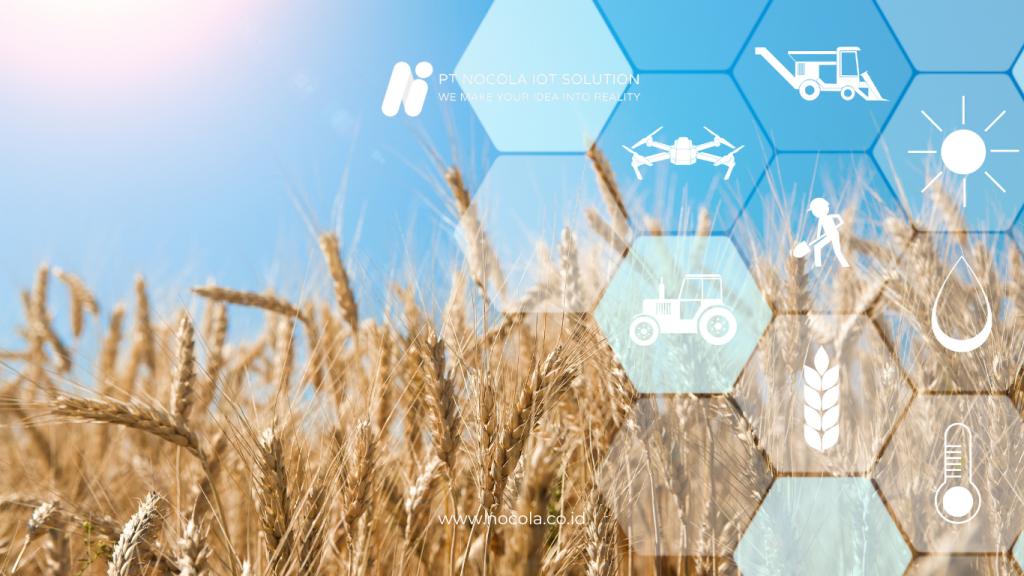
IoT in agriculture refers to the use of sensor devices, gateways, and monitoring software to collect data from land, crops, equipment, and the surrounding environment. All this data is then processed so that farmers can make more informed decisions.
IoT enables farmers to reduce manual work and improve efficiency from upstream to downstream.
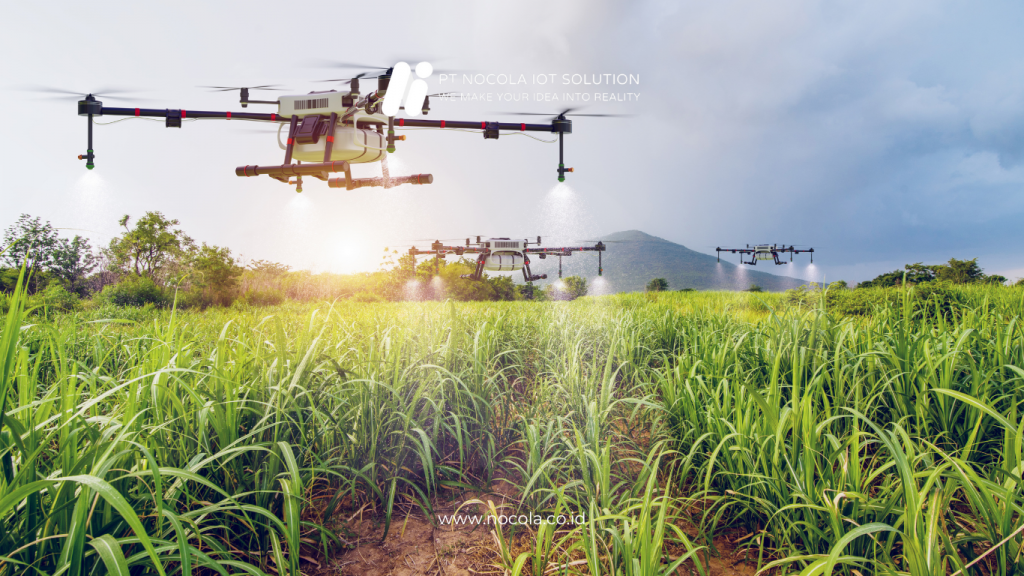
Nocola provides a complete IoT ecosystem that is easy to integrate for Indonesia’s agricultural needs. Here are some components that serve as the backbone of smart farming implementation:
Nocola offers sensors used to monitor environmental factors such as:
These sensors help farmers accurately understand the condition of their crops in real-time.
One of the most needed technologies in agriculture is irrigation automation.
With data from soil sensors, Nocola’s smart irrigation system can automatically turn watering on or off.
With AI camera systems, farmers can:
AI integration helps analyze images, identify patterns, and provide alerts if issues arise.
All of Nocola’s IoT devices can connect to the Flux platform, enabling:
Flux is easy to use for both novice farmers and large-scale agricultural companies.
Nocola’s AI analyzes historical data to provide insights such as:
With AI-based analytics, decision-making becomes much more precise.
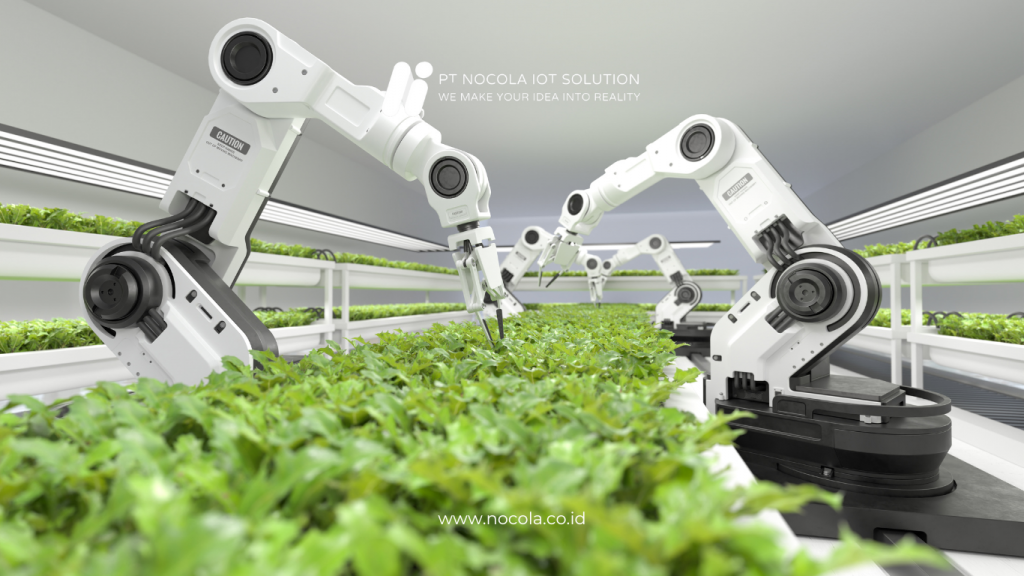
With IoT, farmers no longer guess land conditions. All decisions are based on real-time data.
IoT helps optimize:
As a result, harvests increase significantly.
With proper control over water, fertilizers, and labor—production costs can be reduced without sacrificing harvest quality.
Nocola’s IoT solutions have:
Even non-technical farmers can operate it.
With efficient resource use and precise data, farming becomes more environmentally friendly.
IoT technology is a revolutionary solution for Indonesia’s agricultural sector. With support from sensors, smart irrigation, real-time monitoring, and AI analytics, farmers can significantly enhance efficiency, productivity, and sustainability.
Nocola, as a provider of local IoT technology, offers smart farming solutions that are not only sophisticated but also easy for any farmer to implement. With a practical, accurate, and scalable approach, Nocola’s IoT paves the way for a more modern, efficient, and competitive future in Indonesian agriculture.

