Physical Address
304 North Cardinal St.
Dorchester Center, MA 02124
Physical Address
304 North Cardinal St.
Dorchester Center, MA 02124
In the era of modern industry, the Internet of Things (IoT) is no longer a future technology but an actual necessity for industries that wish to remain relevant and competitive. The challenges of system complexity, data security, and integration needs demand mature and integrated IoT solutions.
Nocola is helping industries adapt faster by providing easy-to-implement, scalable, end-to-end IoT solutions based on real-world needs. Through real-time monitoring, data integration, and accurate insights, Nocola enables industries to transition to more intelligent and efficient operations.
In the face of rapid changes, collaboration with the right IoT partner becomes key. With Nocola, industries not only keep up with IoT developments in 2026 but are also prepared to leverage them as the main engine for growth and digital transformation.
Also Read: Digital Transformation Made Easier with Nocola IoT Solutions
IoT in 2026 has evolved far beyond mere sensor data collection. This technology has become the backbone of data-driven industries. Sensors, smart devices, and digital systems interconnect to create complete visibility into business processes.
In manufacturing, IoT is used to monitor machine performance in real-time, detect potential malfunctions, and optimize production. In the energy and utilities sector, IoT helps monitor energy consumption, environmental quality, and industrial emissions. Meanwhile, in agriculture, IoT is the key to smart farming through soil, weather, and automated irrigation sensors.
2026 also marks an increase in IoT integration with other technologies such as AI, analytics, and cloud computing. Data is not only collected but also analyzed to generate actionable insights. Industries no longer operate reactively but proactively and predictively.
However, the complexity of IoT is also increasing. The growing number of devices, ever-flowing data, and integration system demands pose significant challenges for industries. Without the right platform and partners, the potential of IoT becomes difficult to maximize.
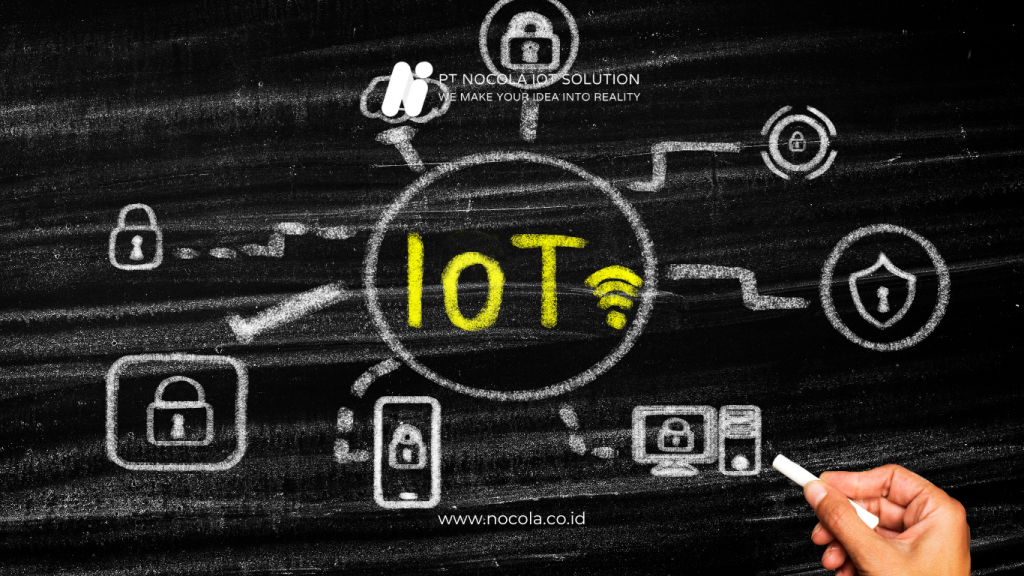
**While the benefits of IoT are increasingly evident, many industries still face various challenges in its implementation. One of the significant challenges is **system fragmentation. Many companies use standalone devices and applications, leading to poorly integrated data.
Additionally, the limitation of human resources also poses a barrier. Not all operational teams have a technical background in IoT, while overly complex systems hinder adoption. As a result, technology that should help can become a new burden.
Data security issues are also becoming increasingly crucial in the IoT era of 2026. As more devices connect, the risk of data breaches and misuse grows. Industries require systems that are not only sophisticated but also secure and reliable.
Another challenge is scalability. Many IoT solutions are not designed to grow with the business. When the number of devices increases or needs change, systems become difficult to evolve and require additional costs.
Faced with these conditions, industries need integrated, user-friendly IoT solutions that can quickly adapt to changing requirements.
**Nocola serves as a response to the challenges of IoT in 2026 with an *end-to-end IoT solutions* approach. Nocola not only provides devices but also builds an interconnected IoT ecosystem ready for use by industries of various scales.**
The main advantages of Nocola lie in its ability to understand the needs of industries in Indonesia. The solutions developed are not generic but are tailored to field conditions, regulations, and local operational characteristics.
With platforms like Flux, environmental, energy, and operational monitoring systems, Nocola helps industries integrate various devices into a single centralized dashboard. This allows companies to gain real-time visibility without managing multiple separate systems.
Nocola also prioritizes ease of implementation. Industries can start on a small scale and gradually expand. This approach makes IoT adoption faster, minimizes risks, and provides immediate real-world impacts.
In the IoT era of 2026, speed and accuracy of data become keys to industry success. Nocola provides IoT solutions that support real-time monitoring, allowing operational conditions to be monitored anytime and from anywhere.
Through an integrated dashboard, operational teams and management can see device performance, environmental conditions, and other critical indicators in one view. Previously scattered data now becomes a single source of information that is easy to analyze.
Nocola’s IoT solutions also support automation and smart notifications. When anomalies or abnormal conditions arise, the system will provide immediate alerts. This allows for quick responses before problems escalate into major disruptions.
From the perspective of decision-making, the historical and real-time data collected serves as a strong basis for robust analysis. Industries can identify patterns, improve efficiency, reduce operational costs, and devise long-term strategies based on real data.
With this approach, IoT is no longer just a monitoring tool but becomes a major enabler of digital transformation in industries.
Looking ahead, IoT will continue to evolve and integrate further with AI, machine learning, and cloud computing. Industries that are prepared for the future are those that establish a strong IoT foundation now.
Nocola plays an essential role as a strategic partner in this journey. With scalable and continually evolving solutions, Nocola helps industries adapt not only to today’s needs but also to future challenges.
The ecosystem approach built by Nocola allows industries to continuously add new features, devices, and integrations without having to build systems from scratch. This provides high flexibility in facing technological changes and business needs.
In the era of IoT in 2026 and beyond, the speed of adaptation becomes a key competitive advantage. Together with Nocola, Indonesian industries have significant opportunities to grow faster, more efficiently, and more sustainably.
In 2026, IoT is no longer a future technology but a real requirement for industries that want to remain relevant and competitive. Challenges such as system complexity, data security, and integration needs demand mature and integrated IoT solutions.
Nocola helps industries adapt faster by providing end-to-end IoT solutions that are easy to implement, scalable, and based on real-world needs. Through real-time monitoring, data integration, and accurate insights, Nocola enables industries to transition toward smarter and more efficient operations.
In the face of increasingly rapid changes, collaboration with the right IoT partner is critical. With Nocola, industries not only keep up with IoT advancements in 2026, but they are also prepared to leverage them as the main driver of growth and digital transformation.
