Physical Address
304 North Cardinal St.
Dorchester Center, MA 02124
Physical Address
304 North Cardinal St.
Dorchester Center, MA 02124


Read More: History and Development of IoT: From Concept to Reality
In the era of Industry 4.0, the manufacturing industry has undergone a massive transformation thanks to technological advancements. Smart industry has emerged as an innovative solution that is changing how factories operate, enhancing efficiency, productivity, and flexibility. This article will discuss various aspects of smart industry, including the technologies involved, its benefits, and its implementation across different industrial sectors.

Read More: Industrial IoT: Introduction to Industry 4.0 and IIoT Concepts
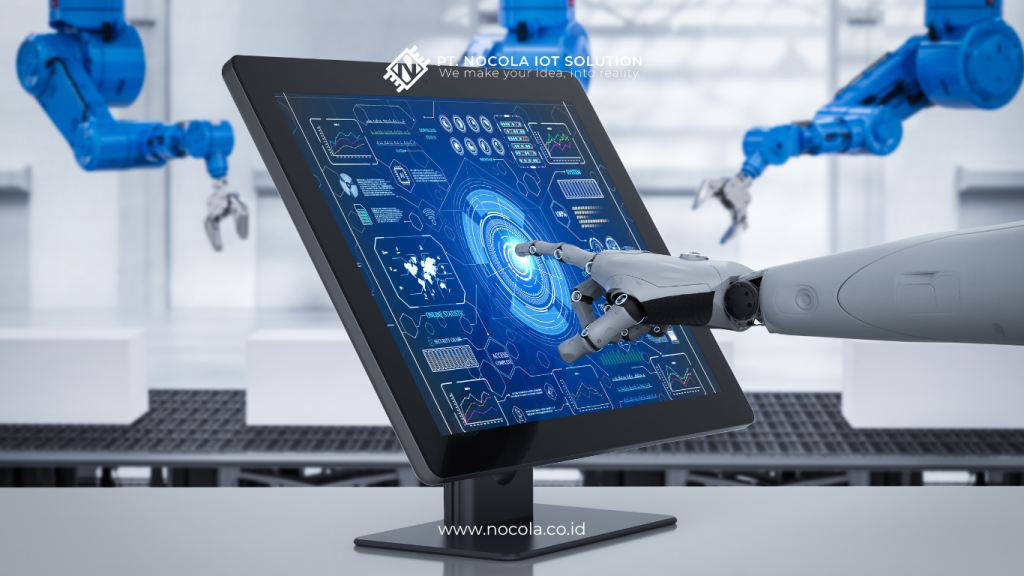
Smart industry is a concept that describes the use of advanced technology to optimize manufacturing and operational processes in factories. This technology includes the Internet of Things (IoT), artificial intelligence (AI), data analytics, robotics, and automation systems. The primary goal is to create smarter, more responsive, and efficient factories.
Read More: Smart Hotel with fluxLiving: Monitoring and Control Solutions
IoT connects various devices and sensors in the factory, enabling them to communicate and share data in real-time. With IoT, factories can monitor machine conditions, predict failures, and optimize production processes. The data collected can be used for further analysis, helping in better decision-making.
AI plays a crucial role in smart industry by processing and analyzing large amounts of data to generate useful insights. AI can be used to optimize production processes, identify patterns and trends, and improve product quality. Additionally, AI can assist in predictive maintenance by forecasting machine failures before they occur.
Robotics in smart industry involves the use of robots to perform automated tasks previously done by humans. Robots can work with high precision and in conditions that are difficult or hazardous for humans. This increases productivity and reduces the risk of workplace accidents.
Data analytics enables factories to process and analyze data collected from various sources. Using advanced analytics tools, factories can identify areas for improvement, monitor machine performance, and plan maintenance more effectively.
Automation systems involve the use of technology to control and regulate production processes automatically. This includes machine control, process control systems, and factory management software. Automation helps reduce human error, improve efficiency, and enable more consistent production.

Read More: Smart Office: Transforming Offices into Smart Spaces with fluxLiving
Implementing smart industry improves operational efficiency by optimizing production processes and reducing downtime. With technologies like IoT and data analytics, factories can monitor and manage assets in real-time, identify potential issues, and take corrective actions before failures occur.
Smart industry can reduce operational costs by minimizing the need for manual labor, optimizing energy usage, and minimizing material waste. Automation and robotics technologies help lower labor costs and increase productivity.
With advanced technologies like AI and data analytics, factories can improve product quality by identifying and addressing quality issues more quickly. Automated control systems also help ensure products are consistent and meet established quality standards.
Smart industry enables factories to be more flexible in responding to market demand changes. With automation and robotics systems, factories can quickly alter production configurations and manufacture various types of products without significant changes to equipment or processes.
Implementing smart industry technology also enhances workplace safety and health. Robotics and automation systems reduce the need for hazardous manual labor, lowering the risk of workplace accidents and injuries. Additionally, sensors and monitoring systems can track working environment conditions and ensure safety standards are met.
Smart industry is a technological innovation that transforms the way factories work by bringing greater efficiency, productivity, and flexibility. Technologies such as IoT, AI, robotics, and automation systems play a key role in creating smarter and more responsive factories. While there are challenges in implementation, the long-term benefits of smart industry make it a worthwhile investment for the future of the manufacturing industry. As technology continues to evolve, we can expect more innovations and advancements in smart industry that will drive further industrial evolution.