Physical Address
304 North Cardinal St.
Dorchester Center, MA 02124
Physical Address
304 North Cardinal St.
Dorchester Center, MA 02124


In today’s increasingly competitive modern industrial era, companies are required to operate more efficiently, quickly, and accurately. In addition, operational transparency and the ability to make data-driven decisions have become crucial factors in maintaining business sustainability.
One of the main challenges faced by industries is how to effectively control all operational processes, especially as production systems become more complex and involve many variables. Even small monitoring errors can have significant impacts on product quality, energy efficiency, and workplace safety.
To address these challenges, Smart Monitoring System technology has emerged, enabling companies to monitor all operational activities in real time. This system not only provides data but also delivers insights that can be used to improve overall industrial performance.
This article will comprehensively discuss how industrial smart monitoring serves as a technological solution to optimize supervision and operational control across various industry sectors.
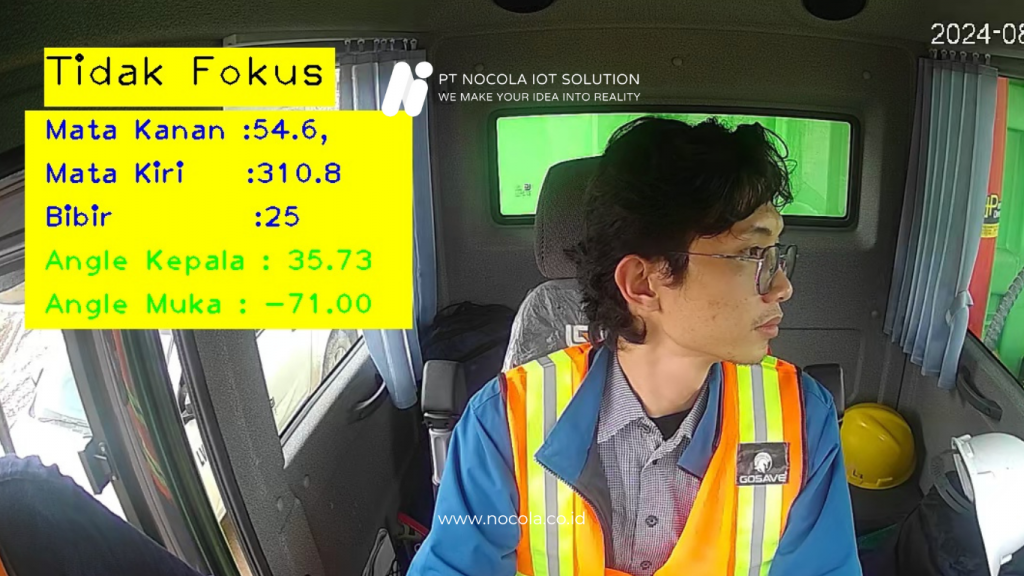
A Smart Monitoring System is a technology-based system designed to monitor, collect, and analyze operational data automatically and in real time. This system is typically integrated with various sensors, IoT (Internet of Things) devices, and advanced analytics platforms.
In an industrial context, this system is used to monitor key parameters such as temperature, pressure, humidity, machine vibration, energy consumption, and production performance. All this data is collected and presented in dashboards that are easy for operators and management to understand.
Unlike conventional monitoring systems, Smart Monitoring Systems can provide automatic alerts or warnings when anomalies or abnormal conditions occur. This allows companies to take immediate action before problems escalate.
Additionally, the system can be accessed remotely via computers or smartphones, enabling operational monitoring from anywhere—not just on-site.
These advantages make industrial smart monitoring one of the key technologies in digital transformation within the industrial sector.

Smart Monitoring Systems operate through the integration of hardware and software that are interconnected. The process begins with data collection through sensors installed at various operational points.
These sensors measure specific parameters such as machine temperature, fluid pressure, or vibration levels. The data generated is then transmitted to a central system via communication networks, either wired or wireless.
Once received, the system processes and analyzes the data using specific algorithms. The results are displayed on interactive dashboards complete with graphs, indicators, and easy-to-understand reports.
One key feature of Smart Monitoring Systems is the ability to generate automatic alerts. When deviations from normal thresholds are detected, notifications are immediately sent to operators or management via applications or email.
Some systems are also equipped with predictive analytics, enabling companies to anticipate potential failures before they occur. This allows for preventive maintenance and helps avoid unexpected downtime.
With this mechanism, industrial smart monitoring functions not only as a supervision tool but also as a data-driven decision-making system.

The implementation of Smart Monitoring Systems provides significant benefits for industrial operations. One of the primary advantages is improved efficiency. With real-time monitoring, companies can identify inefficiencies and take immediate corrective actions.
The system also helps reduce downtime. With early warning features and predictive maintenance, potential failures can be detected early, allowing repairs before major disruptions occur.
Another benefit is improved product quality. With tighter control over production parameters, companies can ensure that products meet established quality standards.
From a cost perspective, Smart Monitoring Systems contribute to operational savings. Energy usage can be monitored and optimized, reducing waste and improving cost efficiency.
Equally important, the system enhances workplace safety. Continuous monitoring of environmental conditions and equipment helps minimize the risk of accidents.
These benefits make industrial smart monitoring a strategic investment for companies aiming to remain competitive in the digital era.

Smart Monitoring Systems have been implemented across various industrial sectors with different needs.
This flexibility allows smart monitoring systems to be adapted to the specific needs of each industry.
Despite offering many advantages, Smart Monitoring System implementation also faces several challenges. One of the main challenges is the high initial investment cost, particularly for sensor installation and system development.
Integration with legacy systems can also be a barrier, as not all companies have infrastructure ready to support IoT-based technologies and digitalization.
Data security is another critical concern. As more data is collected and transmitted over networks, the risk of cyberattacks increases.
However, technological advancements continue to open new opportunities. Integration with artificial intelligence (AI), machine learning, and cloud computing enables systems to become more intelligent and adaptive.
In the future, Smart Monitoring Systems are expected to become part of the Industry 4.0 ecosystem, where all industrial processes are digitally connected and automated.
Smart Monitoring Systems are a technological solution that transforms how industries control their operations. With real-time monitoring capabilities, accurate data analysis, and early warning features, these systems provide significant added value to companies.
The implementation of industrial smart monitoring not only improves efficiency and productivity but also supports risk management, cost savings, and workplace safety.
Although there are challenges in implementation, the long-term benefits make this technology a strategic investment for modern industries.
As digital technology continues to evolve, Smart Monitoring Systems will play an increasingly important role in shaping a smarter, more efficient, and sustainable industrial future.
