Physical Address
304 North Cardinal St.
Dorchester Center, MA 02124
Physical Address
304 North Cardinal St.
Dorchester Center, MA 02124
In this era of digital transformation, the term IoT or Internet of Things is becoming increasingly common, especially in discussions surrounding industries, smart cities, and manufacturing technologies. Many companies are beginning to adopt this technology to enhance operational efficiency, optimize production processes, and accelerate data-driven decision-making.
However, many are still asking, what exactly is IoT and how does it work in the industrial world?
In simple terms, IoT is a concept where various physical devices can connect to the internet and communicate with each other to automatically send and receive data. This data is then processed into information that can be utilized by both systems and humans.
In the industrial context, IoT serves as a fundamental foundation for the concept of Industry 4.0, where machines, sensors, systems, and humans are interconnected within a digital ecosystem.
As a company engaged in IoT solutions, Nocola presents various integrated platforms and solutions, one of which is Flux, that serves as a platform for connecting, managing, and monitoring IoT devices across various industrial sectors.
Through this article, you will receive a comprehensive explanation of what IoT is, how it works, and relevant examples of its applications in industry that meet current operational needs.
Also Read: Indosat Ooredoo and PT Nocola IoT Solution: Collaboration to Create Trash Vending in Semarang
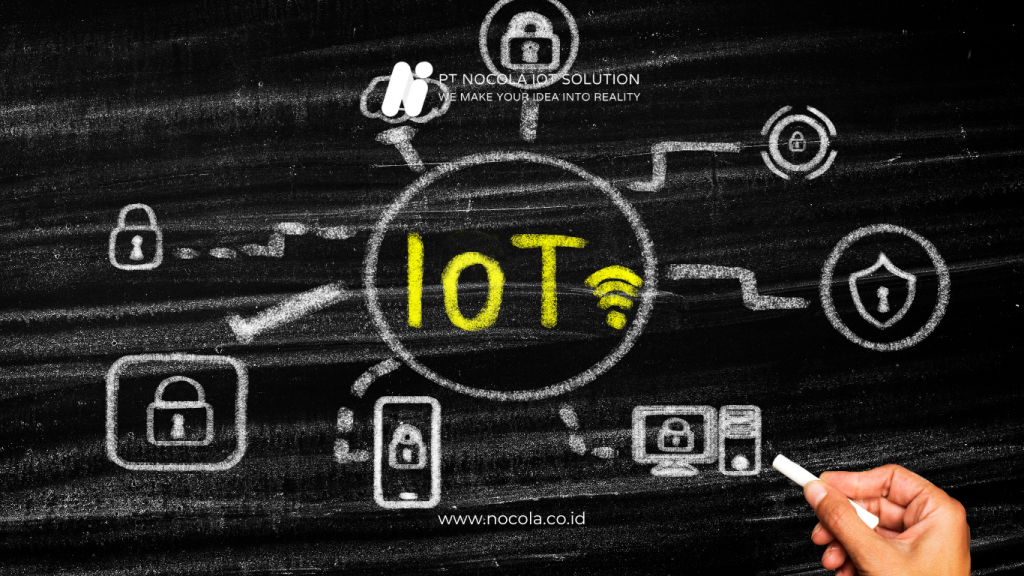
To understand what IoT is, we need to see it as a system, not just a collection of devices.
IoT, or the Internet of Things, is a network of physical devices equipped with sensors, software, and internet connectivity that enables them to automatically collect and exchange data.
These devices can include temperature sensors, pressure gauges, production machines, cameras, vehicles, and electrical appliances.
Generally, the workflow of IoT consists of several main stages.
First, the IoT sensors or devices measure the conditions around them, such as temperature, humidity, vibration, or water quality.
Second, the collected data is transmitted via communication networks, such as WiFi, cellular, radio, or industrial networks.
Third, this data is received by a platform or server, processed, stored, and displayed in the form of dashboards or reports.
Fourth, the system can provide notifications, recommendations, or even automatic commands to specific devices based on the received data.
In Nocola’s ecosystem, this process is facilitated by the Flux platform, which serves as the data integration hub for IoT devices. Flux allows users to manage devices, monitor sensor data, and organize data flows within a centralized system.
Through this mechanism, IoT not only acts as a data-gathering tool but also forms the foundation of a digital system that supports automation and decision-making.
An industrial IoT system cannot operate solely by installing sensors in the field. Several key components must be integrated for the system to work optimally.
The first component is the devices or sensors. These sensors function as data collection tools from the physical environment, such as machines, equipment, and production processes.
The second component is connectivity. Data from the sensors need to be sent to a central system via communication networks. In the industrial world, this connectivity must be stable, secure, and capable of reaching extensive areas.
The third component is the gateway or data logger. This device acts as a link between the sensors in the field and the IoT platform on the server or cloud.
The fourth component is the IoT platform. This serves as the processing hub for data, device management, and system integration. At Nocola, this role is performed by Flux, which provides dashboards, device management, and integration with other systems.
The fifth component is the application or dashboard. Through this application, users can monitor data, observe trends, receive notifications, and manage devices.
In industrial practice, all these components should be designed to operate reliably over the long term. A good IoT system not only displays data but also supports scalability, security, and ease of integration.
Through an integrated architecture, IoT helps companies build more modern, efficient, and adaptive monitoring and control systems.
The implementation of IoT in the industrial sector brings significant changes to how companies conduct their daily operations.
One of the most apparent benefits is enhanced visibility into operational processes. Through IoT, companies can monitor machine conditions, work environments, and production processes in real-time.
IoT also helps improve efficiency. Data collected by sensors allows companies to identify areas of energy waste, machine downtime, and non-optimal processes.
Furthermore, IoT supports the implementation of condition-based maintenance. By monitoring vibrations, temperatures, and other parameters, systems can detect potential failures before they occur.
In terms of safety and security, IoT allows monitoring of work environments, such as hazardous gases, extreme temperatures, or conditions in confined spaces.
Through platforms like Flux from Nocola, all this data can be aggregated into a single centralized dashboard. This makes it easier for management to visualize operational summaries without having to access separate systems.
Another benefit is improved reporting quality. IoT data is automatically stored and can be processed into daily, weekly, or monthly reports.
Thus, IoT not only supports operations at a technical level but also aids strategic, data-driven decision-making.
The application of IoT in the industrial world is vast and can be tailored to the characteristics of each sector.
In the manufacturing sector, IoT is used to monitor the conditions of production machines, such as temperature, vibration, and operational hours. This data is used to optimize maintenance schedules and reduce downtime.
In the energy and power generation sectors, IoT is utilized to monitor equipment performance, environmental conditions, and operational parameters of power plants. This assists operators in maintaining system stability and energy production efficiency.
In the environmental sector, IoT is applied through systems like WQMS and AQMS to monitor water and air quality in real time. This environmental data is critical for both governments and industries to meet regulatory obligations.
In logistics and transportation, IoT is used for vehicle tracking, container temperature monitoring, and distribution route oversight.
In agriculture and plantations, IoT helps monitor soil moisture, weather conditions, and plant health, allowing for more precise irrigation and fertilization processes.
As a company that offers various IoT solutions, Nocola presents integrated platforms like Flux that can be used for these diverse use cases. With one platform, companies can manage various types of devices and IoT systems without having to build separate systems.
Through this flexibility, IoT becomes a relevant technology for various industries, whether they are small, medium, or large-scale.
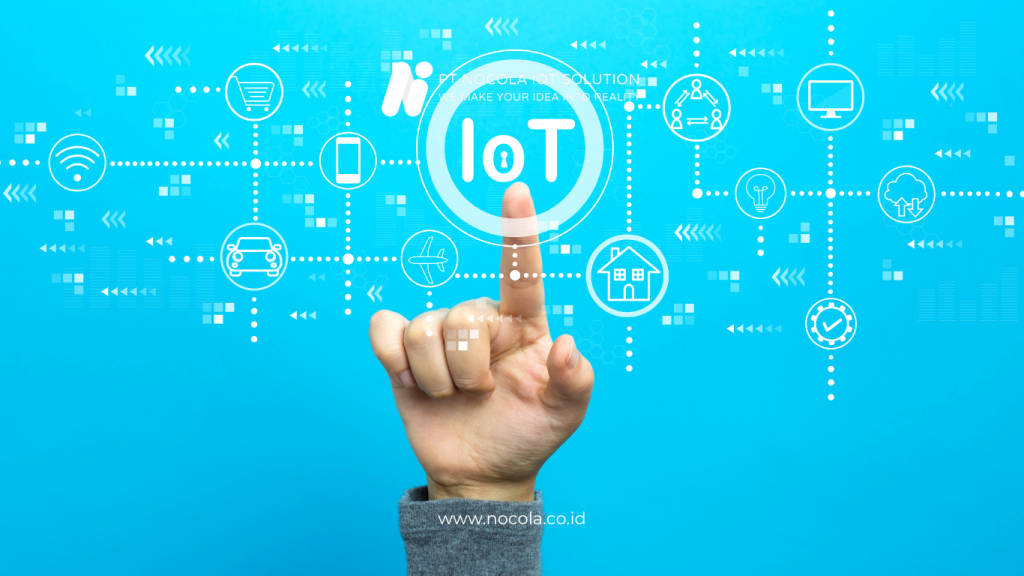
Although IoT devices and sensors play an important role, the success of IoT implementation in industries heavily relies on the platform used.
IoT platforms serve as control centers that manage data flows, device management, and integration with other systems.
Flux from Nocola is designed as an integrated IoT platform that can connect various devices, gateways, and systems within a single ecosystem.
Through Flux, companies can perform:
IoT device management, sensor data monitoring, notification settings, and integration with operational systems such as ERP, internal dashboards, and reporting systems.
Flux also supports historical data management, allowing for long-term trend analysis.
In the industrial context, platforms like Flux play a vital role in accelerating the digitization process. Companies do not need to build IoT infrastructure from scratch, as most basic functions are already available within a single platform.
Moreover, the use of centralized platforms helps reduce operational complexity. IT and operational teams can work on the same system, making coordination much easier.
With the right IoT platform support, the implementation of IoT in industries becomes not just a technology project but a strategic part of business transformation.
IoT, or the Internet of Things, is a technology that enables various physical devices to connect and communicate through the internet to automatically collect and utilize data.
By understanding what IoT is, how it works, and the main components of its system, companies can see that IoT is not just a technological trend but an important foundation in modern industrial transformation.
The implementation of IoT in industry has proven to enhance operational efficiency, improve monitoring quality, support data-driven maintenance, and strengthen decision-making processes.
With the support of integrated platforms like Flux from Nocola, companies can manage IoT devices, monitor data, and integrate systems within a simpler and more structured ecosystem.
In the future, IoT will continue to be a key technology in building smarter, more adaptive, and competitive industries in the face of increasing demands for digitization.
