Physical Address
304 North Cardinal St.
Dorchester Center, MA 02124
Physical Address
304 North Cardinal St.
Dorchester Center, MA 02124

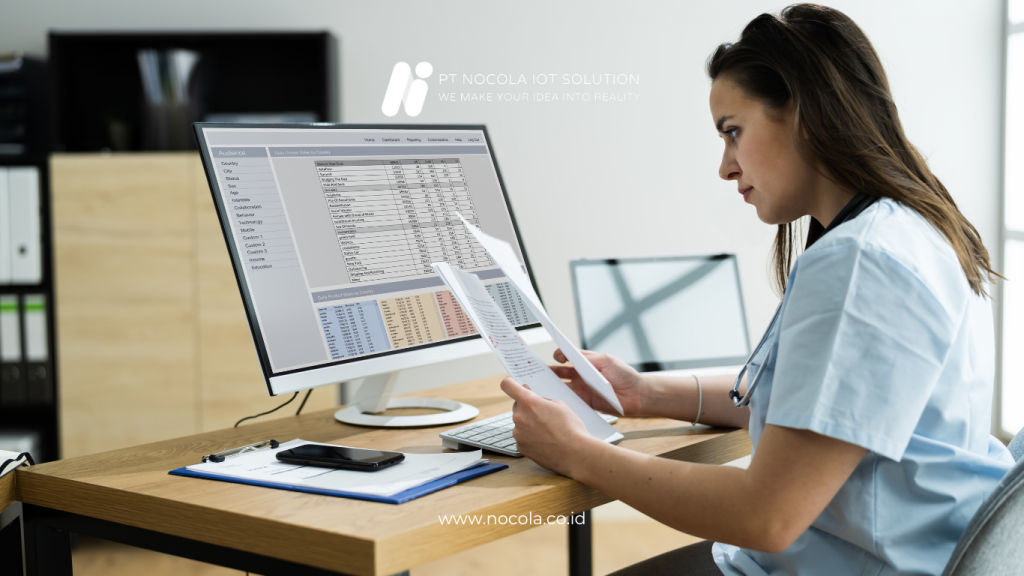
In many companies—especially those operating in operational, manufacturing, energy, utilities, and facilities management sectors—data recording processes are still frequently carried out manually. Field personnel fill out paper forms, record inspection results in logbooks, and then submit the reports to be recapped by the administrative team.
At a glance, this approach may seem simple. However, in practice, manual record-keeping contains many potential issues, ranging from incomplete data and illegible handwriting to delayed report submissions and the risk of documents being lost or damaged.
In today’s digital era, companies are required to operate faster, be more transparent, and work more efficiently. Dependence on manual processes has become one of the main obstacles to building modern, data-driven operations.
This is why digital log sheets have emerged as a solution. Digital log sheets replace manual logbooks with application-based recording systems that can be accessed via mobile devices and web platforms.
As a provider of digital solutions for operational needs, Nocola offers LogSheet Digital, which is designed to help companies record activities, inspections, and maintenance tasks more quickly, neatly, and in an integrated manner.
Through this article, we will discuss why manual record-keeping should be abandoned and how digital log sheets can become a practical solution to improve data quality and operational performance.

Although it is still widely used, manual record-keeping has various limitations that become increasingly apparent as operational complexity grows.
One of the main challenges is data delays. Field personnel usually record activities on paper first and then re-enter the data into the system or submit it to administrators for recapping. This process causes the data received by management to no longer reflect real-time conditions in the field.
In addition, the risk of human error is very high. Mistakes in writing numbers, misreading instructions, or forgetting to fill in certain fields frequently occur in manual record-keeping. This can directly affect the quality of reports.
Another issue is limited data accessibility. Physical documents can only be accessed in specific locations. When data is urgently needed by management or other teams, searching for documents becomes time-consuming.
Furthermore, manual record-keeping makes audits and historical data tracking more difficult. When companies need to review past records, teams must go through physical archives one by one.
In the context of modern operations, this situation makes decision-making processes slow and inefficient.
For companies with multiple locations, assets, and field personnel, manual record-keeping is becoming increasingly irrelevant. A recording system that works in real time, is well-structured, and easy to access is required.
Digital log sheets are designed to address the challenges of manual record-keeping. By using a digital system, the entire recording process is carried out through mobile applications or web-based platforms.
Field personnel can directly enter activity data, inspection results, and maintenance reports through their mobile devices. The submitted data is automatically stored in the system and can be accessed by relevant stakeholders.
Nocola LogSheet Digital is designed to support a wide range of operational needs, from routine activity records and inspection checklists to daily work reports.
Through digital log sheets, companies can ensure consistent data entry formats. Each form can be customized to meet the requirements of different departments or work units.
Some of the main advantages of digital log sheets compared to manual recording include:
faster data entry, automatic data storage, and more structured and well-organized report formats.
In addition, digital log sheets support photo attachments, location data, and automatic timestamps for every entry. These features help improve the validity and reliability of field data.
Within the Nocola ecosystem, LogSheet Digital can also be integrated with other solutions, such as IoT platforms and monitoring dashboards, allowing field records to be directly linked with sensor data and other systems.
Therefore, digital log sheets are not merely a replacement for paper logbooks, but an integral part of an integrated digital operational system.
One of the greatest benefits of implementing digital log sheets is improved work efficiency. Field personnel no longer need to carry multiple paper forms or re-enter data at the end of the day.
Data can be entered directly at the job site and is automatically stored on the server.
From an administrative perspective, teams no longer need to manually recap physical documents. The digital log sheet system automatically manages data and compiles it into report formats.
This saves time and reduces administrative workload.
In terms of accuracy, digital log sheets help minimize input errors through structured forms, data validation, and mandatory fields.
Nocola LogSheet Digital allows companies to define approval and verification workflows. Each report can be reviewed by supervisors before being validated.
In addition, digital recording enables automatic timestamps. Each entry is recorded along with the exact time of submission, making activity tracking easier.
With more accurate and well-structured data, companies can perform better operational analysis. Work patterns, incident frequency, and field team performance can be evaluated based on historical data.
This level of data accuracy becomes a key foundation for making more precise operational decisions.
Beyond recording activities, digital log sheets also play an important role in monitoring field operations and team performance.
Through dashboards, supervisors and management can monitor completed activities, ongoing work, and tasks that have not yet been finished.
Nocola LogSheet Digital enables companies to categorize data by location, asset, job type, and assigned team.
With structured data views, management can easily identify operational areas that require greater attention.
Digital log sheets also improve transparency between teams. Every activity is recorded and traceable, making coordination easier.
In large-scale operations, log sheet-based monitoring is highly effective in managing multiple field activities simultaneously.
Furthermore, digital log sheet data can be used as the basis for performance evaluation. The number of completed tasks, task completion speed, and report quality can be analyzed objectively.
With an integrated system, companies can foster a data-driven work culture instead of relying solely on verbal reports or assumptions.
To ensure that digital log sheet implementation delivers maximum results, companies need a well-planned implementation strategy.
The first step is to map existing manual recording processes. Each form, checklist, and report type should be identified.
The next step is to design digital form formats that match operational needs. Nocola LogSheet Digital supports form customization to align with real-world field workflows.
Once the system is ready, companies should conduct socialization sessions and training for field personnel and supervisors. Ease of use is a critical factor in successful adoption.
Companies also need to define clear data verification and approval workflows. With well-defined processes, data quality can be better maintained.
Integration with other systems, such as IoT monitoring platforms, operational dashboards, and reporting systems, should also be considered so that digital log sheets truly become part of the company’s digital ecosystem.
With a structured approach, digital log sheets become more than just a recording tool—they serve as a foundation for operational-level digital transformation.
Manual record-keeping that is still widely practiced in many companies today presents various limitations, ranging from error risks and data delays to difficulties in report management.
Digital log sheets offer a practical solution by transforming manual processes into faster, more organized, and integrated digital workflows.
Through Nocola LogSheet Digital, companies can record activities, inspections, and maintenance tasks in real time, using consistent formats that are easy to analyze.
The implementation of digital log sheets helps improve operational efficiency, enhance data accuracy, and support transparent monitoring of field activities and team performance.
With the right implementation strategy, digital log sheets can become an important first step for companies in building modern, data-driven operations that are ready to face future digital transformation challenges.
