Physical Address
304 North Cardinal St.
Dorchester Center, MA 02124
Physical Address
304 North Cardinal St.
Dorchester Center, MA 02124


Forklifts are the backbone of logistics operations in warehouses and factories. This transport tool allows for the rapid and efficient movement of large quantities of goods. However, beneath their benefits, forklifts are also one of the leading causes of workplace accidents in the industry. Operator errors, fatigue, blind spots, and insufficient warning systems often trigger these accidents.
In the era of Industry 4.0, IoT technology introduces a new solution: forklifts equipped with smart sensors. Not only do these sensors monitor position and speed, but the system can also detect collision risks, overloads, and unsafe operator behavior in real-time. The result? Accidents can be prevented before they happen.
This article will discuss how the implementation of IoT sensors on forklifts can create a safer, more efficient, and measurable working environment.
Also Read: Warehouse Automation: GPS Indoor Tracking for Forklift Management
The Internet of Things (IoT) allows various physical devices to connect and exchange data. When applied to forklifts, this technology provides capabilities such as automatic monitoring, risk detection, and the direct transmission of data to a central dashboard.
With this, forklifts are no longer just ordinary mechanical tools but smart devices actively ensuring workplace safety.
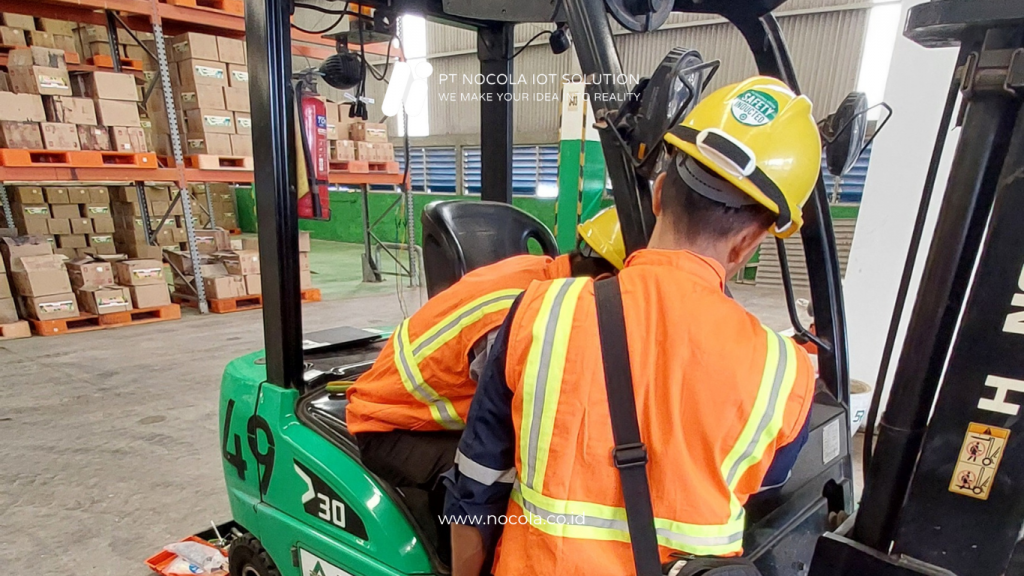
To accurately detect risks, several key sensors are used in forklifts:
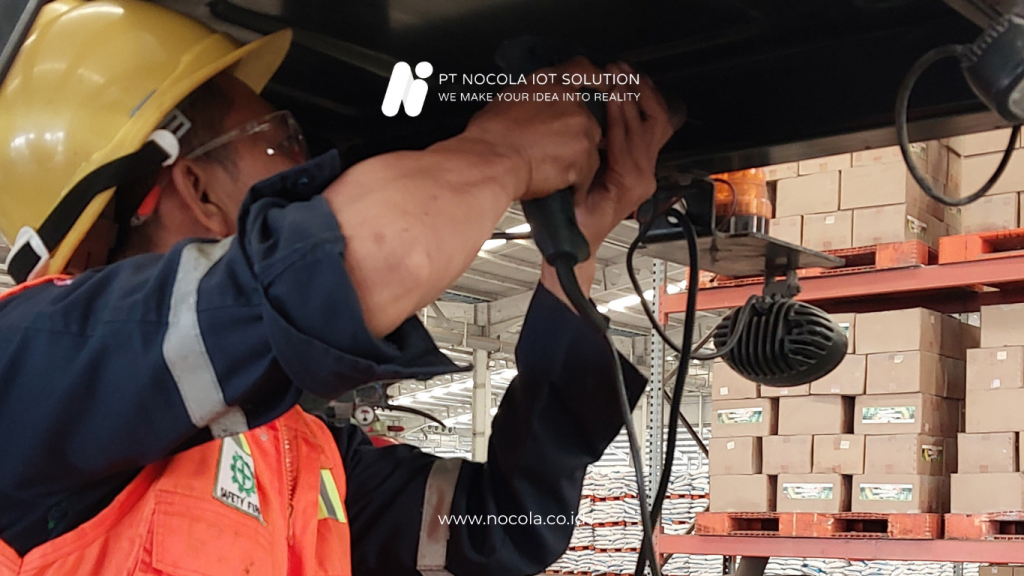
The integration of IoT in forklifts provides several advantages that enhance safety and efficiency in operations:
Proximity sensors and automatic alarms assist operators in avoiding collisions with workers, pallets, or walls.
Real-time data helps operators make safer and quicker decisions without solely relying on intuition.
Machine sensors monitor temperature, oil, and forklift conditions. The system sends alerts if the forklift requires servicing (predictive maintenance).
Supervisors can see which forklifts are active, their locations, and usage duration, helping manage routes efficiently to avoid congestion in the warehouse.
Operator behavior data (such as sudden braking or speeding) can be evaluated for training and improving safety.
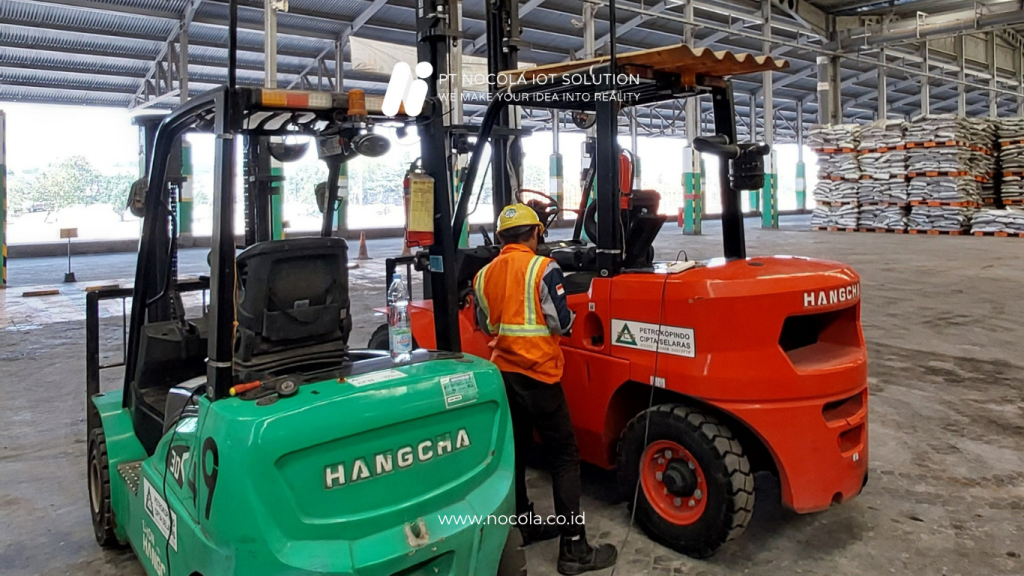
Several exciting trends for the future include:
This means that forklifts will become more than just material handling tools—they will become integral parts of the industrial digital ecosystem.
Forklifts are essential elements in warehouse and factory operations but are also a significant source of workplace accidents that are often overlooked. With the advent of IoT technology, forklifts can now be equipped with distance sensors, load sensors, GPS, and AI cameras, transforming them into smart devices.
The greatest benefits of IoT in forklifts include:
In other words, the implementation of IoT-based forklifts is no longer just a technological trend but a vital investment for safety, efficiency, and the future of industrial operations.

