The Era of Digital Transformation: Why Your Company Needs Nocola’s Digital LogSheet
In the era of digital transformation, manual record-keeping has become obsolete. Many companies are transitioning to digital systems that are more efficient, accurate, and secure. One of the best solutions for this need is Nocola’s Digital LogSheet. This article explores why your company needs Digital LogSheet to support more effective operational recording.
What is Nocola’s Digital LogSheet?

Read Also: Digital Transformation in Record-Keeping: Why Choose Digital LogSheet?
Nocola’s Digital LogSheet is a digital platform designed to replace manual record-keeping. With this solution, data can be recorded, managed, and accessed in real-time through digital devices like computers, tablets, or smartphones.
Key Features of Digital LogSheet:
- Automated Data Entry: Integrates IoT sensors for automated logging.
- Real-Time Access: Allows users to view data anytime and anywhere.
- High-Level Data Security: Features encryption to ensure data confidentiality.
- Simplified Reporting: Generates structured reports with just a few clicks.
Drawbacks of Manual Record-Keeping

Read Also: LogSheet Digital: Optimizing Operational Processes with Digital Technology
1. Prone to Errors
Manual methods often lead to errors like incorrect data input or loss of critical information, impacting decision-making.
2. Time-Consuming
Manual record-keeping requires significant time for logging, processing, and compiling reports.
3. Difficult to Access
Physical documents are scattered across various locations, making them hard to retrieve when needed.
4. Lacks Security
Physical documents are susceptible to damage, loss, or theft, threatening company data security.
Advantages of Nocola’s Digital LogSheet for Your Company

Read Also: Digital Transformation in Record-Keeping: Why Choose Digital LogSheet?
1. Boosts Operational Efficiency
Automation frees up time previously spent on manual recording for more productive tasks.
2. Ensures Data Accuracy
The system minimizes human error, delivering more precise data.
3. Simplifies Audits
Digital LogSheet streamlines the audit process by providing organized and easily accessible data for auditors.
4. Promotes Sustainability
Transitioning to digital record-keeping reduces paper usage, supporting eco-friendly initiatives.
Applications of Digital LogSheet Across Industries

1. Manufacturing
Assists in real-time recording of production data, machine maintenance, and quality monitoring.
2. Energy and Utilities
Logs energy usage, infrastructure maintenance, and emissions reports with high precision.
3. Transportation and Logistics
Facilitates logging of delivery schedules, vehicle data, and fleet maintenance reports.
4. Healthcare Facilities
Tracks medical equipment inventory, patient reports, and facility maintenance schedules.
Additional Features That Strengthen Digital LogSheet

Read Also: Nocola’s Role in Supporting Industry 4.0 in Indonesia
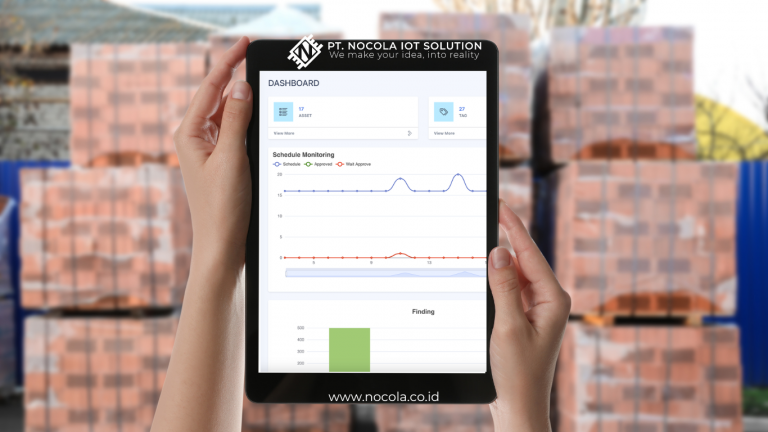
1. Interactive Dashboard
Visualizes data through graphs and tables for easier analysis.
2. Notifications and Alerts
Sends reminders for approaching deadlines or parameters exceeding normal limits.
3. Integration with Other Systems
Compatible with ERP or CRM systems, enhancing overall operational efficiency.
How Digital LogSheet Improves Business Decision-Making

Read Also: LogSheet Digital: Why It’s the Ultimate Solution for Modern Business Needs
- Real-Time Data for Quick Analysis
With data updated in real-time, decision-makers can quickly respond to changing situations. - Early Problem Detection
LogSheet Digital enables companies to identify operational issues early, addressing them before they escalate. - Trend-Based Predictions
The system analyzes historical data to provide insights into operational trends, supporting strategic planning.
Conclusion
LogSheet Digital by Nocola is a modern solution for companies aiming to enhance the efficiency of their operational record-keeping. With features like automation, data security, and easy integration, this system allows your company to operate more efficiently and accurately.
Switching to LogSheet Digital is a vital step in your company’s digital transformation journey. In addition to saving time and costs, this solution helps your business remain competitive in the digital era.
Start transforming your company’s record-keeping with LogSheet Digital from Nocola today and experience the benefits of improved business operations!

Nocola Solutions for Smart Cities: Connected and Efficient IoT Infrastructure
Technological advancements have ushered cities worldwide into a new era known as smart cities. To create more efficient, safe, and comfortable urban environments, the smart city concept has emerged as a promising solution. One of the key technologies driving smart city development is the Internet of Things (IoT). This article explores how Nocola IoT Solutions significantly contributes to building connected and efficient smart city infrastructures.
What is a Smart City?

Read More: Nocola’s Role in Supporting Industry 4.0 in Indonesia
A smart city is a modern urban concept that leverages Information and Communication Technology (ICT) to improve residents’ quality of life, enhance operational efficiency, and ensure environmental sustainability. IoT technology acts as the backbone, connecting various devices, sensors, and infrastructure to generate actionable data for better decision-making.
The Role of IoT in Smart Cities

Read More: Get to Know Flux: A Versatile IoT Platform for Industry and Smart Homes
IoT enables various city systems to communicate in real-time. Below are some key roles IoT plays in developing smart cities:
- Efficient Energy Management: Smart grid systems for electricity management.
- Traffic Management: Sensors to monitor and control traffic flow.
- Environmental Monitoring: Air and water quality sensors to ensure environmental sustainability.
- Public Safety: IoT-based surveillance systems to enhance security.
By implementing IoT, cities can become more responsive to the needs of their communities.
Nocola IoT Solutions for Smart Cities

Read More: Water Quality Monitoring System (WQMS) from Nocola: Advanced Technology for Monitoring Water Quality
Nocola IoT Solutions offers a range of IoT solutions designed to support smart city development. Below are some of Nocola’s flagship products:
1. Flux: An Integrated IoT Platform
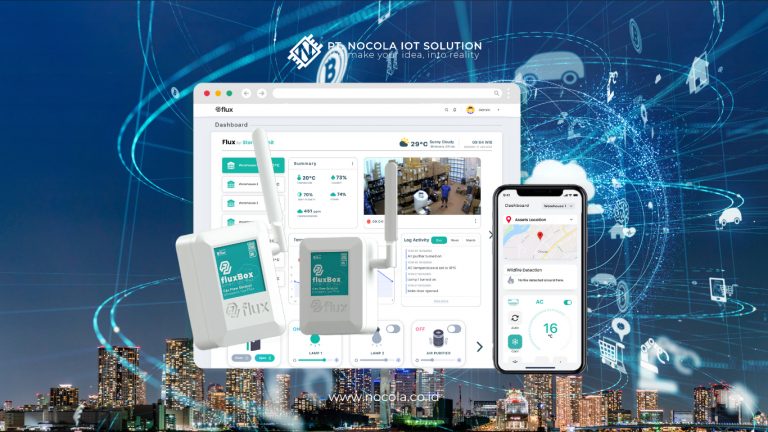
Flux is an IoT ecosystem that connects smart devices and centrally manages data. It consists of several components, including:
- Fluxbox: A device for connecting various IoT sensors and devices.
- Fluxgateway: A bridge between IoT devices and the cloud platform.
- Fluxdashboard: A visual interface for monitoring and analyzing data.
Benefits of Flux for Smart Cities:
- Connecting urban infrastructure, such as smart streetlights and parking systems.
- Monitoring traffic conditions and providing data to reduce congestion.
2. WQMS (Water Quality Monitoring System)
WQMS is a water quality monitoring system utilizing IoT sensors to provide real-time data on water conditions.
Advantages of WQMS:
- Enhances water resource management.
- Ensures clean water supply for residents.
- Monitors water pollution quickly and accurately.
3. AQMS (Air Quality Monitoring System)
This air quality monitoring system helps measure pollution levels and provides data to develop emission reduction strategies.
Applications of AQMS:
- Improving air quality in densely populated areas.
- Supporting urban environmental policies.
Implementation of Nocola Solutions in Smart Cities

Read More: Nocola Smart Agriculture Solutions: Optimizing Agricultural Yields with IoT and Real-Time Data
Nocola solutions have been applied in various cities to create smarter and more efficient ecosystems. Here are some examples of their implementation:
1. Smart Transportation Systems
With Fluxdashboard, cities can manage traffic in real-time. Traffic sensor data enables automatic adjustments to traffic lights, reducing congestion.
2. Smart Waste Management
Nocola utilizes IoT sensors to monitor bin fill levels, enabling more efficient waste management.
3. Sustainable Environmental Monitoring
AQMS and WQMS help cities maintain air and water quality, crucial for public health and environmental sustainability.
Why Choose Nocola IoT Solutions for Smart Cities?

Read More: Smart Parking Solutions for Urban Parking Challenges
Here are some reasons why Nocola is the ideal choice for smart city development:
1. Easy Integration
Nocola provides IoT solutions compatible with various existing devices and infrastructure, facilitating the integration of new technologies.
2. Operational Efficiency
With accurate data analysis, Nocola’s solutions enable more efficient city resource management.
3. High Data Security
Data security is a top priority for Nocola. Their systems use advanced encryption to protect data from potential cyber threats.
4. Customizable Solutions
Every city has unique needs. Nocola offers solutions tailored to meet the specific requirements of each city.
Conclusion
Nocola IoT Solutions plays a vital role in building connected, efficient, and sustainable smart city infrastructure. With products such as Flux, WQMS, and AQMS, Nocola helps cities address the challenges of modern urbanization and create better environments for their communities.
In the future, IoT solutions like those offered by Nocola will continue to evolve, supporting cities worldwide in achieving their full potential as smart cities. By adopting these technologies, cities become not only smarter but also more humane and environmentally friendly.
Nocola’s Role in Supporting Industry 4.0 in Indonesia
Industry 4.0 has become a hot topic in various sectors in Indonesia. This transformation integrates digital technologies such as the Internet of Things (IoT), artificial intelligence (AI), big data, and automation to increase efficiency and productivity. As one of the pioneers of technology solutions, Nocola comes up with various innovations to support the acceleration of this transformation. This article will discuss Nocola’s role in encouraging the development of Industry 4.0 in Indonesia, the superior products they offer, and their impact on various sectors.
What Is Industry 4.0?

Industry 4.0, known as the Fourth Industrial Revolution, involves the integration of digital technologies into production and operational processes. Technologies such as IoT, cloud computing, AI, and automation serve as the backbone of this transformation. This paradigm shift enables faster, more accurate, and cost-effective processes, opening up new opportunities for companies to thrive in global markets.
For Indonesia, which is actively pursuing enhanced competitiveness through digitalization, this transformation is particularly relevant. In this context, Nocola emerges as a strategic partner providing advanced technological solutions to support the implementation of Industry 4.0.
Nocola: A Leader in Technological Innovation in Indonesia

Baca Juga: Get to Know Flux: A Versatile IoT Platform for Industry and Smart Homes
Nocola is a technology company focused on IoT, cloud computing, and big data solutions. With a vision to accelerate digital transformation, Nocola offers flagship products like Flux, LogSheet Digital, and Water Quality Monitoring System (WQMS) tailored to various sectors, including manufacturing, energy, agriculture, and public services.
Nocola’s Key Products
- Flux:
An integrated IoT platform enabling real-time management and monitoring of devices. Flux includes components like Fluxbox, Fluxgateway, and Fluxdashboard, providing comprehensive solutions for industrial needs. - LogSheet Digital:
A digital operational data logging application that helps companies manage information efficiently and accurately. - Water Quality Monitoring System (WQMS):
An IoT-based system designed to monitor water quality, supporting environmental sustainability and compliance with government regulations.
Nocola combines technology and innovation to deliver customizable solutions that address the specific needs of its clients.
Nocola’s Role in Transforming Industry 4.0 in Indonesia

Read More: Fluxcloud Nocola: IoT Data Storage and Management Solution in the Cloud for Business
1. Supporting Digitalization in the Manufacturing Sector
The manufacturing industry benefits significantly from Industry 4.0. Solutions like Flux and LogSheet Digital help manufacturers improve operational efficiency, reduce costs, and optimize supply chains. Flux enables real-time machine monitoring, while LogSheet Digital ensures accurate and secure production data logging.
2. Optimizing the Energy Sector
Nocola contributes to more efficient energy management. IoT technology helps companies monitor energy usage, detect waste, and devise savings strategies, aligning with the government’s goals for national energy efficiency.
3. Promoting Environmental Sustainability
With products like WQMS, Nocola supports sustainability initiatives by providing solutions for water quality monitoring. This system helps governments and industries preserve the environment and meet regulatory standards.
4. Advancing Smart Agriculture
IoT technology from Nocola allows farmers to monitor soil conditions, weather, and water needs automatically. This approach enhances crop yields and reduces the risk of crop failure.
5. Improving Public Service Efficiency
Public services like water management, transportation, and security benefit from Nocola’s digital solutions. IoT facilitates real-time infrastructure monitoring, ultimately enhancing service quality for the public.
Advantages of Nocola’s Technology in Supporting Industry 4.0

Read More: In the Digital Era: Why Digital Transformation is Essential for Data Recording with LogSheet Digital
Nocola offers several key advantages, making it the ideal choice for companies transitioning to Industry 4.0:
- Strong IoT Integration: Nocola’s IoT solutions are designed to work with diverse devices and platforms, ensuring flexibility and compatibility.
- Advanced Data Analytics: By leveraging big data, Nocola provides deep insights that help companies make data-driven decisions.
- Guaranteed Data Security: Nocola’s security systems protect critical company data from cyber threats.
- Customized Services: Understanding the unique needs of each company, Nocola offers tailored solutions.
Positive Impacts of Digital Transformation with Nocola

Baca Juga: Water Quality Monitoring System (WQMS) from Nocola: Advanced Technology for Monitoring Water Quality
The implementation of Nocola’s solutions in various sectors has delivered significant positive impacts, including:
- Increased Efficiency: Time-consuming manual processes are replaced with faster automated systems.
- Enhanced Sustainability: IoT technologies reduce waste and promote environmentally friendly practices.
- Improved Competitiveness: Companies adopting Industry 4.0 can compete more effectively in global markets.
Nocola’s commitment to innovation and excellence continues to drive digital transformation in Indonesia, empowering industries to thrive in the era of Industry 4.0.
Conclusion
Nocola plays an important role in supporting Industry 4.0 in Indonesia by offering advanced technology solutions that are innovative and oriented towards user needs. With superior products such as Flux, LogSheet Digital, and WQMS, Nocola helps companies improve efficiency, productivity, and sustainability across various sectors. Even though challenges still exist, Nocola continues to be committed to being a strategic partner in Indonesia’s digital transformation journey.
With the transformation supported by Nocola, Indonesia is increasingly ready to compete in the Industry 4.0 era, creating a more advanced and sustainable business ecosystem. It’s time to switch to digital solutions with Nocola for a brighter future!
Water Quality Monitoring System (WQMS) from Nocola: Advanced Technology for Monitoring Water Quality
In this modern era, the demand for clean water is increasing along with the growth in population and industrial activities. However, polluted water quality can endanger human health, the environment, and the survival of ecosystems. Therefore, an effective and efficient solution to monitor water quality is essential. The Water Quality Monitoring System (WQMS) developed by Nocola is a leading technology that provides real-time water quality monitoring. In this article, we will discuss what Nocola’s WQMS is, how it works, its advantages, and its benefits for various sectors.
What is Nocola’s Water Quality Monitoring System (WQMS)?

Read More: Benefits of Water Quality Monitoring System (WQMS) in Water Resources Management
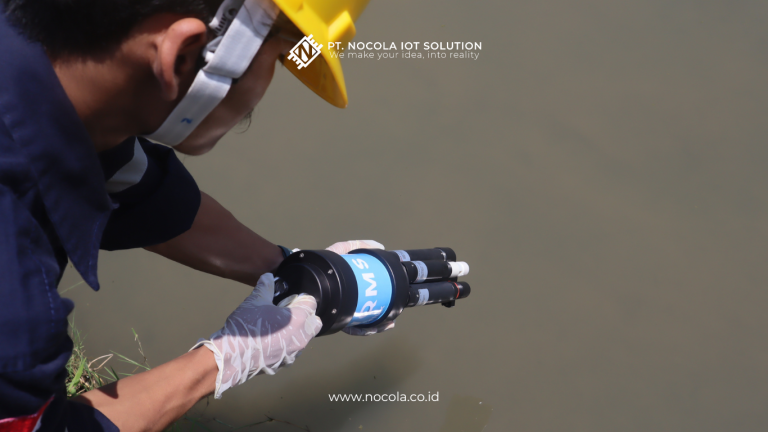
Nocola’s Water Quality Monitoring System (WQMS) is an IoT-based water quality monitoring system designed to measure various water quality parameters directly on-site, such as pH, temperature, dissolved oxygen, turbidity, and heavy metal content. The system integrates advanced sensors capable of detecting changes in water quality and transmitting the data to the cloud in real-time for analysis.
With Nocola’s WQMS, users can monitor water conditions in various locations, such as rivers, lakes, reservoirs, as well as industrial and urban environments. The data collected by this system is accessible online, allowing users to monitor water quality anytime and anywhere.
How Nocola’s WQMS Works

Nocola’s WQMS works by gathering water quality data through various sensors connected to an IoT system. Here are some of the main steps in the WQMS process:
- Data Collection: The sensors installed in this system continuously measure physical and chemical parameters of the water, including pH, temperature, acidity levels, dissolved oxygen, and particle content.
- Data Processing and Analysis: The data collected by the sensors is sent to Nocola’s cloud data center for processing and analysis. This process involves data analytics technology that helps detect changes in water quality quickly and accurately.
- Notifications and Alerts: If there are significant changes indicating a decline in water quality, the system will send notifications or alerts to the user, allowing them to take preventive action before conditions worsen.
- Long-term Data Storage: The data collected is also stored for long-term analysis. Users can observe water quality trends over time, predict potential issues, and make better planning decisions.
Advantages of Nocola’s Water Quality Monitoring System (WQMS)

Nocola’s WQMS has several advantages that make it a top choice for water quality monitoring in both industrial and public environments. Here are some key benefits of this system:
- Real-Time Monitoring: WQMS enables real-time water quality monitoring, allowing for immediate detection of any changes in water conditions. Real-time monitoring is essential for addressing emergency situations promptly.
- High Accuracy: The sensors used in Nocola’s WQMS are designed to provide accurate results. With high accuracy, the data generated can be trusted for analysis and decision-making.
- Cost-Efficiency: With an IoT-based automated system, WQMS reduces the need for manual water quality monitoring, which can save operational costs in the long run.
- Scalability: Nocola’s WQMS can be implemented on various scales, from small projects to large-scale networks, such as monitoring a single river to an extensive water network.
- Location Flexibility: This system can be installed in hard-to-reach areas without requiring direct human supervision, making it easy to monitor water in remote or hazardous locations.
Benefits of WQMS for Various Sectors

Read More: Fluxcloud Nocola: IoT Data Storage and Management Solution in the Cloud for Business
Nocola’s WQMS has broad applications that benefit various sectors. Here are some sectors that can take advantage of WQMS:
- Water Treatment Industry: This industry requires strict water quality monitoring to ensure the produced water meets quality standards. With WQMS, this industry can monitor essential parameters more efficiently.
- Agriculture and Aquaculture: In agriculture, water quality plays an important role in plant growth. WQMS helps maintain suitable water conditions for crops and fish farming, ensuring optimal production.
- Environmental Organizations: Environmental organizations and government agencies need accurate data to track pollution and protect water sources. WQMS provides them with reliable data for conservation programs and policy formulation.
- Industrial Sector: Many industries need clean water for production. By using WQMS, industries can continuously monitor water quality, helping them to meet environmental standards.
Conclusion
Nocola’s Water Quality Monitoring System (WQMS) is a critical tool for maintaining water quality in various sectors. With its real-time, accurate, and cost-effective monitoring capabilities, WQMS plays a vital role in safeguarding water resources for humans and the environment. By utilizing IoT technology, this system offers solutions that are easy to implement and scalable according to different needs. Hopefully, this technology can support efforts to maintain water quality sustainably and contribute positively to environmental conservation.
Get to Know Flux: A Versatile IoT Platform for Industry and Smart Homes
The Internet of Things (IoT) has become a key driver in digital transformation across various sectors. Beyond industrial applications, IoT technology is now being implemented in smart homes, enhancing convenience and comfort in daily life. One IoT platform offering integrated and versatile solutions for both industrial and smart home needs is Flux. This article will delve into Flux, exploring its components, features, and benefits across diverse applications.
What is Flux?

Read More: Fluxcloud Nocola: IoT Data Storage and Management Solution in the Cloud for Business
Flux is an IoT platform designed to connect, monitor, and manage various IoT devices within an integrated system. With Flux, users can access and control a wide range of devices from a single dashboard, whether for large-scale industrial purposes or smart home management. Flux facilitates device connectivity, collects real-time data, and provides in-depth analytics for better decision-making.
This platform works by connecting devices like sensors, cameras, and automation systems through a centralized network accessible remotely. This allows users to gain better insights, monitor performance, and make adjustments without being physically present at the device location.
Key Components of Flux

Read More: Flux Agriculture: Increasing Agricultural Productivity with IoT Technology
Flux includes several core components that support optimal IoT device connectivity and management. Here are the main components of the Flux system:
- Fluxbox: The central control unit within the IoT system, connecting various IoT devices on the user’s site and sending collected data to the central server for analysis.
- Fluxgateway: Serving as the bridge between local networks and the cloud, ensuring secure and swift data transmission to data centers.
- Fluxdashboard: An interface that allows users to access, monitor, and control IoT devices connected to the Flux system. Users can view real-time data, reports, and perform necessary actions through Fluxdashboard.
- Fluxcloud: A cloud-based platform for storing and processing data. IoT device data can be stored in Fluxcloud, allowing users to access it from anywhere.
- Fluxconnect: Provides flexible integration with other systems and platforms, enabling seamless communication between various IoT devices.
- Fluxtrack: A tracking module that lets users monitor the location and movement of IoT devices. This feature is especially useful for location-based applications like logistics.
Key Features of Flux

Read More: Nocola Flux Water Level: An Efficient and Integrated Water Level Monitoring Solution
Flux offers various key features that make it an ideal choice for industrial and smart home applications. Here are some of Flux’s main features:
- Multi-Platform Connectivity: Flux supports connectivity with various types of devices from different vendors, making it highly flexible for diverse environments with varying devices.
- Real-Time Data Monitoring: The Fluxdashboard allows users to monitor data in real-time, facilitating quick decision-making and rapid response to situations requiring immediate action.
- In-Depth Data Analysis: With Fluxcloud, data collected from IoT devices can be thoroughly analyzed, providing valuable insights for users to understand trends, optimize performance, and plan better strategies.
- Open API Integration: Flux offers an open API for integration with other systems such as ERP or CRM, giving users a more holistic view of business operations.
- Notifications and Alerts: Equipped with customizable notifications and alerts, users receive warnings when issues arise or specific conditions require attention.
Benefits of Flux for Industry

Read More: Seamless Connectivity with Fluxconnect Nocola for IoT Based Monitoring Systems
In an industrial environment, Flux provides effective solutions for enhancing efficiency and optimizing operations. Here are the key benefits of using Flux in the industrial sector:
- Improved Operational Efficiency: By enabling real-time monitoring of machines and production processes, Flux allows production managers to take quick action if issues or disruptions occur in operations.
- Reduced Downtime: Continuous monitoring of machine conditions can help prevent breakdowns. With predictive analysis from Flux, companies can perform maintenance before serious damage leads to downtime.
- Energy Cost Savings: Flux allows users to monitor each device’s energy usage, identifying areas where energy savings can be achieved, which is crucial for reducing overall operational costs.
- Enhanced Workplace Safety: With connected sensors, companies can ensure workplace safety by monitoring environmental factors such as temperature, humidity, or air quality, and alerting employees when conditions become unsafe.
- Smart Resource Management: Data analysis on resource usage enables companies to allocate resources more efficiently, reducing waste and achieving sustainable operations.
Benefits of Flux for Smart Homes

Read More: Using Nocola’s Flux in IoT Device Management
Besides industrial applications, Flux is also ideal for enhancing the smart home experience. Here are some of the benefits Flux offers for smart home applications:
- Convenience and Comfort: Users can control devices such as lights, temperature, and security systems through Fluxdashboard, bringing ease and convenience to everyday life.
- Energy Efficiency: Through data monitoring, users can identify ways to save energy and make their home more eco-friendly.
- Enhanced Home Security: The Flux system allows for integration with security cameras and sensors, providing users with live surveillance, real-time alerts, and peace of mind.
- Remote Control: Users can control home devices remotely, so they can monitor and make adjustments while away from home.
Conclusion
Flux is an IoT platform that provides comprehensive solutions for both industrial and smart home applications. By integrating multiple devices, Flux enables users to monitor, control, and optimize their environment in a more effective and efficient manner. With real-time monitoring, data analysis, and customizable notifications, Flux offers an advanced yet user-friendly solution for both industries seeking efficiency and households seeking convenience. Investing in IoT technology like Flux can open the door to a smarter, safer, and more efficient future for all users.
Cloud Computing: Why This Technology Has Become a Necessity for Modern Business
In the fast-paced digital era, the success of modern businesses increasingly depends on the adaptation and implementation of the latest technology. One innovation that has become fundamental for many companies is cloud computing. This technology is no longer just an additional option; it has become a foundation that enables businesses to operate more efficiently, scalably, and flexibly. This article will discuss how cloud computing has evolved into an essential element for modern business, its main benefits, and the factors that make this technology highly relevant in today’s business world.
What is Cloud Computing?

Read More: Fluxcloud Nocola: IoT Data Storage and Management Solution in the Cloud for Business
Cloud computing is a method of data storage and processing that uses the internet to access computing resources. Traditionally, companies had to own physical infrastructure such as servers and data centers to store data and run applications. With cloud computing, all of this can be done via the internet without needing large physical hardware. Cloud computing services allow companies to rent the infrastructure they need, from data storage to processing power.
There are generally three categories of cloud computing services:
- Infrastructure as a Service (IaaS) – Renting basic infrastructure such as servers, storage, and networks.
- Platform as a Service (PaaS) – Providing a platform for developers to create and develop applications.
- Software as a Service (SaaS) – Cloud-based applications that can be directly used by end-users.
Benefits of Cloud Computing for Modern Business

Read More: Building an IoT Ecosystem with Fluxcloud from Nocola: Managing IoT Data at Scale
Cloud computing offers numerous benefits that help businesses thrive in a highly dynamic environment. Here are some of the key benefits of cloud computing for modern companies.
1. Cost Efficiency
With cloud computing, companies can reduce costs required to purchase, manage, and maintain physical infrastructure. Hardware, electricity, and server space costs can be minimized since all these services are provided by cloud providers. Pay-as-you-go billing also allows companies to only pay for the resources they use, making it more economical.
2. Scalability
Businesses using cloud computing can easily adjust infrastructure capacity as needed. During periods of high demand, companies can increase capacity without needing to purchase new hardware. Conversely, they can reduce capacity during slow periods, allowing optimal resource utilization.
3. Enhanced Mobility and Collaboration
Cloud computing allows data access from anywhere and at any time, as long as there is an internet connection. This is crucial in the era of remote or hybrid work, where employees can access applications and data they need without having to be in the office. Additionally, team collaboration is easier as everyone has the same access to information stored in the cloud.
4. Improved Security
Cloud providers generally have advanced security systems that protect data from threats such as hacking or data loss. Encryption, firewalls, and disaster recovery systems are some of the security features applied by cloud providers to protect customer data. Although there are challenges in security, most cloud providers invest heavily in security to maintain customer trust.
5. Support for Innovation and Product Development
Cloud computing enables companies to develop and test new products faster. The flexible and accessible cloud environment allows development teams to create, test, and optimize products without needing to build infrastructure from scratch, speeding up innovation and providing a competitive edge in bringing new products to market.
Cloud Computing and Digital Transformation

Read More: Cloud Computing: Leveraging Cloud-Based Applications for Business Efficiency
In the context of digital transformation, cloud computing plays a very important role. Digital transformation involves changing business processes and operational models to become more responsive and effective by utilizing technology. Cloud computing allows companies to adapt more easily to market changes, support new technology adoption, and optimize internal processes.
1. Accelerating the Implementation of New Technology
Cloud computing facilitates the adoption of technologies such as big data, artificial intelligence (AI), and the Internet of Things (IoT) by providing the necessary infrastructure quickly and accessibly. With the cloud, companies can utilize these technologies without needing significant initial investment, allowing them to focus directly on innovation.
2. Operational Flexibility
With cloud-based infrastructure, companies can change how they manage daily operations. For example, analytics and insights generated from the cloud allow managers to make quicker, data-based decisions, making companies more adaptable to market changes and customer needs.
Challenges in Adopting Cloud Computing

Read More: Understanding the Internet of Things (IoT): From Sensors to Cloud
Although it offers many benefits, cloud computing also presents some challenges that businesses should be aware of.
1. Data Security and Privacy
Despite the high level of security offered by cloud providers, data security and privacy remain major concerns. Companies need to ensure that their data is protected and that their cloud provider complies with applicable regulations, such as the General Data Protection Regulation (GDPR).
2. Dependency on Internet Connectivity
Since cloud computing relies on the internet, disruptions in internet connection can significantly impact company operations. Ensuring a reliable internet connection and having backup plans are essential steps for companies using cloud computing.
3. Integration with Existing Systems
For companies already using other technology systems, integrating those systems with the cloud may be challenging. Companies should plan how to integrate cloud computing into their existing systems to avoid data silos or operational disruptions.
Conclusion
Cloud computing is a powerful tool that enables businesses to operate more efficiently and flexibly in the digital era. The benefits of cost efficiency, scalability, and enhanced mobility make cloud computing a valuable asset in the digital transformation process. However, like any other technology, cloud computing has challenges, including security, internet dependency, and system integration. With the right preparation and strategy, companies can take full advantage of cloud computing, gaining a competitive advantage and supporting sustainable growth in an ever-changing business environment.
Biometrics in Digital Security: Can This Technology Replace Passwords?
Technology continues to evolve, transforming our daily lives. One significant advancement is the use of biometrics in digital security. Biometrics is a technology that uses unique human characteristics, such as fingerprints, retinas, or facial features, to identify and authenticate a person’s identity. This technology has become an increasingly popular solution to replace traditional passwords for securing personal data. However, can biometric technology truly replace passwords? This article will delve into biometric technology, its advantages and disadvantages, and its potential as a password replacement.
Understanding Biometrics and Its Application in Digital Security

Read More: Digital Payment Technology: From QR Codes to Biometrics
Biometrics is a method of recognizing or identifying individuals based on unique physical or behavioral traits. Biometric technology has been applied across various sectors, including security, banking, healthcare, and access to digital devices. By using this method, data and access security are more guaranteed as it is challenging to replicate someone’s biological characteristics.
Biometrics in digital security typically includes the following methods:
- Fingerprint: Fingerprint scanning is one of the most common forms of biometrics, especially on mobile devices and laptops. Each person has a unique fingerprint, making this method reliable and secure.
- Facial Recognition: This method is increasingly popular, especially with advances in smartphone camera technology. It can recognize individuals based on facial features, allowing only the rightful owner to access a device or application.
- Retina or Iris Scanning: This technology is primarily used in high-security environments, such as financial institutions and military facilities. The retina or iris has intricate patterns unique to each individual.
- Voice Recognition: Voice recognition technology verifies users based on their voice. This application can be seen in some banking services or virtual assistants like Siri or Google Assistant.
Advantages of Biometric Technology in Security

Read More: NFC Technology: Connecting Devices by Touch
The use of biometrics in digital security offers significant advantages over conventional passwords:
- Higher Security: Biometrics provides a higher level of security because biological traits are difficult to replicate or steal. This makes user data more secure from hacking or identity theft.
- Ease of Use: Biometrics is very convenient. Users no longer need to remember complex passwords. With a single touch or glance, they can access devices or services.
- No Risk of Forgotten Passwords: Unlike passwords that can be forgotten, biometrics do not need to be remembered as they are part of the user’s body.
- Faster Access: Biometrics can speed up the authentication process. Users do not need to type passwords or answer security questions, allowing quicker access to data or services.
Can Biometrics Replace Passwords?

Read More: Fluxcloud Nocola: IoT Data Storage and Management Solution in the Cloud for Business
One essential question is whether biometrics can fully replace passwords. Although biometrics offer various advantages in terms of security and convenience, there are still reasons why passwords might remain relevant:
- Double Security Opportunity: Combining biometrics with a password creates an additional security layer. Known as two-factor authentication (2FA), it reduces the risk of unauthorized access if one method is compromised.
- Advantages in Emergencies: Passwords can serve as a backup if biometric systems encounter issues. They can be useful if devices malfunction or biometric scanning fails.
- Privacy Concerns: Considering that biometric data is sensitive, many people still feel more comfortable using passwords. If biometrics fully replace passwords, the risk of privacy breaches may increase, given that biometric data cannot be changed like passwords if stolen.
Applications of Biometrics in Various Sectors

Read More: In the Digital Era: Why Digital Transformation is Essential for Data Recording with LogSheet Digital
The use of biometrics is expanding across various sectors, making it a technology not only for security but also for enhancing efficiency and convenience in numerous activities.
- Banking and Finance: Banks and financial institutions use biometrics to enhance transaction security and customer authentication. Some banks have implemented facial recognition or fingerprint scanning for easier identity verification.
- Mobile Devices: Smartphones and tablets have long used biometrics as the primary method for unlocking devices and applications. Apple’s Face ID and Touch ID are popular examples of biometric applications in mobile devices.
- Public Services and Government: Some countries use biometrics in identity cards, passports, or national security systems to improve identification accuracy and minimize identity fraud.
- Healthcare: In the healthcare sector, biometrics are used to access patient medical records, enhancing the security of medical data and ensuring only authorized personnel have access to sensitive information.
- Workplace Attendance Systems: Many companies use biometric devices to record employee attendance, increasing efficiency and minimizing fraud in attendance reporting.
Conclusion
Biometric technology offers a promising solution for enhancing data security in an era when cyberattacks and data theft are rampant. Although biometrics provide higher security and convenience, using passwords in combination with biometrics remains a wise choice for added security. As technology evolves, biometrics might indeed replace passwords in the future. However, considering privacy concerns and the need for data protection, users should approach biometric technology prudently. Hopefully, this article provides an overview of biometric technology and its role in securing personal data.
NFC Technology: Connecting Devices by Touch
Technology advances rapidly, introducing various innovations that make life easier for people. One such innovation is Near Field Communication, or NFC. This technology enables devices like smartphones, smartwatches, and smart cards to interact with each other through touch or by bringing the devices close together. NFC has become increasingly popular, especially in cashless payment transactions, data transfer, and even in the security sector. This article will delve deeper into what NFC is, how it works, its advantages and disadvantages, and its applications in daily life, further establishing its position as the technology of the future.
What is NFC Technology?

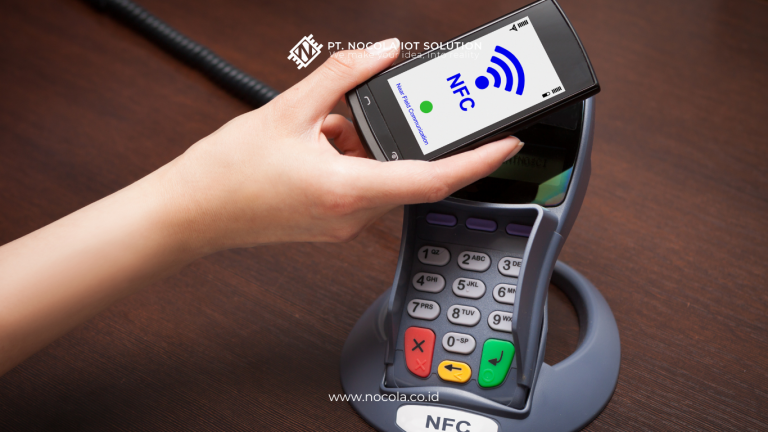
Near Field Communication (NFC) is a high-frequency wireless communication technology that allows electronic devices to exchange data over short distances, typically no more than 4 cm. NFC is an advancement of RFID (Radio Frequency Identification) technology, operating at a frequency of 13.56 MHz. Despite its simplicity, NFC offers speed and convenience in data transfer, making it suitable for various modern applications, from digital payments to access control.
NFC technology enables communication between two active devices, such as smartphone-to-smartphone, or between an active and passive device, like a smartphone and an access card. One of its main advantages is the ability to operate without an internet connection, making it a fast and secure choice for a variety of applications.
How NFC Technology Works

Read More: Fluxcloud Nocola: IoT Data Storage and Management Solution for Business
NFC works by using an electromagnetic field created when two devices come close to each other. NFC communication operates in three modes:
- Peer-to-Peer Mode: In this mode, two NFC devices can exchange information. A common example is two smartphones touching to share contacts, photos, or other data.
- Read/Write Mode: This mode allows one device to read or write data on another device. For instance, a smartphone reading information from an advertisement poster embedded with an NFC tag.
- Card Emulation Mode: In this mode, the device acts as an NFC card, like a credit card or access card. This mode is commonly used in payment applications such as Google Pay and Apple Pay.
Because NFC operates over a very short distance, the risk of data interception is lower compared to other wireless technologies like Bluetooth, making it a secure and reliable technology for applications requiring privacy and security.
Advantages of NFC Technology

Read More: Fluxcloud Nocola: IoT Data Storage and Management Solution for Business
- Ease of Use
NFC is very easy to use as it only requires bringing devices close or touching them. This makes NFC an ideal choice for quick transactions, such as payments or entry to buildings. - High Security
NFC offers high security because it works at a very short range, significantly reducing data interception risks. - No Internet Needed
Unlike many other technologies, NFC does not require an internet connection to function, allowing for transactions or data transfer anytime and anywhere, even without a network. - Low Power Consumption
NFC requires very little power to function. In many cases, passive NFC tags do not require power as they are powered by the active reading device. - Fast Transactions
Transactions with NFC occur almost instantaneously, minimizing wait times for users. This speed is a key reason NFC is widely adopted in retail and payment industries.
Disadvantages of NFC Technology

Read More: Benefits of Water Quality Monitoring System (WQMS) in Water Resource Management
- Limited Range
While advantageous for security, NFC’s short range can be a limitation in some situations, making it unsuitable for long-distance data transfer. - Data Speed Limitations
NFC’s data transfer speed is relatively low compared to technologies like Bluetooth or Wi-Fi, making it less ideal for sending large files. - Not Supported by All Devices
Although many modern devices support NFC, some older or budget-friendly devices may lack this feature.
Applications of NFC in Everyday Life

Read More: Unlimited Connectivity with Fluxconnect Nocola for IoT-Based Businesses
As a simple, fast, and secure technology, NFC has numerous applications in various aspects of life. Some of its most common applications include:
- Contactless Payments
In today’s cashless world, NFC is the technology behind payment applications such as Google Pay, Apple Pay, and Samsung Pay, enabling transactions with a simple touch or tap. - Access Control
NFC is also widely used in access control systems for buildings, hotels, and other facilities, where employees or guests can simply tap their cards or smartphones for entry. - Data Transfer
With NFC, users can quickly transfer data like contacts, photos, and other information between two NFC-enabled devices. - Marketing and Information Sharing
Marketers often use NFC tags embedded in posters or products to provide additional information or special promotions, allowing users to access relevant content by tapping their devices on these tags.
Conclusion
Near Field Communication (NFC) has changed the way we perform various daily tasks, from making payments to accessing information and sharing data. Its advantages, such as ease of use, high security, and low power consumption, have made NFC popular in many industries. However, like any technology, it has its limitations, particularly in range and data speed. Nonetheless, with the continuous development and refinement of this technology, NFC remains one of the most promising innovations for supporting the future of cashless transactions, secure access, and seamless data sharing.
Impact of 3D Printing Technology in the Manufacturing and Construction Industry
The popularity of 3D printing technology is rising in various sectors, particularly in manufacturing and construction. This process enables three-dimensional objects to be created quickly and with high precision, opening numerous opportunities to improve efficiency and reduce production costs. This article delves into how 3D printing technology impacts the manufacturing and construction industries and its future development.
What is 3D Printing Technology?

Read More: Digital Payment Technology: From QR Codes to Biometrics
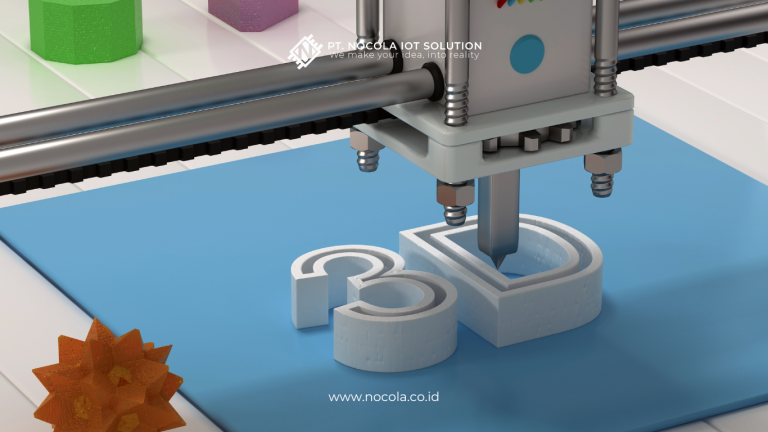
3D printing is a technology that allows the direct creation of physical objects from digital models. This process uses specialized printers that build objects layer by layer using various materials, such as plastic, metal, ceramics, and even concrete. In recent years, this technology has evolved significantly, making it a practical solution for prototyping and even final products across various industries.
A Brief History of 3D Printing Technology
3D printing technology was first introduced in the 1980s, initially used primarily for small-scale prototyping. Today, the technology has advanced rapidly and is used to manufacture large-scale components, even in heavy industries such as automotive, aerospace, and construction.
Benefits of 3D Printing in the Manufacturing Industry

Read More: Smart Home Technology: Smart Solutions for the Home of the Future
3D printing offers numerous advantages for the manufacturing industry. Here are some key benefits of this technology:
1. Reduces Production Time
In traditional production processes, creating a prototype can take days or even weeks. With 3D printing, production time can be cut down to just a few hours. This enables companies to develop products faster and expedite time to market.
2. Lowers Production Costs
By reducing the need for production tools and special setups, 3D printing can help reduce production costs. This technology allows objects to be created without expensive molds or special tools, making it ideal for small-scale production or prototyping.
3. Design Flexibility
3D printing enables the easy creation of complex designs, allowing engineers and designers to explore new concepts and create products with intricate geometries that would be difficult or expensive to produce using traditional methods.
4. Reduces Material Waste
The 3D printing process is additive, meaning material is added gradually to form the product. This is vastly different from subtractive processes like cutting or casting, which generate a lot of material waste. Thus, 3D printing helps reduce environmental impact by using materials more efficiently.
Impact of 3D Printing Technology in the Construction Industry

Read More: Flux Agriculture: Increasing Agricultural Productivity with IoT Technology
In the construction sector, 3D printing is beginning to open up new opportunities. Some of the impacts of this technology on the construction industry include:
1. Faster and More Efficient Construction
3D printing technology enables faster and more efficient construction of structures. In some projects, houses can be printed within a few days or even hours. This saves labor costs and project time, especially for large-scale projects like housing or emergency infrastructure.
2. More Complex Building Designs
With 3D printing technology, designers have more freedom to create unique and complex building designs. This technique allows for intricate geometric patterns and organic shapes that are difficult to achieve with traditional construction methods, providing modern architecture with many opportunities for innovation in design.
3. Overcoming Material Limitations
3D printing allows the use of various alternative construction materials, such as eco-friendly concrete, recycled materials, or special composites. This opens opportunities for the construction industry to reduce dependence on conventional building materials, which is not only eco-friendly but also potentially more cost-effective.
4. Sustainable Construction
In addition to reducing waste, 3D printing also minimizes the need for material transportation, which means the carbon footprint of the construction process is smaller. Efficient and precise use of materials also aligns with sustainability efforts that are increasingly important in today’s construction sector.
Examples of 3D Printing Applications in the Manufacturing Industry

Read More: The Future of Technology: How AI and Machine Learning Are Transforming Modern Business
Several companies have successfully implemented 3D printing in their production. Here are some real-world case examples:
- Automotive Industry: Car manufacturers like Ford and BMW use 3D printing to create prototypes of automotive components. This allows them to test new designs and features before producing them on a larger scale.
- Aerospace Industry: 3D printing is also used in the aerospace industry to produce lightweight and durable components. Boeing, for example, uses this technology to manufacture complex aircraft parts to reduce weight and improve fuel efficiency.
- Medical Sector: In the medical field, 3D printing is used to create prosthetic limbs and dental implants that are custom-designed for each patient. This technology enables the production of medical devices that fit individual anatomy more accurately.
- Electronic Products: 3D printing allows manufacturers to produce electronic products with complex designs. Companies like Apple are experimenting with 3D printing to create internal and external components for their products, helping streamline the production process.
Future Developments in 3D Printing Technology

The potential for 3D printing technology is far from exhausted. Future developments in this field include:
- Printing Larger Objects: As 3D printing technology evolves, larger and more robust printers will be developed, enabling the production of larger structures, from residential buildings to industrial infrastructure.
- More Complex Materials: The expansion of materials compatible with 3D printing is another area with significant potential. Researchers are developing materials with specific properties, such as high strength, flexibility, and temperature resistance, making this technology applicable to a wider range of industries.
- Custom Mass Production: In the future, 3D printing could allow mass production of customized products, opening new possibilities in industries like fashion and sports equipment, where individual preferences and measurements are essential.
- Combination with Artificial Intelligence: AI integration into 3D printing technology can help optimize design processes and improve production efficiency, making this technology even more powerful in producing innovative products.
Conclusion
3D printing technology continues to grow rapidly, offering various benefits and applications in the manufacturing and construction sectors. This technology not only enhances production efficiency but also opens new doors for design innovation and sustainability. With ongoing developments, 3D printing is expected to play an increasingly important role in transforming how we produce and build in the future.
Collaboration between Delman.io and Nocola in the Webinar “Empowering Your Data Journey: From Real-Time Acquisition to Insightful Analytics”
On November 6, 2024, Delman.io and Nocola will host a webinar titled “Empowering Your Data Journey: From Real-Time Acquisition to Insightful Analytics.” The virtual event, held via Zoom, invites professionals to explore how real-time data collection and analytics can enhance business decision-making. This collaboration between Delman.io and Nocola aims to showcase how data technology drives innovation and efficiency across industries.
Introducing Delman.io and Nocola

Read More: Fluxcloud Nocola: IoT Data Storage and Management Solution in the Cloud for Business
Delman.io is a cloud-based data analytics platform. It simplifies data processing, making it more accessible for organizations. The platform helps businesses make data-driven decisions. With strong expertise in big data management, Delman.io improves performance and effectiveness.
Nocola is an IoT solutions provider. It offers technologies that help companies monitor and manage data in real time. One of its products, the Water Quality Monitoring System (WQMS), helps monitor water quality. Flux provides an integrated IoT solution, allowing monitoring and control for various industrial applications.
Webinar: Empowering Your Data Journey

Read More: Seamless Connectivity with Fluxconnect Nocola for IoT Based Monitoring Systems
The webinar will focus on the data journey, from collection to analysis. Delman.io and Nocola will highlight the importance of combining IoT data with analytics for better decision-making. Participants will learn how these technologies can improve business operations.
Objectives of This Webinar
This webinar is designed to:
- Explore Real-Time Data Potential: Learn how IoT technology captures data in real time for monitoring and analysis.
- Showcase Data Analytics Benefits: Understand how processed data reveals insights for better decision-making.
- Inspire IoT and Analytics Integration: Discover how combining IoT data and analytics enhances decision-making.
Benefits of Attending This Webinar

Read More: CEMS Nocola: Monitoring Industrial Emissions in Real-time
Participants will gain several benefits, including:
- A Deeper Understanding of IoT Data: Learn how to collect and use real-time IoT data for monitoring and control.
- Knowledge of Data Analytics: Understand how to use collected data for meaningful analysis.
- Identify Valuable Insights: Learn how to spot trends and patterns to improve business strategies.
With this knowledge, participants can apply insights to improve efficiency and effectiveness in their organizations.
Why the Collaboration Between Delman.io and Nocola Matters

Read More: In the Digital Era: Why Digital Transformation is Essential for Data Recording with LogSheet Digital
The partnership between Delman.io and Nocola combines two core technologies: IoT data collection and cloud-based data processing. Together, they provide a complete solution for companies that want to leverage data for better decision-making.
Nocola specializes in IoT-based data collection, using connected devices to monitor environmental or industrial data. Delman.io processes this data, turning it into valuable information. The combination of both technologies helps companies gain faster, more accurate insights.
In the webinar, participants will see how these technologies optimize business processes, support cost savings, and boost productivity.
Conclusion
The “Empowering Your Data Journey” webinar offers valuable insights for companies seeking to enhance operations with data technology. Focused on real-time data collection and analytics, it will provide practical advice on maximizing data for decision-making.
The Delman.io and Nocola collaboration shows how two distinct technologies can complement each other. Together, they form a system that delivers quick, comprehensive insights. The webinar will demonstrate how data can become a valuable asset for companies, from acquisition to analysis.