Utilizing Nocola’s Fluxtrack in the Supply Chain: Increasing Logistics Transparency and Efficiency
Supply chains are one of the most critical aspects of modern business operations. Companies across various industries require efficient systems to manage shipments, inventory, and product distribution. One of the biggest challenges in supply chains is the lack of transparency and visibility, which can lead to delays, waste, and inefficiencies in operations.
Nocola, a leading technology company, offers a solution through its innovative product, Fluxtrack. Fluxtrack is an IoT (Internet of Things)-based system designed to monitor and track the movement of goods in the supply chain in real-time. In this article, we will discuss how the use of Fluxtrack from Nocola can enhance transparency and efficiency in logistics and why this technology has become a vital part of the modern supply chain.
1. What Is Fluxtrack?

Read More: Integrating AI and IoT with Flux from Nocola: The Future of Automated Manufacturing
Fluxtrack is part of Nocola’s IoT platform, specifically designed for the logistics industry. Using sensors connected to the IoT network, Fluxtrack enables companies to monitor the condition, location, and shipment status of goods in real-time. The data collected by these sensors can be accessed through an easy-to-use interface, providing companies with full visibility over their entire supply chain.
With Fluxtrack, companies can easily track the movement of every item in the supply chain, from the factory to the customer’s hands. This solution not only offers better visibility but also helps identify potential issues before they escalate, such as shipment delays or product damage during transit.
2. Improving Transparency in the Supply Chain

Read More: The Innovation Behind Nocola’s Fluxbox and Fluxgateway: Connecting IoT for a Smarter World
One of the greatest benefits of using Fluxtrack is increased transparency. In traditional supply chains, it is often challenging for companies to track the movement of goods throughout the distribution process. Inaccurate or delayed data can lead to inefficiencies and uncertainty in logistics operations.
With Fluxtrack, all data regarding the status of goods is accessible in real-time. This allows companies to see exactly where goods are, when they will arrive, and under what conditions they are being transported. This enhanced transparency is crucial for ensuring that every part of the supply chain operates efficiently and according to plan.
For example, if a shipment is delayed due to an issue at one of the distribution points, supply chain managers can quickly identify the problem through Fluxtrack and take appropriate action to minimize its impact. Moreover, real-time data allows companies to provide more accurate information to customers about their delivery status.
3. Higher Logistics Efficiency with Real-Time Monitoring

Read More: Implementation of River Level Monitoring with fluxEWS in a Residential Area of South Tangerang
In addition to transparency, Fluxtrack also enhances overall logistics efficiency. With the ability to monitor the condition and location of goods in real-time, companies can respond to issues more quickly and avoid wasting resources.
For instance, if a delivery vehicle experiences a breakdown or a delivery route needs to be changed, Fluxtrack can provide the necessary data to make faster and more effective decisions. This not only reduces operational costs but also helps prevent delays that could harm a company’s reputation.
Moreover, Fluxtrack enables more efficient inventory management. With constantly updated data, companies can more accurately predict when they will run out of stock and order new items before supplies are depleted. This helps avoid situations where companies run out of essential products, potentially resulting in lost revenue.
4. Reducing Risks and Losses in Shipments

Read More: Integrating AI and IoT with Flux from Nocola: The Future of Automated Manufacturing
One of the biggest challenges in logistics is the risk of goods being lost or damaged during the shipping process. Without adequate monitoring systems, it is often difficult to determine where and how the goods were lost or damaged.
With Fluxtrack, these risks can be minimized. The system allows companies to monitor the condition of goods directly, including temperature, humidity, and vibrations that may affect the items during transit. If there is a problem with the condition of the goods, the system can provide an early warning, allowing preventive action to be taken before the items are damaged.
For example, if temperature-sensitive goods are exposed to extreme conditions, Fluxtrack can notify logistics managers immediately, enabling them to intervene quickly and avoid damage. Additionally, the ability to track the location of goods in real-time helps minimize the risk of loss, as companies can quickly pinpoint where the items are.
5. Easy Integration with Other Systems

Read More: Building an IoT Ecosystem with Fluxcloud from Nocola: Managing IoT Data at Scale
One of Fluxtrack’s advantages is its ability to integrate with other logistics management systems. Companies do not need to replace their entire infrastructure to start using Fluxtrack. Instead, the system can easily be integrated with existing logistics software and platforms, making the adoption process smoother.
This integration allows companies to optimize their operations without facing major disruptions to their current workflows. With Fluxtrack data accessible directly from existing management systems, companies can maximize efficiency without adding unnecessary complexity.
Conclusion
In an increasingly connected and complex business world, transparency and logistics efficiency are keys to success. Fluxtrack from Nocola offers an innovative solution for better monitoring and managing the supply chain. With advanced IoT technology, real-time monitoring, and easy integration, Fluxtrack provides companies with full visibility over their logistics processes, improving operational efficiency and reducing the risk of losses.
For companies looking to enhance their logistics operations and stay competitive in the global market, adopting solutions like Fluxtrack is a smart move. This technology not only offers short-term benefits but also helps build a strong foundation for future growth. In an increasingly digital world, Fluxtrack is a vital solution to ensure supply chains run smoothly and efficiently.

Managing Environmental Risk with AQMS and CEMS from Nocola: Technology for Companies that Care About the Environment
In the modern industrial world, managing environmental risks has become a top priority. Many companies today are seeking ways to reduce the environmental impact of their operations while maintaining efficiency and productivity. This is where Nocola’s AQMS (Air Quality Monitoring System) and CEMS (Continuous Emission Monitoring System) technologies play a crucial role. This article will discuss how these two technologies help companies monitor and manage environmental risks, and the importance of implementing eco-friendly technologies for the future.
1. What Are AQMS and CEMS?

Read More: How Nocola Helps the Energy Industry Monitor Carbon Emissions with CEMS Technology
AQMS (Air Quality Monitoring System) is a system designed to monitor air quality in an area, whether in a work environment or public spaces. It is equipped with sensors capable of detecting various air pollutants such as carbon dioxide (CO2), nitrogen oxides (NOx), sulfur dioxide (SO2), and other fine particles that can be harmful to health and the environment.
CEMS (Continuous Emission Monitoring System) is a system that continuously monitors emissions from factories or industries to ensure that exhaust gas levels remain within the limits allowed by regulations. This system is particularly useful for companies looking to ensure they comply with environmental standards and help reduce negative impacts on air quality.
2. Why Are AQMS and CEMS Important for Companies?

Read More: Nocola CEMS: Reducing Emissions with Continuous Emission Monitoring
The importance of AQMS and CEMS lies in their ability to provide accurate real-time data on air quality and emissions. For companies operating in the industrial sector, especially those involving combustion processes or chemical use, monitoring air quality and emissions is essential. Without a good monitoring system, harmful emissions could be released into the atmosphere unnoticed, which can have serious consequences for public health and the environment.
Moreover, government regulations in many countries are becoming increasingly stringent regarding air pollution control. Companies that fail to comply with emission standards may face hefty fines and even risk losing their operating licenses. By using Nocola’s AQMS and CEMS, companies can ensure they always meet environmental regulations while demonstrating their commitment to sustainability.
3. How Do AQMS and CEMS Work?

Read More: PT Cemindo Gemilang Bayah and PT Nocola IoT Solution Integrate CEMS with KLHK Server
AQMS operates by using various sensors installed at specific points around the area to be monitored. These sensors measure the concentration of air pollutants and send the data to a control center. The data is then analyzed to identify potential air quality issues, so preventive actions can be taken before the problem becomes severe.
CEMS, on the other hand, is installed directly at the emission source, such as a smokestack or factory. This system continuously measures exhaust gas emissions and provides real-time data to operators. The data collected from CEMS can be used to monitor whether the emissions are still within permissible limits or have exceeded the threshold.
Both systems operate automatically and are integrated with Nocola’s IoT platform, enabling remote monitoring via mobile devices or desktops. This provides companies with flexibility and ease in managing environmental risks.
4. Benefits of AQMS and CEMS for Companies

Read More: The Important Role of Nocola in Reducing Industrial Emissions with Advanced Monitoring Technology
a. Ensuring Regulatory Compliance
One of the main benefits of using AQMS and CEMS is that they help companies ensure compliance with environmental regulations. Continuous and real-time monitoring allows companies to identify potential violations before they become serious issues. This not only helps avoid large fines but also protects the company’s reputation in the eyes of the public.
b. Reducing Environmental Impact
By effectively monitoring emissions and air quality, companies can take steps to reduce negative impacts on the environment. This not only benefits the surrounding environment but also helps companies achieve long-term sustainability goals.
c. Improving Company Image
Companies that are proactive in managing environmental risks gain a positive image in the eyes of consumers, investors, and other stakeholders. In the modern era, many consumers prefer products from companies that show a commitment to environmental preservation.
d. Reducing Health Risks for Employees
Monitoring air quality in and around industrial facilities is also crucial to protect employees’ health. Air pollution can cause various health problems, from respiratory disorders to chronic diseases. By using AQMS, companies can ensure that the air quality in the workplace remains safe for their employees.
e. Accurate Data for Decision Making
The data collected from AQMS and CEMS allows companies to make better decisions regarding their operations. This data helps identify emission patterns or air quality issues, so corrective actions can be taken promptly.
5. Why Choose AQMS and CEMS from Nocola?

Read Also: Nocola CEMS: Reducing Emissions with Continuous Emission Monitoring
Nocola is a company with a strong track record in providing technological solutions for various industrial sectors. Nocola’s products, including AQMS and CEMS, are designed using the latest technology and have proven to be reliable in various field applications. Here are some reasons why Nocola’s AQMS and CEMS are the best choices for environmentally conscious companies:
Continuous Innovation: Nocola consistently strives to develop the latest technology to ensure that its products remain relevant to the needs of modern industries.
IoT Integration: With IoT platform integration, Nocola’s AQMS and CEMS enable easier and more efficient monitoring, along with deep data analysis.
Best Technical Support: Nocola offers comprehensive technical support to its customers, ensuring that any technical issues can be resolved quickly.
Commitment to Sustainability: Nocola understands the importance of sustainability and is committed to providing solutions that help companies reduce their negative environmental impact.
Conclusion
In addressing environmental challenges in the modern era, technology plays a crucial role in helping companies manage risks and ensure regulatory compliance. Nocola’s AQMS and CEMS offer the right solutions for companies looking to monitor air quality and emissions effectively and efficiently. By utilizing this technology, companies can improve environmental compliance, reduce negative environmental impacts, and strengthen their image as environmentally responsible organizations.
For companies looking to demonstrate their commitment to sustainability and environmental responsibility, adopting Nocola’s AQMS and CEMS is the right step. In the future, such technology will become increasingly important in helping companies tackle growing environmental challenges.

The Importance of Water Quality Monitoring in Industry: Nocola’s WQMS Solution for a Better Environment
Water is one of the most vital natural resources in the world, especially in industry. However, without proper monitoring, wastewater from industrial processes can harm the environment. To maintain ecosystem balance and comply with government regulations, water quality monitoring becomes a critical aspect. In this article, we will discuss the importance of water quality monitoring in industries and the innovative solutions offered by Water Quality Monitoring System (WQMS) from Nocola to achieve a better environment.
1. Why Is Water Quality Monitoring Important in Industries?

Water quality monitoring is the process of measuring certain parameters in water that help determine whether the water is safe to use or discharge into the environment. There are several key reasons why water quality monitoring is crucial, especially in the industrial sector:
- Environmental Protection: Industrial waste often contains harmful substances that can pollute natural water sources such as rivers, lakes, or oceans. Without proper monitoring, this pollution can cause long-term damage to ecosystems.
- Regulatory Compliance: Many countries enforce strict regulations on the discharge of wastewater from industries. By monitoring water quality, companies can ensure they comply with these regulations and avoid fines or penalties.
- Operational Efficiency: By monitoring water quality, companies can identify areas that require improvement. This also helps optimize industrial processes involving water, such as treatment or cooling.
2. Key Parameters in Water Quality Monitoring

When monitoring water quality, there are several important parameters to measure. Some of these parameters include:
- pH: The acidity or alkalinity level of water can affect the life forms in it and the industrial processes that use water.
- Total Dissolved Solids (TDS): High TDS levels in water indicate dissolved substances, potentially from industrial waste.
- Dissolved Oxygen (DO): Oxygen dissolved in water is essential for aquatic life. Low DO levels can be an indicator of organic pollution.
- Water Temperature: Significant temperature changes can affect the water’s ability to support life and alter its physical and chemical properties.
- Heavy Metal Content: Many industries produce waste containing heavy metals such as lead, mercury, or arsenic, which are extremely harmful to the environment.
3. Nocola’s WQMS: Innovative Solution for Water Quality Monitoring

Nocola offers a water quality monitoring solution known as the Water Quality Monitoring System (WQMS). This system is designed to provide accurate, real-time monitoring data, helping industries comply with environmental regulations and improve their wastewater management.
Key Features of Nocola’s WQMS:
- Real-Time Monitoring: Nocola’s WQMS allows real-time water quality monitoring, providing immediate information about water quality parameters in industrial areas.
- IoT-Connected: WQMS integrates with Internet of Things (IoT) technology, enabling efficient data management and remote access. This system simplifies water quality monitoring without the need for frequent manual inspections.
- Accurate Measurements: Using advanced sensors, WQMS can measure various water parameters such as pH, DO, TDS, and water temperature with high precision.
- Early Warning: If undesirable changes occur in water parameters, the system can provide early warnings, allowing corrective action to be taken immediately to prevent pollution.
4. Benefits of WQMS for Industries

Implementing a water quality monitoring system like Nocola’s WQMS offers several benefits for industrial companies:
- Higher Operational Efficiency: With real-time monitoring, companies can optimize water usage and reduce costs associated with wastewater treatment.
- Reduced Environmental Risks: WQMS helps detect water quality issues early, enabling companies to prevent potential pollution that could harm the environment.
- Ensured Compliance with Regulations: With accurate and detailed monitoring data, companies can ensure that they always comply with environmental regulations regarding wastewater disposal.
- Improved Company Reputation: Companies that prioritize monitoring and protecting the environment tend to have a better reputation among the public and business partners.
5. Positive Environmental Impact

In addition to direct benefits for industries, implementing WQMS also has significant positive impacts on the environment. By continuously monitoring and controlling water quality, companies can:
- Reduce Water Pollution: Proper monitoring allows industries to better manage their waste and prevent the discharge of harmful substances into natural water sources.
- Preserve Aquatic Ecosystems: Good water quality is essential to support life in water. By reducing contamination, industries can help maintain aquatic ecosystem balance.
- Use Water More Efficiently: Water quality monitoring also helps companies reduce excessive water use, thereby contributing to water resource conservation.
Conclusion
Water quality monitoring in industries is not only a requirement for regulatory compliance but also an important step in preserving the environment. Nocola’s Water Quality Monitoring System (WQMS) provides an innovative and efficient solution to ensure that water used and discharged by industries is safe for the environment.
With real-time monitoring features, IoT integration, and the ability to detect various water parameters, WQMS is an essential tool to help industries better manage their wastewater. The implementation of this system not only assists in regulatory compliance but also contributes to environmental protection and operational efficiency. Ultimately, Nocola’s WQMS is a solution for a more sustainable industrial future.

GP Mandalika 2024: Collaboration between Indosat Ooredoo Hutchison and PT Nocola IoT Solution Presents Trash Vending Innovation
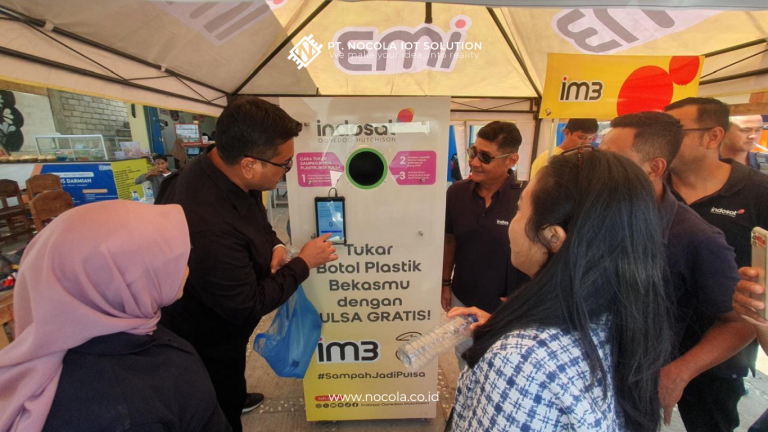
The technology and telecommunications industries continue to grow rapidly, offering various innovative solutions that help address environmental challenges. One of the latest standout collaborations is between Indosat Ooredoo Hutchison and PT Nocola IoT Solution in creating Trash Vending, an innovation designed to support smart and efficient waste management. Trash Vending was first introduced at the GP Mandalika 2024, one of the world’s largest motorcycle racing events, attended by thousands of visitors annually.
This collaboration brings a unique and futuristic solution to tackle one of the biggest challenges at large events—waste management. With Internet of Things (IoT) technology integrated into Trash Vending, the GP Mandalika not only offers thrilling racing entertainment but also showcases technology that contributes to environmental preservation.
This article will delve into Trash Vending, covering the concept, function, features, and impact on waste management at the GP Mandalika.
Background of the Collaboration

Read More: Indosat Ooredoo and PT Nocola IoT Solution: Trash Vending Collaboration in Semarang
The GP Mandalika is one of Indonesia’s largest international events, attracting thousands of visitors from around the world. However, with so many attendees, the amount of waste generated also increases drastically. Waste from large events often becomes a challenge for organizers as its management requires significant effort and time.
To address this challenge, Indosat Ooredoo Hutchison and PT Nocola IoT Solution combined their expertise in telecommunications and IoT technology to create Trash Vending. The goal of this collaboration is to simplify waste management and create a cleaner environment at major events like the GP Mandalika.
Indosat Ooredoo Hutchison’s Role
As one of Indonesia’s leading telecommunications providers, Indosat Ooredoo Hutchison provides the telecommunications infrastructure that allows Trash Vending to operate seamlessly. Indosat’s 4G and 5G networks enable real-time connectivity between the vending machines and the data management center, ensuring continuous monitoring and optimization of waste management.
PT Nocola IoT Solution’s Role
PT Nocola IoT Solution is a technology company focused on developing IoT-based solutions. In this project, Nocola is responsible for developing the Trash Vending system, equipped with advanced sensors and data processing technology that allows the machine to automatically detect, classify, and manage waste.
What is Trash Vending?

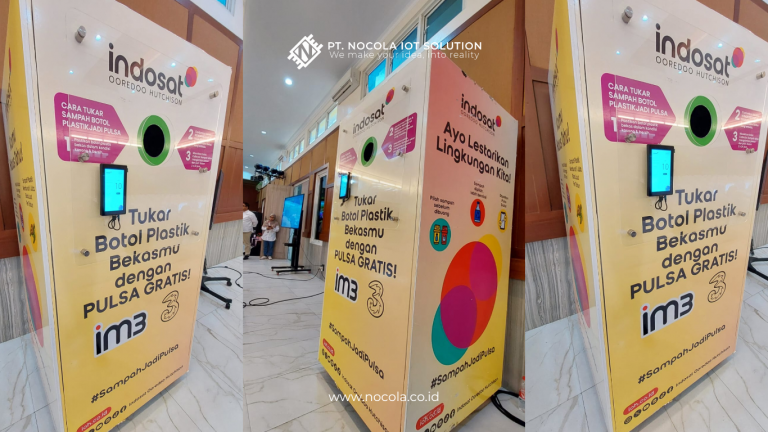
Trash Vending is a smart machine specifically designed to receive, process, and manage waste automatically. With the help of Internet of Things (IoT) technology, Trash Vending can identify waste types, classify them, and send related data on the volume and type of waste to the management center. This enables more efficient waste management, especially at large-scale events like GP Mandalika.
Trash Vending not only helps reduce waste accumulation but also educates visitors to be more environmentally conscious. With easy access to the machine, visitors are encouraged to be more responsible in disposing of their waste in the proper place.
Functions of Trash Vending

The primary function of Trash Vending is to manage waste automatically and in real time. Here are some of the main functions of Trash Vending:
- Waste Reception
Trash Vending receives waste deposited by visitors. The machine has several slots for different types of waste, such as plastic, paper, metal, and organic waste. Each slot is designed to make it easier for visitors to dispose of waste according to its type. - Automatic Classification
After the waste is deposited, Trash Vending uses advanced sensors to detect and identify the type of waste. The waste is then automatically classified into the appropriate container. This function is essential for supporting recycling programs and more sustainable waste management. - Real-Time Monitoring
Trash Vending is connected to a central system via the internet, provided by Indosat Ooredoo Hutchison. Each machine can be monitored in real time, including information about the collected waste volume and machine capacity. If the capacity is nearly full, a notification is sent to the waste management team to empty the machine immediately. - Automatic Emptying
When Trash Vending detects that its capacity is nearly full, the system automatically sends an alert to the cleaning team for emptying. This ensures that the machine never overflows and that waste does not pile up, keeping the environment clean and pleasant. - Reporting and Data Analysis
Trash Vending not only manages waste but also generates reports and data analysis on the amount and type of waste collected. These reports can be used by event organizers to evaluate the effectiveness of the waste management program and plan improvements for future events.
Key Features of Trash Vending

Read More: Smart Water Quality Monitoring System (WQMS): Innovation by Nocola IoT Solution
- IoT Integration
Trash Vending is fully integrated with IoT technology, enabling real-time monitoring and automatic waste management processes. - User-Friendly Interface
Equipped with a touchscreen interface, Trash Vending provides clear instructions to users on how to deposit their waste. - Durability
Designed to withstand various weather conditions, Trash Vending machines are highly durable and can operate outdoors without performance degradation. - Data-Driven
The ability to collect data from every machine allows for in-depth analysis of waste management patterns, helping optimize future processes. - 5G Connectivity
Indosat Ooredoo Hutchison’s high-speed network ensures smooth and reliable data transmission for real-time monitoring and alerts.
Implementation of Trash Vending at GP Mandalika

GP Mandalika 2024 is the first event where Trash Vending has been widely implemented. As a motor racing event attended by thousands of visitors, GP Mandalika faces significant challenges in waste management. Therefore, Trash Vending is introduced as a solution to address this issue.
Indosat Ooredoo Hutchison and PT Nocola IoT Solution collaborated with the GP Mandalika organizers to install Trash Vending machines at strategic points around the circuit. Each machine is monitored in real-time through Indosat’s telecommunications network, ensuring smooth waste management operations without any disruptions.
Additionally, GP Mandalika visitors were educated on the importance of proper waste management through various campaigns conducted during the event. With Trash Vending, visitors are expected to become more aware of the environmental impact of the waste they produce and take greater responsibility in disposing of their trash properly.
Impact of Trash Vending on GP Mandalika Waste Management

Trash Vending at GP Mandalika 2024 has successfully improved the efficiency of waste management, resulting in a cleaner environment and enhanced visitor comfort. Here’s how Trash Vending has positively impacted waste management at the event:
- Reduced Waste Accumulation
With real-time monitoring and automatic waste classification, Trash Vending has reduced waste buildup and improved cleanliness at the event venue. - Faster Waste Collection
The automatic emptying function ensures that waste is collected promptly, preventing bins from overflowing and maintaining a clean environment for visitors. - Environmentally Friendly
By promoting responsible waste disposal and recycling, Trash Vending supports environmental sustainability at large-scale events. - Real-Time Data Access
Event organizers can monitor waste management efficiency and make data-driven decisions to improve future event planning.
Conclusion
The collaboration between Indosat Ooredoo Hutchison and PT Nocola IoT Solution to introduce Trash Vending at GP Mandalika 2024 is a groundbreaking innovation in waste management. By combining advanced IoT technology with real-time data monitoring, Trash Vending has proven its ability to improve waste management efficiency and promote environmental awareness among visitors.
Trash Vending sets a new standard for smart waste management at large events, offering a solution that is not only efficient but also environmentally sustainable. As technology continues to advance, we can expect more innovations like this that make a positive impact on the environment and society

Nocola Smart Agriculture Solutions: Optimizing Agricultural Yields with IoT and Real-Time Data
In today’s modern technological era, the agricultural sector is undergoing a major revolution. Traditional farming methods are transitioning to smart solutions that leverage the Internet of Things (IoT) and real-time data analytics. One company at the forefront of this innovation is Nocola IoT Solutions. With its smart agriculture solutions, Nocola helps farmers increase crop yields, optimize efficiency, and reduce waste. This article will explore how Nocola’s smart agriculture solutions harness IoT technology and real-time data to drive significant change in the agricultural sector.
1. What is Smart Agriculture?

Read More: Nocola IoT Solutions for Smart Agriculture: Monitoring and Managing Resources with Latest Technology
Smart agriculture refers to the application of modern technology to enhance agricultural productivity. The technologies used include IoT, sensors, artificial intelligence (AI), and real-time data to gather information from the agricultural environment, such as soil moisture, temperature, air humidity, and soil nutrients. This data is then analyzed to provide recommendations that help farmers make better decisions in managing their land.
With smart agriculture, farming becomes more efficient and accurate. Farmers no longer have to rely solely on estimates or experience, as they can access data-driven insights to maximize crop yields.
2. The Role of IoT in Nocola’s Agriculture Solutions

Read More:Advanced Agricultural Technology: Increasing Food Production with Smart Farming
IoT is at the core of Nocola’s smart agriculture solutions. By connecting various devices and sensors, IoT enables the automatic and real-time collection of data. Here are some IoT technologies integrated into Nocola’s agricultural solutions:
- Soil and Weather Sensors: Nocola provides sensors that can be installed in agricultural fields to measure soil and weather conditions in real-time. Data on soil moisture, temperature, rainfall, and wind speed can be accessed directly by farmers through Nocola’s digital platform. With this data, farmers can determine the best time to plant, water, or fertilize crops.
- Plant Monitoring with Cameras and Drones: Nocola also utilizes cameras and drones to monitor crop conditions from the air. With the help of infrared cameras, farmers can detect diseases or pests early, allowing for quicker preventive actions and reducing crop failure.
- Automated Irrigation Systems: One of the key features of Nocola’s smart agriculture solutions is an automated irrigation system that can be adjusted based on real-time data. The system will automatically water plants when sensors detect that soil moisture is below optimal levels, ensuring efficient water use and sufficient water supply for plants.
3. Benefits of Real-Time Data for Agriculture

Read More: Digitalization in Agriculture: From Management Systems to Automation
One of the key components of smart agriculture is the use of real-time data. Real-time data enables farmers to make quick and informed decisions based on current field conditions. Some key benefits of real-time data in agriculture include:
- Increased Production Efficiency: With real-time data, farmers can easily identify issues in the production process, such as over- or under-irrigation, pest attacks, or nutrient deficiencies in the soil. This allows for corrective actions to be taken as quickly as possible, boosting land productivity.
- More Efficient Resource Use: Real-time data also helps in managing resources like water, fertilizers, and energy. With accurate information, farmers can use resources efficiently, reducing waste and lowering production costs.
- More Accurate Predictions: Data collected from IoT sensors can be used to make predictions about weather, pest attacks, or crop growth trends. With more accurate predictions, farmers can better manage risks and prepare better anticipatory measures.
4. Nocola Flux: An IoT Platform for Smart Agriculture

Read More: The Innovation Behind Nocola’s Fluxbox and Fluxgateway: Connecting IoT for a Smarter World
One of Nocola’s flagship products in smart agriculture solutions is Nocola Flux. Flux is an IoT platform that integrates various sensors and devices to provide comprehensive information to farmers. Some key features of Nocola Flux for agriculture include:
- Fluxbox and Fluxgateway: Fluxbox serves as the data processing center connected to field sensors, while Fluxgateway acts as the link between sensors and the cloud platform. The data collected from the field is sent directly to Nocola’s cloud platform, where it is processed and analyzed.
- Fluxdashboard: With Fluxdashboard, farmers can monitor their land conditions directly via smartphones or computers. The user-friendly interface allows farmers to view real-time data and receive recommendations from the system.
- Fluxconnect: Fluxconnect is a system that allows all IoT devices in the field to communicate with each other, ensuring seamless integration and automation.
With Flux, Nocola provides a complete solution for farmers to manage their agriculture more efficiently and intelligently.
5. Implementation of Nocola Solutions in Various Agricultural Sectors

Read More: Facing the Industrial Future with Integrated IoT Solutions from Nocola
Nocola Smart Agriculture Solutions can be applied across various agricultural sectors, from food crops to horticulture and livestock farming. Some examples of its implementation include:
Rice Farming: In paddy fields, Nocola’s solutions help farmers monitor soil moisture and irrigation water levels. With accurate data, water usage becomes more efficient, and crop productivity increases.
Fruit Plantations: In fruit plantations, Nocola provides temperature and humidity monitoring systems that help keep fruit plants in optimal condition.
Livestock Farming: Nocola’s IoT solutions extend beyond plants, offering tools for livestock farming, such as health monitoring systems, automated feed management, and GPS-based livestock tracking systems.
Conclusion
Nocola Smart Agriculture Solutions have proven that technology can be a vital partner in optimizing agricultural output. By utilizing IoT and real-time data, farmers can manage their land more efficiently, increase productivity, and reduce waste. From automated irrigation systems to crop monitoring via drones, Nocola’s smart agriculture solutions have a significant positive impact, benefiting both farmers and food security.

Data Security in IoT Systems: How Nocola Guarantees the Privacy and Security of Customer Data
In today’s digital era, the Internet of Things (IoT) has become an integral part of various sectors, including industry, healthcare, transportation, and smart homes. As more devices become connected, the challenges related to data security and privacy also increase. PT Nocola IoT Solution, as one of the pioneers in IoT solutions in Indonesia, is committed to ensuring customer data security. This article will discuss how Nocola maintains data security and privacy in their IoT systems, as well as the steps taken to protect sensitive information.
What is IoT and Why is Data Security Important?

Read More: Indosat Ooredoo and PT Nocola IoT Solution: Collaboration on Trash Vending Creation in Semarang
Definition of IoT
IoT refers to a network of physical devices connected via the internet, allowing for data collection and exchange. These devices can include sensors, cameras, household appliances, and more, all designed to operate automatically and collect useful information.
Importance of Data Security
Data security in IoT systems is crucial because these devices often collect personal and sensitive information. Data breaches can lead to identity theft, financial loss, and even threats to physical safety. Therefore, it is important for companies like Nocola to implement strong security measures to protect customer data.
Nocola’s Approach to Data Security

1. Layered Security Design
Nocola implements a layered security design that includes multiple levels of protection. This includes:
- Device Security: Every IoT device developed by Nocola is equipped with strong security features, such as data encryption and user authentication. This ensures that only authorized users can access the devices and the data collected.
- Network Security: Nocola uses secure network protocols and implements firewalls to protect data transmitted between devices and servers. This minimizes the risk of data theft during transmission.
2. Data Encryption
Encryption is one of the most effective ways to protect data. Nocola applies end-to-end encryption for all data collected from IoT devices. This means that data is encrypted when sent from the device to the server and can only be decrypted by authorized users.
3. Regular Security Updates
Nocola regularly performs software updates for all their IoT devices. These updates include necessary security patches to close any vulnerabilities that could be exploited by hackers. By routinely updating, Nocola ensures that all devices operate with the latest security measures.
4. Security Audits and Risk Assessments
Nocola conducts regular security audits and risk assessments to identify potential weaknesses in their systems. By analyzing existing data and security procedures, Nocola can take proactive steps to enhance data security and minimize the risk of breaches.
Access Management and Data Privacy

Read More: How to Enhance Personal Data Security on the Internet
1. Strict Access Control
Nocola implements strict access control policies to ensure that only authorized users can access certain data. This includes the use of strong passwords, two-factor authentication, and user access rights management.
2. Clear Privacy Policy
Nocola has a clear privacy policy that explains how customer data is collected, used, and protected. This policy provides transparency to customers about how their information is handled and gives them control over their personal data.
3. User Education
Nocola is also committed to educating users about the importance of data security. By providing information on how to protect their data and identify potential threats, Nocola helps customers take the necessary steps to secure their information.
The Future of Data Security in IoT Systems

Read More: Building an IoT Ecosystem with Nocola’s Fluxcloud: Managing IoT Data at Scale
1. Innovations in Security Technology
As IoT technology evolves, threats to data security will also become more complex. Nocola continues to conduct research and development to discover new innovations in data security, including the use of artificial intelligence (AI) to detect and prevent threats in real-time.
2. Collaboration with Third Parties
Nocola plans to partner with leading cybersecurity solution providers to strengthen existing security measures. By collaborating with security experts, Nocola can ensure that their systems remain secure against emerging threats.
Conclusion
Data security in IoT systems is of paramount importance, and PT Nocola IoT Solution has demonstrated a strong commitment to maintaining customer data privacy and security. Through the implementation of advanced security measures, data encryption, regular updates, and strict access controls, Nocola ensures that sensitive customer information is protected from threats. Additionally, by continuously innovating and educating users, Nocola stands at the forefront of addressing the evolving security challenges in the IoT landscape.
With a strong dedication to data security, Nocola not only creates innovative products but also builds trust with customers. Moving forward, Nocola is committed to continuously enhancing data security and providing safe and effective IoT solutions for all users.

Collaborative Innovation of Cilacap State Polytechnic and Nocola IoT Solution: Development of Ship Reef Cleaning Robots
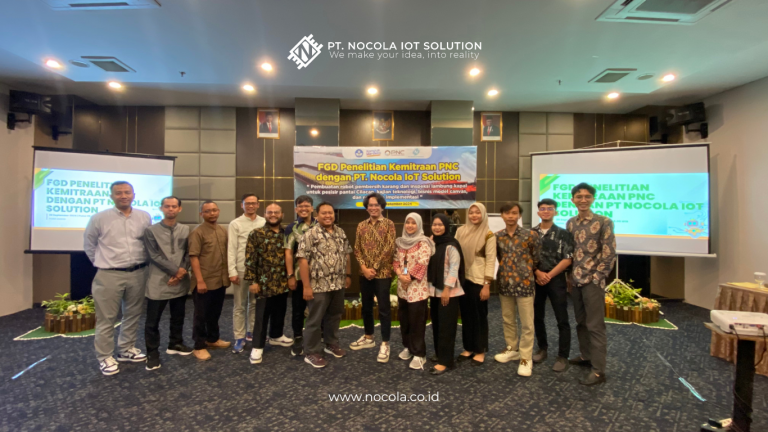
In the era of Industry 4.0, educational institutions and industry must collaborate closely. Technological innovations are advancing rapidly, and this partnership is essential for creating efficient solutions to real-world problems. A clear example of this is the collaboration between Politeknik Negeri Cilacap and PT Nocola IoT Solution to develop a ship hull cleaning robot. During a focus group discussion (FGD), both parties discussed building a technological solution to address barnacle buildup on ships, which often decreases operational performance and increases maintenance costs.
This article will cover the functions and features of the ship hull cleaning robot being developed, as well as explain why collaboration between education and industry is crucial for creating innovative solutions in the modern era.
Why Must Ship Hulls Be Cleaned?

Read More: Indosat Ooredoo and PT Nocola IoT Solution: Collaboration for Trash Vending in Semarang
Ships operating at sea often accumulate barnacles and other marine organisms on their hulls. This buildup causes several serious problems:
- Increased Fuel Consumption: Barnacles increase friction between the ship’s hull and water, forcing the ship to use more power and consume more fuel.
- Hull Damage: Barnacles can corrode and damage the metal surface of the hull. If left untreated, this damage may lead to leaks or other costly issues.
- Reduced Speed and Efficiency: The buildup of barnacles reduces the ship’s speed due to increased resistance, disrupting operational schedules, especially for commercial ships.
Functions of the Ship Hull Cleaning Robot

In the FGD, participants focused on developing a robot that automatically cleans barnacles from the ship’s hull. This robot offers several key functions for efficient cleaning and maintenance.
1. Automatic and Autonomous Cleaning
The robot operates autonomously, eliminating the need for human intervention. It uses integrated AI and sensors to detect areas that require cleaning and performs the task independently, reducing time and costs associated with traditional ship maintenance.
2. Detection of Barnacle-Infested Areas
Equipped with ultrasonic sensors and underwater cameras, the robot identifies heavily infested areas and focuses on cleaning them first.
3. Efficient Energy Usage
The robot’s energy-efficient design allows it to run for hours without needing frequent recharges. The ship’s automatic charging system supports the robot, ensuring it remains operational during long maintenance sessions.
4. IoT Connectivity
Thanks to PT Nocola IoT Solution’s expertise, the robot features IoT technology, enabling remote monitoring and control. Ship operators can check the robot’s status, see how much barnacle buildup it has removed, and start additional cleaning when necessary.
Key Features of the Ship Hull Cleaning Robot

Read More: CEMS Nocola: Reducing Emissions with Continuous Emission Monitoring
Technological innovation in this robot offers several standout features:
1. Durable and Corrosion-Resistant Materials
Since the robot operates in seawater, it must withstand corrosion. Therefore, it is built from composite materials and corrosion-resistant metals, making it durable even with regular exposure to harsh marine conditions.
2. Precise Navigation
GPS and sonar sensors allow the robot to navigate precisely underwater. It moves smoothly around the ship’s hull, avoiding obstacles and targeting the most heavily barnacle-infested areas.
3. Advanced Cleaning System
The robot uses high-speed brushes to clean barnacles without damaging the ship’s hull. These brushes are strong yet flexible, capable of removing even the toughest barnacles.
The Impact of Industry-Academic Collaboration

The partnership between Politeknik Negeri Cilacap and PT Nocola IoT Solution highlights the importance of academia-industry collaboration in solving real-world problems. Their combined knowledge and expertise lead to more effective solutions.
1. Accelerated Research and Innovation
This collaboration allows for faster technological development. Students and faculty bring fresh insights and academic research, which accelerates innovation.
2. Real-World Applications for Students
Students from Politeknik Negeri Cilacap gain valuable hands-on experience by participating in industry projects. They work on real-world problems and develop solutions with direct impacts.
3. New Business Opportunities
For PT Nocola IoT Solution, this partnership opens new business opportunities. By developing the ship hull cleaning robot, the company can expand its product line and offer innovative solutions to the global maritime market.
Conclusion
The collaboration between Politeknik Negeri Cilacap and PT Nocola IoT Solution demonstrates the importance of industry-academia partnerships in tackling real-world challenges. The development of the ship hull cleaning robot offers an innovative solution to improve ship performance and reduce maintenance costs. With its autonomous operation, IoT connectivity, and energy efficiency, this robot is set to revolutionize ship maintenance practices worldwide.

Indosat Ooredoo and PT Nocola IoT Solution: Collaboration for Trash Vending in Semarang
Technology is rapidly advancing, and one of the biggest challenges faced by modern society is effective waste management. To tackle this issue, collaboration between major companies has emerged as a key solution to create innovations that positively impact the environment. A prime example of such an innovative collaboration is between Indosat Ooredoo and PT Nocola IoT Solution, who have jointly developed a Trash Vending system in the city of Semarang. This project aims to optimize waste management by integrating Internet of Things (IoT) technology to create a more efficient, effective, and environmentally friendly waste management system.
This article will provide an in-depth discussion about the Trash Vending project, how this technology works, its key functions and features, and how this collaboration can bring positive change to Semarang and its surrounding environment.
The Collaboration Between Indosat Ooredoo and PT Nocola

Indosat Ooredoo, as one of Indonesia’s largest telecommunications providers, is constantly seeking ways to contribute to sustainable development. Through its Corporate Social Responsibility (CSR) program, they aim to combine the power of communication technology with environmental solutions.
PT Nocola IoT Solution, a leading technology company focused on developing IoT solutions, is an ideal partner to help realize this vision. Nocola is known for its various innovations in IoT technology that have been applied in different sectors, including environmental management.
What is Trash Vending?

Read More: Integrating AI and IoT with Flux by Nocola: The Future of Automated Manufacturing
Trash Vending is an innovative concept that combines IoT technology and automated systems to manage waste in a more structured way. Through this system, the public can dispose of waste in designated areas, which is then processed by an automatic machine. Trash Vending operates like a traditional vending machine, but instead of dispensing products, it accepts waste as input and rewards users.
This system not only helps reduce litter in the environment but also incentivizes people to participate in keeping their surroundings clean.
Key Functions and Features of Trash Vending

1. IoT-Integrated Waste Management Trash Vending is designed to connect various waste collection points via an IoT network. This allows for real-time monitoring of the collected waste, machine status, and maintenance needs. The data is sent to a control center, enabling managers to act quickly if any issues arise.
2. Incentives for the Public One of the most attractive features of this system is its ability to provide incentives to users who properly dispose of waste. Users can earn points or specific rewards that can be exchanged for benefits such as phone credit, shopping vouchers, or service discounts. These incentives encourage the public to be more aware of the importance of proper waste disposal.
3. Automatic Waste Sorting Trash Vending is equipped with advanced waste recognition technology. The machine can identify whether the disposed waste is plastic, paper, or organic. This allows for automatic sorting of waste, which simplifies the recycling process later on.
4. Real-Time Monitoring System Another important feature is the machine’s ability to provide real-time reports to the management. These reports include information such as the current machine capacity, the time required for emptying, and the machine’s condition. With this system, the waste management process becomes more efficient and organized.
5. Accessibility and Ease of Use Trash Vending is designed to be user-friendly, allowing even those unfamiliar with technology to use it with ease. The machine is also designed to be accessible to everyone, including people with disabilities.
Benefits of Trash Vending for Semarang

Read More: The Importance of Nocola Solutions in Environmental Monitoring for Sustainable Industry
The collaboration between Indosat Ooredoo and PT Nocola IoT Solution in the Trash Vending project in Semarang brings numerous significant benefits for both the city of Semarang and the wider community.
1. Raising Environmental Awareness The Trash Vending system educates the public about the importance of proper waste management. By offering incentives, people are encouraged to be more environmentally conscious and actively involved in keeping the city clean.
2. Reducing Litter One of the main goals of this project is to reduce the amount of litter in public areas. With accessible waste collection points and attractive incentives, people are more motivated to dispose of waste properly.
3. Supporting Recycling Programs With its automatic waste sorting technology, Trash Vending supports recycling efforts. Properly sorted waste can be directly sent to recycling processes, reducing the burden on landfills and supporting a circular economy.
4. Enhancing Waste Management Efficiency With real-time monitoring and automated reporting, waste managers can optimize waste collection schedules and perform machine maintenance more efficiently. This will reduce operational costs and improve the quality of waste management services in Semarang.
IoT Technology Behind Trash Vending

Read More: Advanced Agricultural Technology: Boosting Food Production with Smart Farming
The success of Trash Vending cannot be separated from the IoT technology implemented by PT Nocola IoT Solution. This technology enables the Trash Vending machines to connect to a central network that monitors all data in real-time. Key components of the IoT technology used in this project include:
1. Advanced Sensors Trash Vending machines are equipped with various sensors that can detect the type of waste, machine capacity, and overall machine condition. These sensors work automatically to optimize machine operations.
2. Network Connectivity Through the IoT network, all Trash Vending machines in Semarang are connected to each other and to a control center. This allows managers to monitor the entire system holistically and make decisions based on accurate data.
3. Data Processing System Every piece of data collected from the Trash Vending machines is processed at a central location. This data helps waste management teams identify areas that need attention, plan waste collection, and ensure that the machines are functioning optimally.
Conclusion
The Trash Vending project is a concrete example of how collaboration between technology companies like Indosat Ooredoo and PT Nocola IoT Solution can bring significant environmental and societal benefits. By integrating IoT technology into waste management, Semarang now has a more efficient and effective system that promotes environmental sustainability and encourages community participation. The success of this project could serve as a model for other cities looking to adopt similar solutions to address waste management challenges in the future.

Collaboration of SBI Cilacap and PT Nocola IoT Solution: Variable Speed Drive (VSD) Innovation for Industrial Energy Efficiency
The modern industry is facing increasingly significant challenges in terms of energy efficiency and resource management. In this rapidly developing era of digitalization, IoT (Internet of Things) technology plays a crucial role in supporting this transformation. One of the latest innovations emerging from industry collaboration is the application of Variable Speed Drive (VSD) technology, an energy efficiency solution that connects industrial machines with real-time data management. The collaboration between SBI Cilacap and PT Nocola IoT Solution in developing this VSD is expected to bring significant changes in energy management and industrial operations.
This article will discuss the functions, features, and impacts of this collaboration on energy efficiency in the industry, and how the implementation of VSD technology, supported by IoT, can help reduce energy consumption and operational costs.
Sub-chapters:
1. What is a Variable Speed Drive (VSD)?

Variable Speed Drive (VSD) is a device used to control the speed and torque of electric motors by adjusting the frequency and voltage of the supplied electricity. This technology has long been used in the industry to save energy and improve machine performance. However, with IoT advancements, VSDs are now becoming smarter with real-time data collection and analysis capabilities.
VSD enables better control over industrial processes, especially on machines requiring variable speed control according to the need. For instance, in pumps or fans, the machine’s speed can be adjusted according to the required workload, thus reducing unnecessary energy usage.
2. The Role of IoT in Variable Speed Drive

Read More: RSUD Banyumas X AMIKOM Purwokerto X Flux Collaboration for IoT-Based Stroke Monitoring
The application of IoT in VSD systems changes the traditional way of managing industrial machines. IoT allows VSDs to be connected to a broader network, enabling remote monitoring and control. Data collected by sensors on the VSD can be analyzed in real-time to detect energy usage patterns, predict maintenance needs, and optimize production processes.
With IoT, VSDs can be controlled more precisely, either through a dashboard or automation based on stored historical data. This not only enhances efficiency but also minimizes operational disruptions caused by unplanned maintenance.
3. VSD Function in the Industry

The primary function of VSD is to control the speed of electric motors to enhance energy efficiency and productivity. Some key functions of VSD in the industry include:
- Energy Savings: VSD reduces energy consumption by adjusting the machine’s speed according to production needs. In many cases, energy savings can reach up to 50%.
- Prolonging Machine Life: By reducing mechanical stress on machines due to sudden speed changes, VSD can extend the lifespan of the machine.
- Carbon Emission Reduction: By using energy more efficiently, VSD helps reduce carbon emissions generated by industrial machines.
- More Accurate Control: VSD provides more accurate control over production processes, thereby improving product quality and consistency.
4. Key Features of VSD from the SBI Cilacap and PT Nocola IoT Solution Collaboration

Read More: Nocola CEMS: Reducing Emissions with Continuous Emission Monitoring
The collaboration between SBI Cilacap and PT Nocola IoT Solution has resulted in a VSD equipped with advanced features that meet the needs of modern industries. Some of the key features of this VSD include:
- IoT-Enabled Monitoring: The developed VSD comes with IoT capabilities, enabling remote monitoring via an internet connection. This allows operators to monitor machine performance from anywhere.
- Real-Time Data Collection: With integrated sensors, the VSD collects data on energy consumption, machine speed, and operating conditions in real-time. This data can be accessed via a user-friendly dashboard.
- Predictive Maintenance: One innovative feature of this VSD is its ability to predict maintenance needs based on historical data analysis. This ensures maintenance is performed timely before breakdowns occur.
- Maximum Energy Efficiency: The precise speed control feature allows the VSD to optimize energy usage, even in fluctuating operating conditions.
- Integration with Energy Management Systems: The VSD can be integrated with existing energy management systems to provide greater control over energy usage across the facility.
5. Positive Impact on Energy Efficiency in the Industry

Read More: LogSheet Digital: Operational Efficiency Solution
The implementation of VSD, especially the one developed by SBI Cilacap and PT Nocola IoT Solution, is expected to significantly impact energy efficiency in the industry. Here are some potential benefits:
- Significant Energy Savings: By controlling motor speed according to needs, VSD can reduce unnecessary energy consumption.
- Lower Operating Costs: Reduced energy consumption translates into lower electricity bills, which can significantly reduce operational costs.
- Reduced Carbon Emissions: By using energy more efficiently, VSD helps reduce carbon emissions, contributing to a cleaner environment.
- Improved Production Quality: With precise control, VSD helps maintain the consistency and quality of products.
6. Long-Term Benefits of VSD Implementation

Read More: The Importance of Nocola Solutions in Environmental Monitoring for Sustainable Industries
The implementation of VSD technology integrated with IoT offers various long-term benefits for the industry. Some of these include:
- Sustainability: More efficient energy use supports the company’s sustainability initiatives, aligning with global commitments to reduce carbon footprints.
- Process Optimization: With real-time data collection and in-depth analysis capabilities, companies can continuously optimize their production processes.
- Increased Productivity: VSD not only reduces energy consumption but also boosts machine productivity by ensuring more stable and accurate operations.
- Reduced Downtime: With predictive maintenance features, machine downtime due to breakdowns can be minimized, thus enhancing overall production efficiency.
Conclusion
The collaboration between SBI Cilacap and PT Nocola IoT Solution in the development and implementation of Variable Speed Drive (VSD) demonstrates how IoT technology can significantly impact energy management in the industry. With advanced features that support energy efficiency, remote monitoring, and predictive maintenance, the VSD resulting from this collaboration paves the way for a more energy-efficient and sustainable industrial future. Amid growing demands to enhance operational efficiency and reduce carbon footprints, VSD solutions integrated with IoT represent a critical step toward a more eco-friendly and competitive industry.

How Nocola Helps the Energy Industry Monitor Carbon Emissions with CEMS Technology
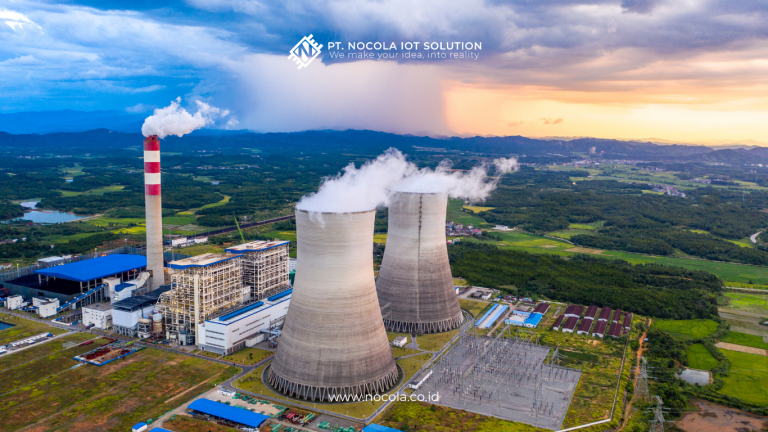
The global energy industry faces significant challenges in reducing carbon emissions. With increasing attention to climate change, governments worldwide are imposing strict regulations on carbon emissions, forcing energy companies to seek effective solutions for monitoring and managing emissions. One of the most innovative and effective technologies available today is the Continuous Emission Monitoring System (CEMS). PT Nocola IoT Solutions, as a leading IoT solutions provider, offers advanced CEMS technology to help the energy industry monitor and manage carbon emissions more efficiently.
1. What is CEMS and Why is it Important?

Read More: CEMS Nocola: Reducing Emissions with Continuous Emission Monitoring
CEMS (Continuous Emission Monitoring System) is a system designed to continuously measure and analyze gas emissions from industrial chimneys or processes. This technology allows companies to monitor emissions in real time and ensure they comply with strict environmental regulations.
The Importance of CEMS in the Energy Industry
2. CEMS Technology from Nocola: A Leading Solution for Emission Monitoring

Read More: The Benefits of Implementing a Continuous Emission Monitoring System (CEMS) for the Industry
PT Nocola IoT Solutions offers advanced CEMS technology specifically designed for the energy industry. Leveraging integrated IoT solutions, Nocola’s CEMS provides real-time data on greenhouse gas emissions, such as carbon dioxide (CO2), sulfur dioxide (SO2), nitrogen oxides (NOx), and other harmful gases. Moreover, this technology is designed for easy integration into existing operational systems, making it ideal for energy companies looking to upgrade their monitoring systems without disrupting operations.
3. Key Features of Nocola’s CEMS Technology

Read More: PT Cemindo Gemilang Bayah and PT Nocola IoT Solution Integrate CEMS with KLHK Server
Nocola’s CEMS technology comes with a range of advanced features, making it an ideal solution for energy companies:
- Real-Time Monitoring: Emission data is presented instantly and continuously, allowing operators to take immediate action if emissions exceed thresholds.
- IoT Integration: This technology integrates with Nocola’s IoT platform, enabling data from various devices to be collected, analyzed, and reported automatically.
- Automated Reporting: The system automatically generates customizable reports, making it easier for companies to report emission data to regulatory authorities.
- Minimal Maintenance: Nocola’s CEMS system is designed for minimal maintenance, which reduces long-term operational costs.
- High Accuracy: The sensor technology used in Nocola’s CEMS ensures that the data generated is accurate and reliable, meeting international regulatory standards.
4. Benefits of Nocola’s CEMS Technology for the Energy Industry

Read More: CEMS Nocola: Reducing Emissions with Continuous Emission Monitoring
Energy companies can benefit in many ways by adopting Nocola’s CEMS technology:
- Compliance with Environmental Regulations: With continuous emission monitoring and automated reporting, companies can ensure they always comply with government regulations.
- Cost Savings: Accurate and fast monitoring allows companies to identify leaks or inefficiencies in their systems, ultimately reducing operational and energy costs.
- Enhanced Company Image: By using technology aimed at reducing emissions, companies can strengthen their image as environmentally conscious businesses.
- Better Decision-Making: The data collected by CEMS provides deep insights into emissions and energy consumption, which can be used to make more strategic decisions.
5. The Impact of CEMS Technology on Carbon Emission Reduction Efforts

Read More: Peran Penting Nocola dalam Pengurangan Emisi Industri dengan Teknologi Pemantauan Terdepan
Nocola’s CEMS technology has a direct impact on efforts to reduce carbon emissions:
- Early Detection of High Emission Levels: The continuous monitoring system allows companies to detect emission levels early and take appropriate corrective measures.
- Data-Driven Improvements: With accurate data on emissions, companies can implement improvements in their processes to reduce emissions.
- Support for Carbon Offset Programs: Companies can use the data generated by CEMS to support participation in carbon offset programs, demonstrating their commitment to reducing their environmental footprint.
Conclusion
In summary, Nocola’s CEMS technology is a crucial solution for energy companies looking to monitor and manage emissions effectively. With features like real-time monitoring, IoT integration, and automated reporting, this technology helps ensure compliance with environmental regulations while offering cost savings and strategic insights. As the energy industry faces increasing pressure to reduce its carbon footprint, adopting CEMS technology from Nocola is an essential step toward a more sustainable future.